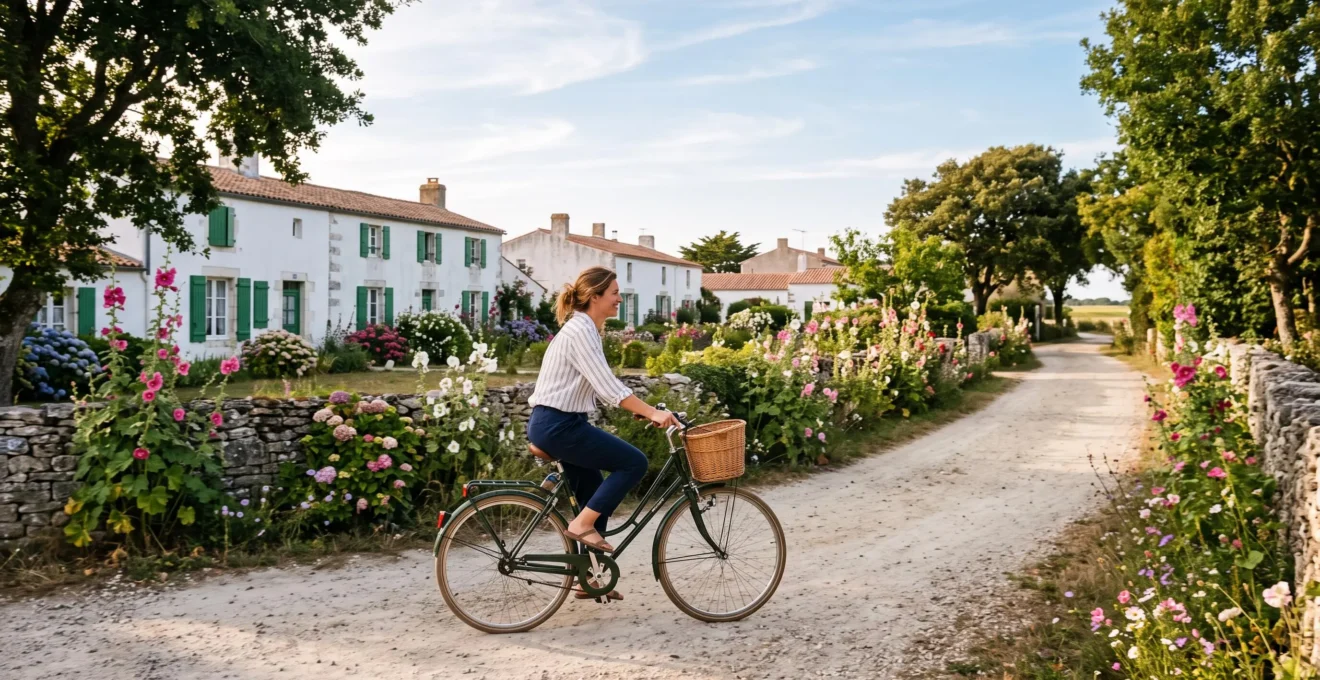
Direct answer: Île de Ré works so well for slow travel because it’s small enough to stay put, flat enough to explore by bike, and structured around villages and landscapes (like salt marshes) that reward lingering rather than rushing.
If you want a holiday that feels restorative—not “empty,” just unhurried—Île de Ré makes the slower choice almost automatic. You can base yourself in one village, move mostly on cycle paths, and let daily rhythms (morning markets, harbour walks, marshland light) shape your days.
The big hesitation is real: “Will it be too touristy?” The short version is that the island can feel busy in peak summer, but with the right season and a deliberately light plan, it’s still one of the easiest places to slow down without feeling cut off or bored.
A quick checklist to see if Île de Ré fits your slow-travel style
- You prefer one base and deeper days over ticking off multiple stops.
- You like cycling (or want to try it) for everyday getting around.
- You’re happy with simple pleasures: villages, markets, salt marsh walks, harbour time.
- You can travel outside late July–August if crowds worry you.
- You want easy planning: short distances, clear village “anchors,” and flexible days.
What Does Slow Travel Really Mean on Île de Ré?
Slow travel is a mindset: fewer places, more presence. Instead of building a checklist (one beach, one museum, one “must-see” viewpoint per hour), you choose a setting that can hold your attention for days—then you let time do the work.
On Île de Ré, this mindset is less of a discipline and more of a natural consequence. The island is connected and easy to navigate, so you’re not constantly “optimising” routes. That’s exactly what makes it a good fit if you’re asking, “Is Île de Ré a good choice if I want to slow down on holiday?”
Cas pratique
Imagine two versions of the same week off. In the first, you split the trip into three destinations, spend hours checking in/out, and keep chasing the next “highlight.” In the second, you pick one village on Île de Ré as your base, cycle to a neighbouring village for lunch, stop at the marshes on the way back, and keep evenings unscheduled. The second plan doesn’t need more activities—just a place where distances and atmosphere make lingering feel normal.
One practical clue that the island is designed for a slower pace: the official tourism office highlights a bike-friendly approach to getting around, including a mapped cycle-path network linking the island’s villages (and a physical map available in tourist offices).
Villages, Salt Marshes and Unhurried Rhythms
If you want to know what slows you down on Île de Ré, start with the places that don’t need an “attraction” to be satisfying. Villages, ports, and marshland landscapes are inherently time-based: you stroll, you watch, you return at a different hour and it feels changed.
What does an unhurried morning look like in Saint-Martin-de-Ré?
In Saint-Martin-de-Ré, the harbour and streets make an easy slow-travel “loop”: coffee, a wander along the water, a few quiet backstreets, then a long pause somewhere that catches your eye. The point isn’t to cover ground—it’s to keep your day spacious enough that small details (light on the boats, a shaded corner, the pace of people walking) become the experience.
Why do the salt marshes encourage patience, not speed?
The salt marshes—especially around Loix and near Ars-en-Ré—are landscapes built around slow processes. Even if you’re only passing through, they change how you move: flat horizons, narrow paths, and wide skies naturally invite you to stop, look, and take your time rather than push on to the next stop.
Because marsh areas are also working environments (and can be sensitive), the simplest slow-travel approach is to treat them as places to observe quietly: keep to marked paths, slow your cycling pace, and plan fewer “targets” for the day.
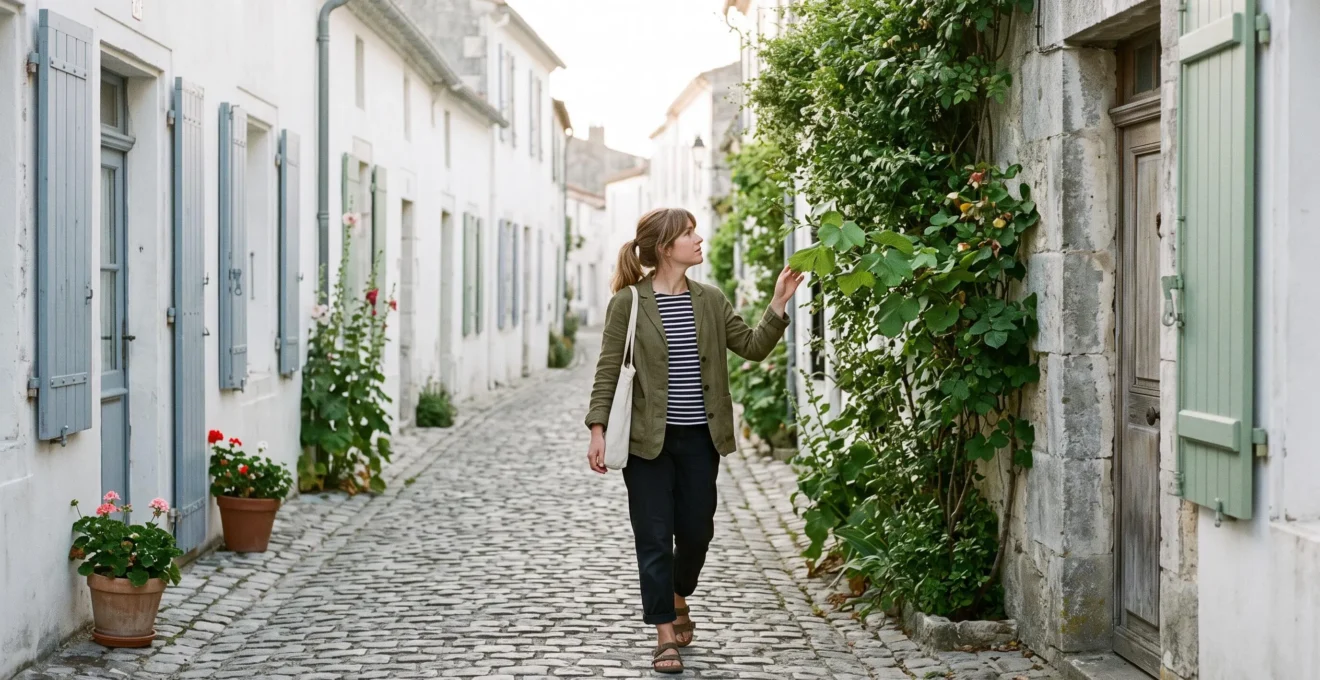
Village life on Île de Ré also helps you slow down because it provides built-in anchors—markets, short errands by bike, a beach walk at a quiet hour—without forcing you into an “all-day excursion” mindset.
Decision hint: If your main fear is crowds, you’ll enjoy the island more by choosing one village base and exploring outward in small loops—rather than trying to “do” every corner in a single day.
Exploring the Island by Bike
Cycling isn’t just a nice extra here—it’s one of the main reasons slow travel Île de Ré makes sense in practice. When the bike becomes your default, your day naturally fills with pauses: viewpoints, marsh edges, a bakery stop, a detour that looks interesting.
On the evidence side, two official local sources describe the scale of the network: the Communauté de communes de l’île de Ré states the island has 138 km of signposted cycle itineraries on its 2026 map, and the official tourism office also presents a 138 km cycle-path network linking the island’s villages.
138km
Signposted cycling itineraries on Île de Ré (official 2026 map by the Communauté de communes de l’île de Ré).
If you want to verify routes before you go (or once you arrive), you can check the réseau cyclable officiel de 138 km published by the Communauté de communes.
Is cycling on Île de Ré realistic if you’re not a “sporty” rider?
It can be—because the island is presented as mostly flat by the official tourism office, which makes gentle rides more accessible than in hilly destinations. The key is to plan your days around comfort, not performance: shorter rides, more stops, and a clear “turn back whenever you feel like it” rule.
What does a half-day slow ride look like?
A simple half-day rhythm is: start from your base village, ride to a neighbouring village for a long coffee or lunch, and return by a different path that crosses marshland or coastline. You’re not trying to cover the whole island—just letting the landscape set a calm tempo.
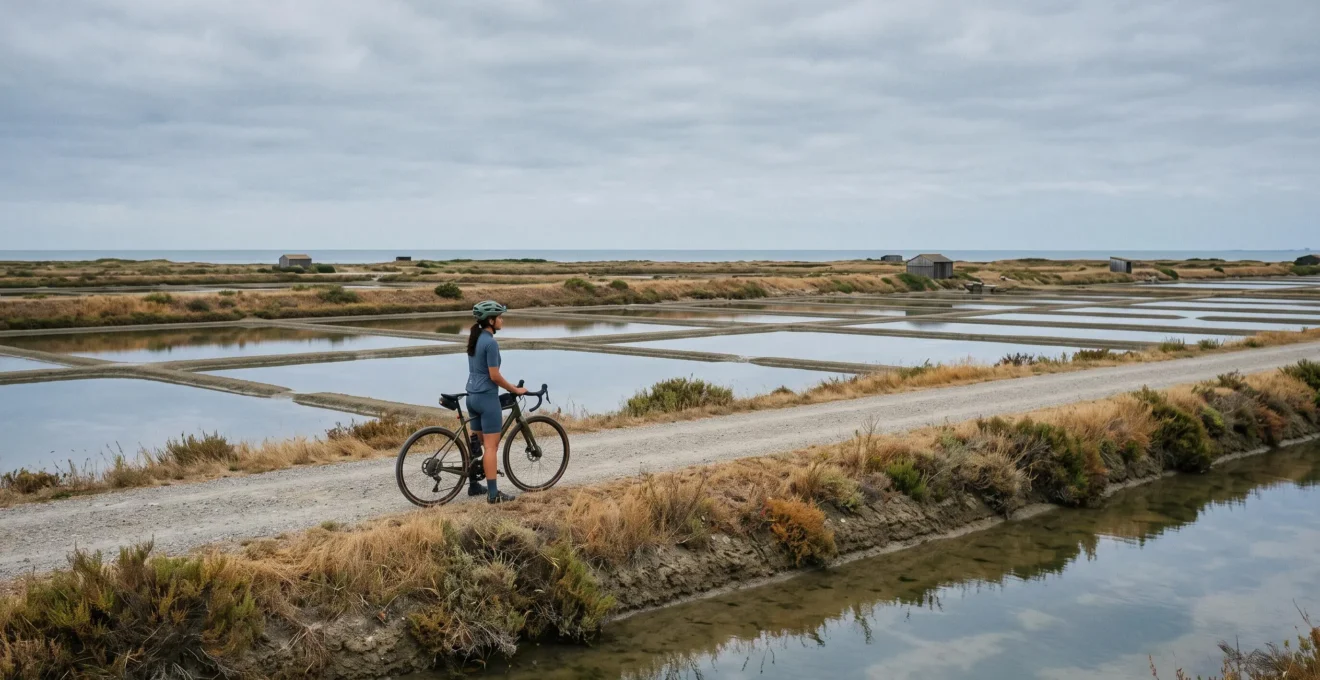
A practical limit to keep in mind: Bike rental availability and some services can vary by season, so confirm opening days and stock directly with local providers once you’ve chosen your travel dates.
For on-the-ground orientation, the official tourism office notes that a cycle-path map is available from its welcome desks, as part of its bike-friendly visitor approach (including the national “Accueil Vélo” framework).
Slowing Down Through Local Life and Seasons
Slow travel isn’t only about how you move; it’s also about what fills your hours. On Île de Ré, local life can give you “small but real” structure: morning markets, simple meals, and repeated rituals that make a short break feel longer.
Is Île de Ré too touristy for a relaxing, disconnected holiday?
It can feel touristy in peak periods—especially if you arrive expecting empty lanes and spontaneous restaurant tables in mid-summer. But if your goal is a relaxing stay, the more useful question is: can you choose a calmer window? Local seasonality suggests yes.
According to an article from Ré à la Hune relaying figures and comments from the official tourism office, the tourist season now stretches roughly from April to October, and the very high season typically doesn’t begin before the third week of July (since 2018/2019).
When is the quietest time to visit Île de Ré?
Based on that seasonality picture, a quieter slow-travel experience is more likely if you aim for dates outside the late-July to August peak. April–June and September–October can still feel “alive” without the same intensity—though weather, opening hours, and transport frequency can be more variable, so it pays to double-check practical info close to your trip.
If you’re comparing options, it can help to look at other slow-friendly formats too—like a longer reset elsewhere. If that’s your style, this internal guide on two-week getaways can give you ideas to benchmark against a shorter island stay.
How to Plan Your Own Slow Escape to Île de Ré
A slow escape works best when you plan less, not more. Your aim is to choose a base, set gentle daily distances, and leave breathing room so the island can “fill the gaps” with small discoveries.
How many days do I need to slow-travel Île de Ré without rushing?
Four to five days is a practical sweet spot for many travellers: long enough to repeat routines (market mornings, favourite cafés, a couple of rides) and still have blank space. A weekend can work too, but you’ll feel the difference if you don’t try to cover every village.
Which village should you choose as a base?
Pick one base village, then explore outward in loops. If you want a harbour atmosphere and an easy “evening stroll” routine, Saint-Martin-de-Ré is a natural candidate. If your ideal day is quieter lanes and marsh-adjacent rides, villages nearer the salt marshes (such as Loix or Ars-en-Ré) can make calm the default.
- You want cafés and a lively port feel:
Base yourself in or near Saint-Martin-de-Ré, and plan early-morning or late-day exploration to keep things calmer.
- You want nature-led days (marshes, flat rides, silence):
Choose a smaller village feel near marshland (for example Loix or Ars-en-Ré) and keep daily plans minimal.
- You worry about crowds most of all:
Prioritise shoulder-season dates and commit to one base—don’t “tour” the island like a checklist.
A 4–5 day slow itinerary framework (one base, light pacing)
This is a framework, not a schedule—use it to protect your time rather than fill it.
- Day 1: Arrive and shrink your radius
Stay close to your base village: harbour walk, first easy ride, early night.
- Day 2: One long loop by bike
Pick one neighbouring village, add a marsh detour, and stop often.
- Day 3: “No-plan” day
Market, beach at a quieter hour, reading break, slow dinner—no must-dos.
- Day 4: Repeat what you liked
Slow travel gets better when you repeat: same café, same path, new details.
- Day 5 (optional): Short ride + leave margin
Keep the last day flexible so departure doesn’t turn into a sprint.
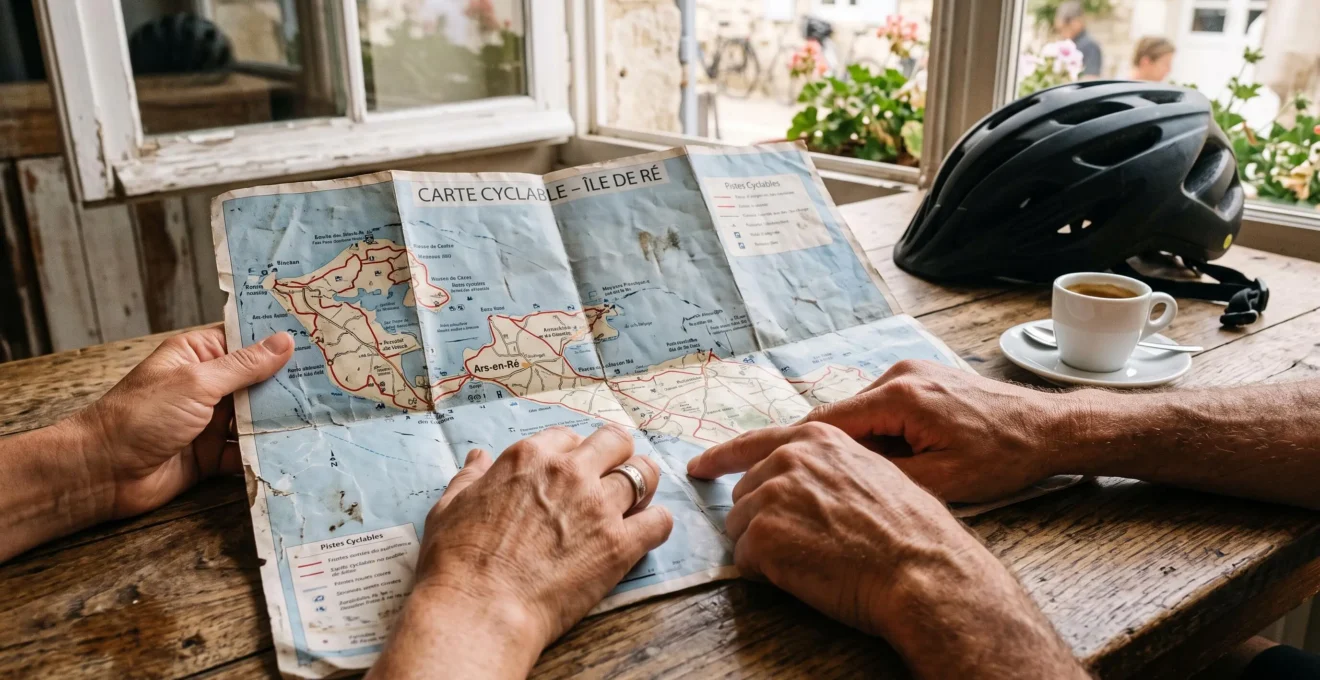
One last reliability tip: for opening times, seasonal services, and the most current practical guidance, verify details with office de tourisme and label Accueil Vélo information before you lock your dates.
What does slow travel actually mean in practice on Île de Ré?
How easy is it to explore the island slowly by bike?
When is the best season to visit Île de Ré for a quieter slow travel experience?
Is Île de Ré too touristy for a relaxing holiday?
If you’re deciding whether Île de Ré is “perfect” for slow travel, use one simple test: can you picture enjoying the same place twice? If yes—same café, same cycle path, same harbour at a different hour—the island’s villages, marsh landscapes and bike-first logic will support the pace you’re looking for, especially if you choose your season thoughtfully.