Your Tuscan week at a glance
- Five iconic cities connected by flexible bus routes: Florence, Pisa, Siena, Lucca, and San Gimignano form natural geographic arcs across central Tuscany
- Multi-day passes eliminate car rental stress: skip ZTL fines, parking chaos, and navigation anxiety whilst enjoying air-conditioned comfort with Wi-Fi
- Balanced pacing prevents burnout: intensive cultural days in Florence and Siena alternate with slower vineyard afternoons and hilltop town wandering
- Strategic transport timing unlocks spontaneity: early morning departures and flexible return scheduling let you linger where moments surprise you
Decoding Tuscany’s five-city canvas: where a week takes you
The five cities form a natural geography, not a random bucket list. Visualize two intersecting routes painted across central Tuscany: the Green northern arc sweeps from Florence through Pisa’s Leaning Tower and Lucca’s bike-friendly ramparts, whilst the Terracotta central circuit descends south through San Gimignano’s medieval towers to Siena’s shell-shaped piazza. Each town anchors a distinct experience—Renaissance grandeur, Romanesque elegance, Gothic intensity—yet they’re separated by manageable 60-90 minute journeys rather than exhausting cross-country slogs.
Florence holds the centre geographically and thematically. Your week orbits this Renaissance hub, launching day trips along the northern arc before pivoting south into wine country and hilltop fortresses. The routes intersect at strategic points, letting you loop back to collect luggage or shift your base without retracing ground. This isn’t accidental symmetry; it’s the result of centuries-old trade routes and modern transport planning converging.
Understanding this canvas before you book accommodation changes everything. Base yourself in Florence for simplicity, or split between Florence (nights 1-4) and Siena (nights 5-7) for deeper immersion. Either strategy works because the bus network treats these five destinations as spokes of a single wheel. Travellers who grasp this geographic logic early waste less mental energy on routing and more on deciding whether to climb another tower or order another glass of Vernaccia. When you’re ready to visualize your own route across Europe’s most storied regions, a detailed map for planning your Europe trip becomes an invaluable companion for seeing how Tuscany fits into broader Italian adventures.
Your week unfolds: rhythm and flow across seven days
-
Florence arrival: Duomo, Ponte Vecchio, evening passeggiata -
Northern arc: Pisa’s Leaning Tower (morning), Lucca’s wall cycling (afternoon) -
Florence deep dive: Uffizi Gallery, Piazzale Michelangelo sunset -
Terracotta route begins: San Gimignano towers and Vernaccia tasting -
Siena immersion: Piazza del Campo, Duomo, contrada wandering -
Flexible choice: return to favorite city, Chianti detour, or slow Siena morning -
Florence farewell: final museum, market breakfast, departure buffer
The rhythm matters as much as the routing. Days 1-3 establish your Florentine foundation whilst energy runs high—navigating streets, decoding museums, absorbing Renaissance grandeur. Days 4-5 shift to medieval intensity: San Gimignano and Siena demand vertical climbs, sun-baked stone, contrada rivalries in narrow alleys. Days 6-7 flex intentionally, offering recovery or one last cultural sprint.
The landscape transforms between routes. The northern arc trades through gentler plains—Pisa’s cathedral sprawls across lawns, Lucca’s walls circle a centre you can bicycle in ninety minutes. The terracotta route climbs into Chianti where roads corkscrew through vineyards and hilltop towns announce themselves kilometres away, medieval towers punching skyward.
Days 1-3: Florence foundations and the northern arc
Florence greets you with cathedral-induced neck strain and gelato decisions. That first afternoon, resist the Uffizi queue; walk the city’s bones—cross Ponte Vecchio when late sun turns the Arno copper, climb to Piazzale Michelangelo as aperitivo hour begins, let the Duomo’s marble facade ambush you from side streets. Day two launches the northern arc early: Pisa’s Campo dei Miracoli empties by 8:30am, giving you that tower lean photo without crowds. Lucca follows—rent a bicycle at Porta San Pietro and circumnavigate the Renaissance wall in ninety minutes, rooftops to your right, tree-shaded ramparts to your left.
Day three returns you to Florence for cultural heavy lifting. The Uffizi demands three hours minimum if you’re genuinely looking rather than Instagram-shuffling past Botticellis. Florentine sightseeing is physical: marble staircases in Palazzo Vecchio, cobblestones that punish shoes, the vertical climb to Brunelleschi’s dome. Budget afternoon recovery—Mercato Centrale’s food stalls offer seated people-watching alongside ribollita and Chianti.
Days 4-5: Medieval immersion through San Gimignano and Siena
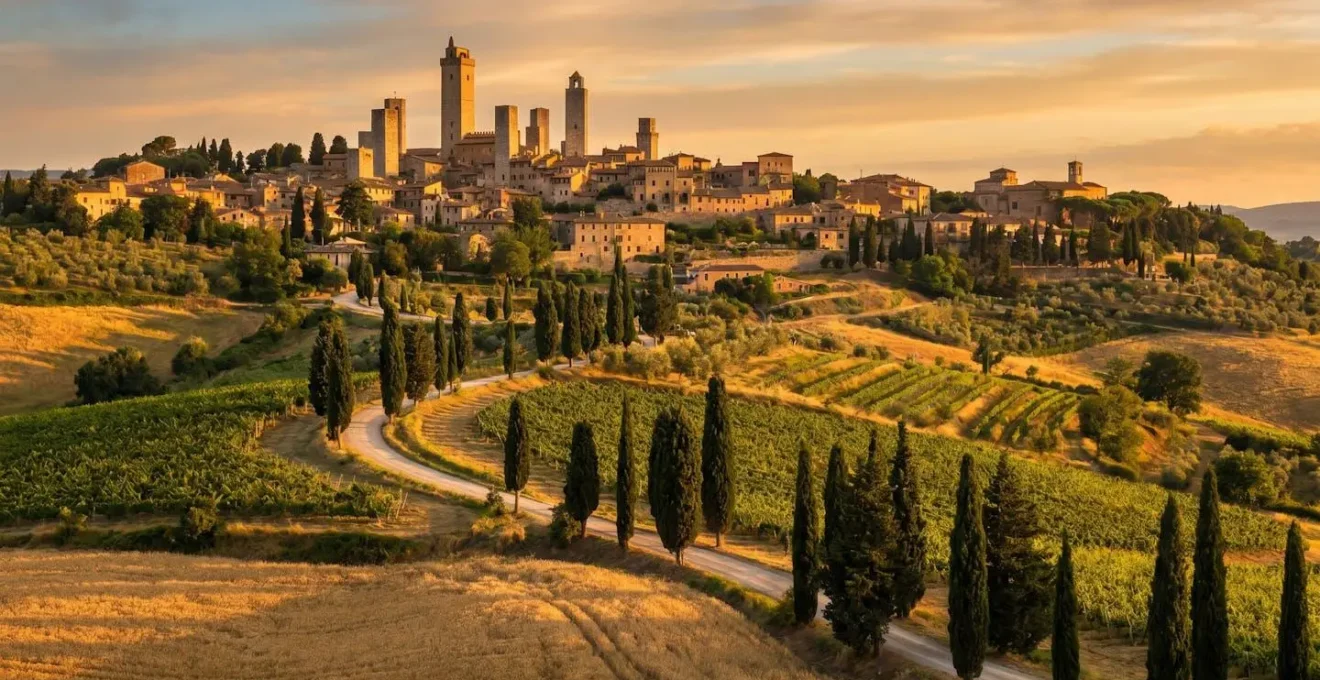
The terracotta route shifts the sensory palette. San Gimignano announces itself from kilometres away—fourteen stone towers punching skyward, remnants of seventy-two that once signalled rival family wealth. Arrive mid-morning, climb Torre Grossa for panoramic views, then descend into shadowed alleys where Vernaccia cellars offer tastings. The town empties by 4pm when day-trippers retreat; linger through golden hour when swallows circle the towers and the only sounds are church bells and distant tractors.
Siena demands overnight commitment. Piazza del Campo is a tilted scallop shell of brick where twice yearly the Palio horse race detonates contrada rivalries into ninety seconds of chaos. Outside Palio dates (July 2, August 16), the piazza functions as Siena’s living room: families sprawl on sloped brickwork, children kick footballs. The cathedral’s striped marble interior creates optical vertigo. Allocate a full day; Siena rewards slow circling through contrada neighborhoods, each marked by fountain sculptures and heraldic flags.
Days 6-7: Flexible finale and Florence farewell
Your penultimate day holds no firm itinerary. Travellers overlook the value of a flexible buffer—one adapting to whether you’re energized or depleted, craving new ground or drawn to unfinished business. Some return to Florence for the Accademia’s David, others detour into Chianti estates, a few claim a Sienese café table and watch swallows. This unstructured time transforms a good trip into one that feels genuinely yours.
Day seven navigates departure logistics. If flying from Florence, build generous buffer—Italian strikes happen, traffic snarls materialize. The temptation to cram one final museum before airport transfer often backfires; instead, claim slow breakfast at Mercato Centrale, collect that final leather journal or olive oil, let the city recede gradually. The underrated advantage: you depart from where you arrived, luggage stored at the same hotel, familiar streets walked with confidence of temporary belonging.
Solving the Tuscan transport puzzle without driving stress
Car rental seduces with freedom fantasies: spontaneous vineyard stops, cypress-lined roads at your pace, boot space for wine. Reality reveals itself when Florence’s ZTL (Zona a Traffico Limitato) cameras photograph your numberplate—€80-120 fines per violation, as the Florence municipal authority confirms. These automated systems operate Monday-Friday 7:30-20:00 and Saturday 7:30-16:00, with additional summer night restrictions. From July 2025, the Scudo verde expands enforcement across 38 square kilometres with 77 cameras operating 24 hours daily.
Parking compounds the friction. Central Florence charges €25-40 daily for legal spaces—when you find them. Siena’s hilltop geography means car parks outside medieval walls, requiring uphill walks with luggage. San Gimignano’s narrow lanes prohibit vehicle access; you’ll circle dusty lots in August heat searching for spots amongst tour coaches.
The stress associated with driving can often outweigh the sense of freedom it initially provides. A comprehensive Tuscany bus tour pass offers a convenient way to explore the region without the constraints of traffic restrictions, parking difficulties or the challenges of navigating narrow roads. Travelers can therefore enjoy a more relaxed experience while discovering Tuscany’s landscapes and cultural highlights with greater peace of mind.
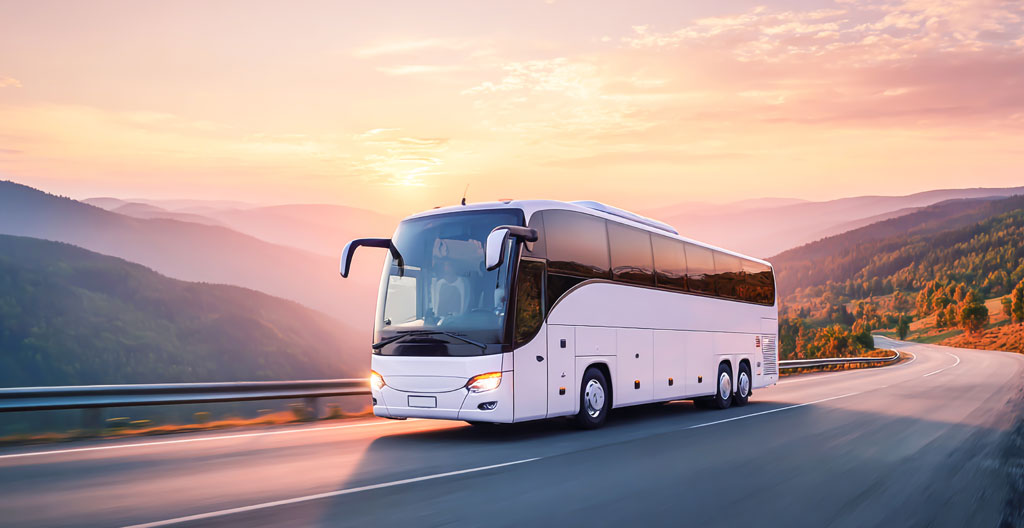
Modern bus networks solve this differently. Multi-day passes connect Florence, Pisa, Siena, Lucca, and San Gimignano through routes preserving spontaneity—hop off when a vineyard view demands contemplation, extend your afternoon without worrying about return timing. Contemporary vehicles deliver functioning air-conditioning, Wi-Fi, and USB-C charging. AI guides through mobile apps offer multilingual route planning in 50+ languages, removing linguistic friction.
The practical comparison reshapes how you allocate both money and mental energy:
| Logistics factor | Multi-day bus pass | Car rental |
|---|---|---|
| Parking hassle | Skip entirely—bus stops at city centres | €25-40/day plus 20-40 min hunting for spaces |
| ZTL violation risk | Zero—buses navigate legally | €80-120 per camera, fines arrive weeks later |
| Navigation stress | Relax, enjoy landscapes through large windows | GPS dependency, narrow medieval road anxiety |
| Flexibility to linger | Hop on/off throughout pass validity period | Fixed rental period with return deadline pressure |
| Onboard comfort | AC, Wi-Fi, USB-C charging, reclining seats | Depends on rental tier and vehicle age |
For travellers extending toward the coast, the train route from Livorno to Florence offers seamless connections to Mediterranean port towns, complementing the inland circuit with coastal exploration.
Beyond the Instagram angles: moments worth slowing down for
The postcards sold you on the Duomo and Leaning Tower. What transforms a competent Tuscan week into one that lingers are unscripted intervals—moments demanding you stop performing tourism and inhabit a place. Piazzale Michelangelo at dawn delivers the payoff: arrive forty minutes before sunrise when the city sleeps, watch early light ignite terracotta rooftops from grey to coral to gold. You’ll share the viewpoint with three photographers and elderly Florentines walking their terrier. The Instagram hordes arrive ninety minutes later.
Siena’s contrada neighborhoods reward aimless wandering. Each of seventeen districts—Oca (Goose), Tartuca (Tortoise), Drago (Dragon)—marks territory with ceramic plaques, fountain sculptures, flag-mounted lamps. Residents belong to their contrada from birth; these aren’t tourist divisions but living tribal identities exploding twice yearly during Palio preparations. Stumble into a contrada museum (most open erratically, staffed by volunteers) and witness hundred-year-old Palio silks, trophy collections, neighbourhood pride bordering on obsession.
Lucca’s Renaissance walls beg for bicycle circumnavigation at sunset—rent from shops near Porta San Pietro for €15/day. The four-kilometre tree-shaded loop positions you above rooftops whilst Apuan Alps serrate the northern horizon. You’re joining daily Lucchese ritual rather than tourist-spotting. San Gimignano’s Torre Grossa opens until 19:30 in summer; climb at 18:45 when day-trippers have departed and watch sunset paint Val d’Elsa countryside in golds and purples. At Mercato Centrale in Florence, skip lunch rush; arrive at 14:30 when vendors offer tastes of tomorrow’s prosciutto or talk you through seventeen Pecorino varieties. These conversations—broken English, generous gestures, curiosity about where you’re from—outlast museum photos.
Questions travelers ask before booking their Tuscan week
Where should I base myself for the entire week?
Florence offers the most logical single base—central position, abundant accommodation, direct connections to all destinations. The trade-off: hauling luggage up palazzo staircases (lifts remain rare) and returning to the same hotel nightly. Splitting between Florence (nights 1-4) and Siena (nights 5-7) delivers deeper local rhythm but requires mid-trip luggage transfer. Bus passes accommodate both strategies.
What’s the realistic all-in budget for this trip?
Tuscany commands premium pricing—ISTAT 2025 data shows €1,060 per-capita tourist spending. Expect €120-180 nightly for mid-range Florence hotels, €15-25 per meal at neighbourhood trattorias, €15-20 for museum entries. Multi-day bus passes undercut car rental when factoring ZTL fines and parking. A comfortable week including accommodation, meals, transport, and attractions lands around €1,400-1,900 per person, excluding flights.
When’s genuinely the best season to visit Tuscany?
May and late September occupy the sweet spot—warm without August’s 35°C furnace, smaller crowds than June-July, longer daylight than October. 250.1 million overnight stays in 2024 confirm Italy’s position as Europe’s second-largest destination. Summer Saturdays in San Gimignano resemble theme parks; shoulder seasons preserve sanity. Winter offers discounts but shorter museum hours and unpredictable rain.
How do I manage luggage when moving between cities?
If maintaining a single Florence base, luggage stays at your hotel during day trips—confirm storage policy when booking. For split-stay strategies, pack a daypack for overnight Siena trips whilst leaving main luggage at Florence accommodation (most hotels store bags free for returning guests). Alternatively, use left-luggage at Santa Maria Novella station (€6 for 5 hours, €12 for 12 hours). Wheeled suitcases suffer on cobblestones; soft duffels or backpacks navigate medieval streets better.
Is basic Italian language ability necessary?
Florence and Siena’s tourist economies run on English—museums, hotels, restaurants employ multilingual staff. Lucca and San Gimignano show thinner coverage, particularly in neighbourhood cafés. Learning ten phrases (greetings, numbers, « where is, » « how much ») unlocks disproportionate warmth. Modern bus systems deploy multilingual AI guides through mobile apps, removing linguistic barriers from route planning and navigation.
Can I realistically extend this itinerary to coastal Tuscany?
Absolutely, though it requires strategic choices. Adding Livorno or Viareggio demands extending to 9-10 days or sacrificing one inland city (typically Lucca or San Gimignano). Coastal extensions shift the trip from art-historical intensity to Mediterranean leisure—decide which you’re craving. Transport connections exist but lengthen journey times; Livorno sits 90 minutes from Florence via regional train. If genuinely drawn to both hill towns and coastline, consider saving coastal Tuscany for a dedicated future trip rather than cramming incompatible rhythms into one week.