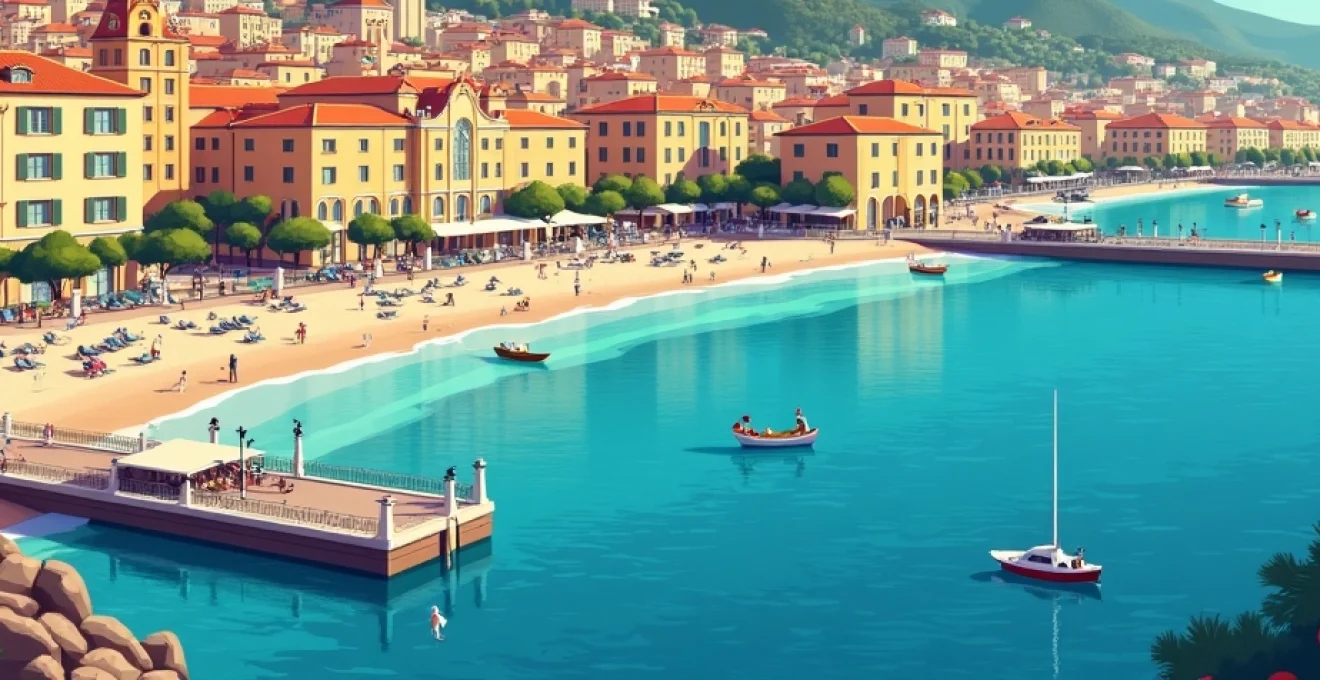
Nestled along the azure coastline of the Mediterranean Sea, Nice stands as the undisputed jewel of the French Riviera, captivating millions of visitors annually with its extraordinary blend of natural beauty, cultural richness, and historical significance. This cosmopolitan city, with its population of approximately 350,000 residents, serves as the gateway to the glamorous Côte d’Azur region, offering an unparalleled combination of Belle Époque elegance, vibrant Mediterranean lifestyle, and world-class attractions. From its stunning Promenade des Anglais stretching along the Baie des Anges to its labyrinthine Old Town filled with baroque churches and bustling markets, Nice presents an irresistible destination that seamlessly marries French sophistication with Italian warmth and charm.
Architectural heritage and UNESCO world heritage recognition in nice
Nice’s architectural landscape represents one of Europe’s most remarkable collections of diverse building styles, spanning from medieval structures to modernist marvels. The city’s architectural significance has been increasingly recognised by international preservation organisations, with several districts under consideration for UNESCO World Heritage status due to their exceptional universal value and authentic representation of Mediterranean urban development patterns.
Belle époque villa architecture along the promenade des anglais
The Promenade des Anglais showcases an extraordinary collection of Belle Époque villas and palaces that epitomise the grandeur of late 19th and early 20th-century architecture. These magnificent structures, including the iconic Hotel Negresco with its distinctive pink dome and neo-classical façade, demonstrate the sophisticated architectural tastes of the European aristocracy who transformed Nice into a premier winter destination. The architectural ensemble features elaborate wrought-iron balconies, ornate stucco decorations, and carefully proportioned façades that create a harmonious streetscape of unparalleled elegance.
The preservation of these architectural treasures requires constant attention to detail, with local authorities implementing strict conservation guidelines to maintain the authentic character of the district. Many of these buildings have been meticulously restored to their original splendour, incorporating modern amenities whilst preserving their historical integrity. The architectural coherence of the Promenade des Anglais creates a unique urban landscape that serves as a living museum of Belle Époque design principles.
Baroque churches and religious monument preservation
Nice’s religious architecture reflects the city’s complex historical identity, with numerous baroque churches showcasing the influence of Italian architectural traditions. The Cathedral of Sainte-Réparate, located in the heart of Vieux Nice, exemplifies the baroque style with its elaborate interior decorations, marble altarpieces, and ornate ceiling frescoes. These sacred structures represent important examples of Counter-Reformation architecture, designed to inspire awe and devotion through their dramatic visual impact.
The preservation efforts for these religious monuments involve collaboration between local authorities, heritage organisations, and religious communities to ensure proper maintenance of both structural elements and decorative details. Many churches undergo regular restoration programmes to address the effects of Mediterranean climate on stone, frescoes, and wooden elements, ensuring these architectural treasures remain accessible to future generations.
Art deco building conservation in the libération district
The Libération district showcases Nice’s embrace of modernist architectural movements, particularly Art Deco design from the 1920s and 1930s. This neighbourhood features streamlined façades, geometric decorative elements, and innovative use of reinforced concrete that reflects the optimistic spirit of the interwar period. The buildings demonstrate how Nice successfully adapted international architectural trends to local Mediterranean conditions, creating a distinctive regional variant of Art Deco style.
Conservation efforts in this district focus on preserving the characteristic features of Art Deco architecture whilst adapting buildings for contemporary use. Many structures have been carefully renovated to meet modern safety and accessibility standards while maintaining their architectural integrity, demonstrating successful approaches to heritage preservation in urban environments.
Medieval old town (vieux nice) urban planning legacy
Vieux Nice represents one of Europe’s most authentic medieval urban centres, with its narrow winding streets, ancient stone buildings, and compact urban fabric largely unchanged since the Middle Ages. The district’s urban planning reflects typical Mediterranean town development patterns, with buildings constructed directly against each other to maximise shade and create cooling microclimates during hot summer months.
The preservation of this medieval urban landscape involves careful balance between maintaining historical authenticity and accommodating modern urban functions. Urban planners work closely with heritage specialists to ensure that any modifications respect the district’s historical character whilst improving living conditions for residents and accessibility for visitors.
Mediterranean climate patterns and optimal tourism seasons
Nice benefits from one of Europe’s most favourable climates, characterised by mild winters, warm summers, and abundant sunshine throughout the year. The city experiences a Mediterranean climate with continental influences, resulting in approximately 300 sunny days annually and average temperatures that rarely fall below freezing. This exceptional climate contributes significantly to Nice’s appeal as a year-round destination, though different seasons offer distinct advantages for various types of activities and experiences.
Microclimate analysis of the baie des anges coastal zone
The Baie des Anges creates a unique microclimate that moderates temperature extremes and provides particularly pleasant conditions along the coastal areas. The bay’s configuration, with its east-west orientation and protection from northern winds by surrounding hills, creates thermal stability that makes waterfront areas consistently comfortable. Sea breezes provide natural air conditioning during summer months, whilst the thermal mass of the Mediterranean Sea helps maintain warmer temperatures during winter evenings.
This microclimate phenomenon explains why the Promenade des Anglais remains popular for outdoor activities throughout the year, with joggers, cyclists, and pedestrians enjoying comfortable conditions even during winter months. The temperature differential between coastal and inland areas can reach 5-7 degrees Celsius, making waterfront locations particularly attractive during hot summer days.
Alpine maritime influence on nice’s weather systems
The proximity of the Alps Maritimes mountain range creates distinctive weather patterns that influence Nice’s climate throughout the year. These mountains provide natural protection from cold northern winds whilst creating orographic effects that influence precipitation patterns and temperature variations. The föhn effect, caused by air masses crossing the mountains, occasionally brings exceptionally clear, warm conditions that enhance visibility and create spectacular atmospheric conditions for photography and outdoor activities.
Mountain influences also contribute to the clarity of Nice’s atmosphere, with low pollution levels and exceptional visibility that allows clear views of the coastline, surrounding hills, and distant mountain peaks. This atmospheric clarity enhances the visual appeal of the city’s natural setting and contributes to the quality of light that has attracted artists for generations.
Seasonal tourism flow management and crowd distribution
Understanding Nice’s seasonal tourism patterns enables visitors to optimise their experience by choosing appropriate timing for different activities and attractions. Peak season extends from June through August, with maximum crowds, highest temperatures, and premium pricing for accommodation and services. However, this period also offers the warmest sea temperatures for swimming and the most vibrant atmosphere in outdoor venues and beach establishments.
The shoulder seasons of April-May and September-October provide ideal conditions for cultural activities, hiking, and sightseeing, with pleasant temperatures, fewer crowds, and reduced accommodation costs. Winter months offer unique advantages for museum visits, indoor cultural activities, and enjoying the mild Mediterranean winter climate that remains comfortable for outdoor dining and leisurely walks along the promenade.
The optimal timing for visiting Nice depends largely on personal preferences and planned activities, with each season offering distinct advantages and atmospheric qualities that enhance different aspects of the city’s appeal.
Strategic geographical position as french riviera gateway
Nice occupies an exceptionally strategic position that makes it the natural gateway to the French Riviera and the broader Mediterranean region. Located approximately 30 kilometres from the Italian border and 200 kilometres from Marseille, Nice serves as the transportation hub for the Côte d’Azur, with excellent connections to major European cities and convenient access to other Riviera destinations. The city’s position between the Mediterranean Sea and the Maritime Alps creates unique geographical advantages that enhance its appeal as both a destination and a base for exploring the region.
The geographical configuration places Nice within easy reach of diverse landscapes and experiences, from the glamorous resorts of Cannes and Monaco to the mountain villages of the Mercantour National Park. This accessibility enables visitors to experience dramatic contrasts within short distances, moving from seaside relaxation to alpine hiking, from cosmopolitan city life to traditional Provençal villages, all whilst maintaining Nice as a convenient base with superior accommodation and dining options.
Nice Côte d’Azur Airport, France’s second-busiest airport, reinforces the city’s role as a regional gateway with direct connections to over 100 destinations worldwide. The airport’s proximity to the city centre, just 7 kilometres from downtown, provides exceptional convenience that enhances Nice’s attractiveness compared to other Mediterranean destinations. Rail connections link Nice efficiently to Paris, with high-speed TGV services covering the distance in approximately 5.5 hours, whilst regional trains provide scenic coastal connections to Monaco, Cannes, and other Riviera towns.
The geographical position also provides access to diverse cultural influences, with Italian culinary traditions, Provençal lifestyle, and international cosmopolitan elements creating a unique cultural synthesis. This multicultural character, rooted in geographical location and historical connections, contributes to Nice’s distinctive identity that distinguishes it from other French cities whilst maintaining its authentically French character.
World-class museum collections and cultural institution density
Nice’s cultural landscape features an remarkable concentration of world-class museums and cultural institutions that rival those of much larger cities. The city hosts over 30 museums and galleries, creating one of Europe’s highest ratios of cultural institutions per capita. This extraordinary cultural density reflects Nice’s historical role as an artistic centre and its continued commitment to supporting contemporary cultural development through innovative programming and international collaborations.
Musée matisse permanent collection and Post-Impressionist holdings
The Musée Matisse houses the world’s most comprehensive collection of Henri Matisse’s works, spanning the artist’s entire career from early academic paintings to revolutionary cut-out compositions. Located in a 17th-century Genoese villa surrounded by olive groves, the museum provides intimate access to Matisse’s artistic evolution and personal belongings, including furniture, books, and personal effects that illuminate his creative process. The collection includes 68 paintings, 236 drawings, 218 engravings, 95 sculptures, and 14 illustrated books, offering unparalleled insight into one of modern art’s most influential figures.
The museum’s presentation emphasises the relationship between Matisse’s work and the Mediterranean light and landscape that inspired his later career. Special exhibitions regularly explore connections between Matisse and other artists, whilst educational programmes provide detailed analysis of artistic techniques and historical context that enhance visitor understanding and appreciation.
Marc chagall biblical message museum ecclesiastical art
The Musée National Marc Chagall presents the artist’s monumental Biblical Message cycle, comprising 17 large-scale paintings that represent Chagall’s most ambitious and spiritually significant work. Purpose-built to house this extraordinary collection, the museum creates an immersive environment that enhances the contemplative and spiritual dimensions of Chagall’s artistic vision. The paintings, depicting scenes from Genesis, Exodus, and the Song of Songs, demonstrate Chagall’s unique synthesis of Jewish mysticism, Russian folklore, and modernist artistic techniques.
The museum’s architecture and garden design complement the artwork, with natural light carefully controlled to optimise viewing conditions whilst protecting the paintings from damage. The collection also includes preparatory sketches, lithographs, and stained glass windows that provide comprehensive insight into Chagall’s artistic process and spiritual philosophy.
Musée d’art moderne et d’art contemporain contemporary installation spaces
MAMAC (Musée d’Art Moderne et d’Art Contemporain) showcases exceptional collections of European and American art from the 1960s onwards, with particular strength in Nouveau Réalisme, Pop Art, and Minimal Art movements. The museum’s distinctive architecture, featuring four towers connected by glass walkways, creates dramatic exhibition spaces that accommodate large-scale installations and multimedia works. The collection includes significant works by Yves Klein, César, Arman, Niki de Saint Phalle, and Andy Warhol, amongst others.
The museum’s programming emphasises contemporary artistic practices and regularly features temporary exhibitions that explore current developments in international art. The rooftop terraces provide spectacular views of Nice whilst creating additional exhibition space for outdoor installations and sculptures that interact with the urban landscape.
Villa masséna regional history and napoleon III period exhibits
The Villa Masséna serves as Nice’s museum of local history, housed in a magnificent Belle Époque palace that exemplifies the grandeur of 19th-century Riviera architecture. The museum’s collections illuminate Nice’s transformation from a small fishing village to an international resort destination, with particular focus on the Second Empire period when Napoleon III’s patronage established the Riviera’s reputation amongst European nobility. Exhibits include period furniture, paintings, photographs, and documents that chronicle the social, economic, and cultural changes that shaped modern Nice.
The villa’s gardens provide additional exhibition space whilst demonstrating typical Riviera landscape design principles. The museum regularly organises themed exhibitions that explore specific aspects of local history, from the development of tourism infrastructure to the artistic communities that flourished in the region during the early 20th century.
Gastronomic excellence and provençal culinary authenticity
Nice’s culinary scene represents one of the Mediterranean’s most authentic and diverse gastronomic landscapes, combining traditional Niçois specialities with influences from Provence, Italy, and international cuisine. The city’s gastronomic identity has been shaped by its unique geographical position and multicultural history, creating distinctive flavours and preparations that cannot be experienced elsewhere. From street food vendors serving socca and pissaladière to Michelin-starred establishments pushing culinary boundaries, Nice offers exceptional dining experiences that satisfy every palate and budget.
Cours saleya market mediterranean produce sourcing
The Cours Saleya market represents the heart of Nice’s culinary culture, operating since the 18th century as the city’s primary source for fresh produce, flowers, and local specialities. The market showcases the exceptional quality of Mediterranean agriculture, with vendors offering seasonal fruits and vegetables, herbs, olives, and artisanal products sourced from local producers throughout the region. The market’s flower stalls create spectacular displays of colour and fragrance, whilst food vendors provide immediate access to traditional Niçois preparations.
Professional chefs and home cooks alike rely on Cours Saleya for ingredients that define authentic Provençal cuisine, from sun-ripened tomatoes and courgette flowers to locally produced olive oil and herbs de Provence. The market also serves as a cultural institution where traditional knowledge about food preparation, seasonal eating, and local culinary customs passes between generations through informal interactions and demonstrations.
Traditional niçoise speciality dish preparation techniques
Niçois cuisine features distinctive specialities that reflect the region’s unique cultural heritage and agricultural abundance. Signature dishes include salade niçoise, prepared according to strict traditional specifications with specific ingredients and proportions; socca, a chickpea flour pancake cooked in wood-fired ovens; and ratatouille, a vegetable stew that celebrates summer produce through careful layering and slow cooking techniques. Each dish represents generations of culinary refinement and adaptation to local ingredients and climate conditions.
Traditional preparation techniques emphasise simplicity and quality of ingredients rather than complex cooking methods. Local cooks maintain authentic recipes whilst adapting to seasonal availability and modern dietary preferences, ensuring that traditional flavours remain accessible to contemporary diners whilst preserving cultural authenticity.
Michelin-starred restaurant concentration in old town
Nice’s restaurant scene includes several Michelin-starred establishments that demonstrate exceptional culinary innovation whilst maintaining connections to regional traditions. These restaurants showcase the creativity of contemporary chefs who reinterpret classic Provençal and Mediterranean flavours through modern techniques and presentation styles. The concentration of high-quality restaurants in the Old Town creates a culinary destination that attracts food enthusiasts from around the world.
Many starred restaurants emphasise locally sourced ingredients and seasonal menus that highlight the exceptional quality of regional produce. Chefs collaborate with local farmers, fishermen, and artisanal producers to create menus that celebrate terroir whilst pushing creative boundaries through innovative combinations and techniques.
Local wine appellation and bellet vineyard terroir
The Bellet wine appellation, located in the hills surrounding Nice, produces distinctive wines that perfectly complement local cuisine whilst showcasing unique terroir characteristics. Despite its small size, covering only 50 hectares, Bellet produces wines from indigenous grape varieties including Braquet, Folle Noire, and Rolle that create flavours unavailable elsewhere. The vineyard’s Mediterranean climate, limestone soils, and elevation create optimal conditions for producing elegant wines with pronounced mineral character.
The local wine production emphasises quality over quantity, with small family-owned wineries maintaining traditional viticulture practices adapted to Mediterranean conditions. Wine tastings in Bellet vineyards provide intimate experiences that combine spectacular views of Nice and the coastline with education about local wine-making traditions and terroir characteristics that make these wines truly distinctive.
Transport infrastructure and accessibility networks
Nice’s exceptional transport infrastructure positions the city as one of Europe’s most accessible destinations, with comprehensive networks that connect the city internally whilst providing seamless access to regional, national, and international destinations. The integration of multiple transport modes creates unprecedented convenience for visitors, enabling efficient movement between attractions whilst maintaining connections to broader European transport systems. This infrastructure excellence contributes significantly to Nice’s appeal as both a destination and a regional hub for exploring the Mediterranean coastline.
The Nice Côte d’Azur Airport serves as France’s second-busiest aviation hub, handling over 14 million passengers annually with direct connections to more than 100 destinations across Europe, North Africa, and beyond. The airport’s strategic location, just seven kilometres from the city centre, provides exceptional convenience that few major cities can match. Modern terminal facilities, efficient ground transport connections, and comprehensive airline partnerships ensure that Nice remains accessible from virtually any global origin point whilst maintaining the highest service standards.
The integrated public transport system includes tramway lines, comprehensive bus networks, and regional rail connections that create seamless mobility throughout the metropolitan area. The modern tramway system operates three lines that connect major districts, attractions, and transport hubs with frequent services and comfortable, environmentally-friendly vehicles. Visitors can access virtually any destination within Nice using public transport, whilst regional connections enable day trips to Monaco, Cannes, Antibes, and mountain villages without requiring private vehicles.
Rail infrastructure provides exceptional connectivity through multiple service levels, from local coastal trains that offer scenic journeys along the Mediterranean shoreline to high-speed TGV services that connect Nice to Paris in under six hours. The coastal railway line represents one of Europe’s most spectacular train journeys, winding along clifftops and through coastal towns whilst providing continuous views of the Mediterranean Sea. Regional buses extend transport networks to mountain villages, hiking destinations, and locations not served by rail, ensuring comprehensive accessibility throughout the Alpes-Maritimes region.
For visitors preferring private transport, Nice offers excellent road infrastructure with well-maintained highways connecting to major European destinations and comprehensive parking facilities throughout the city centre. The A8 autoroute provides efficient connections to Italy, Provence, and northern France, whilst scenic coastal routes enable leisurely exploration of the Riviera’s most beautiful stretches. Car rental services at the airport and throughout the city provide flexibility for independent exploration, though the quality of public transport often makes private vehicles unnecessary for most visitor activities.
Pedestrian and cycling infrastructure throughout Nice demonstrates the city’s commitment to sustainable tourism and quality of life for residents and visitors alike. The Promenade des Anglais features dedicated cycling lanes that extend for the full seven-kilometre length, whilst the city centre includes comprehensive pedestrian zones that prioritise comfort and safety for those exploring on foot. Bike-sharing systems provide convenient access to environmentally-friendly transport options that enhance the experience of discovering Nice’s diverse neighbourhoods whilst contributing to reduced traffic congestion and improved air quality.
The convergence of world-class transport infrastructure, exceptional cultural institutions, outstanding culinary traditions, and magnificent architecture creates a destination experience that justifies Nice’s reputation as one of Europe’s premier urban destinations, offering sophistication and authenticity in equal measure.