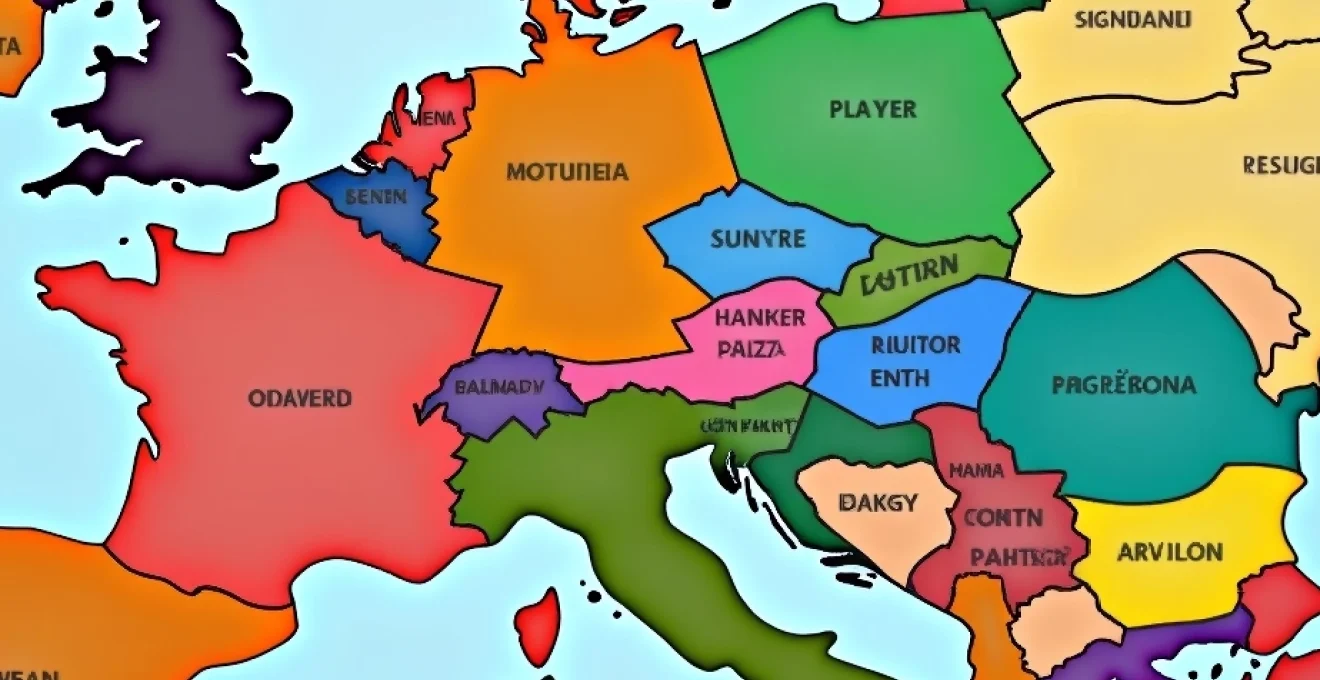
Vienna stands as one of Europe’s most strategically positioned capitals, serving as a cultural and economic bridge between Western and Eastern Europe for over a millennium. The Austrian capital’s unique location has shaped its destiny from Roman settlement to Habsburg imperial seat, and today positions it as a vital hub within the European Union’s framework. Understanding Vienna’s precise geographical coordinates, regional influences, and continental connections reveals why this city has maintained its significance throughout European history and continues to thrive as a modern metropolitan centre.
The city’s position within the Pannonian Basin, along the mighty Danube River, creates a natural convergence point for trade routes, cultural exchanges, and political activities that extend far beyond Austria’s borders. This strategic placement has attracted international organisations, multinational corporations, and diplomatic missions, making Vienna one of Europe’s most important administrative and cultural centres.
Vienna’s central european geographical coordinates and regional classification
Precise latitude and longitude position within the pannonian basin
Vienna occupies a precise position at approximately 48°12’N latitude and 16°22’E longitude, placing it firmly within Central Europe’s geographical heartland. These coordinates position the city in the northeastern corner of Austria, where the Alps gradually give way to the expansive Pannonian Basin. This basin, shared with Hungary and Slovakia, creates a natural depression that has influenced settlement patterns and economic activities for millennia.
The Pannonian Basin’s geological characteristics provide Vienna with relatively flat terrain compared to Austria’s predominantly mountainous landscape. This topographical advantage has enabled the city to expand efficiently whilst maintaining excellent transport connections to neighbouring regions. The basin’s fertile soils and moderate elevation of approximately 156-542 metres above sea level create ideal conditions for both urban development and agricultural activities, including Vienna’s famous vineyards that still operate within the city limits.
Administrative location within lower austria’s eastern border region
Vienna holds a unique administrative status as both Austria’s capital city and one of the country’s nine federal states (Bundesländer). This dual classification means Vienna operates independently from the surrounding Lower Austria state, despite being geographically enclosed by it. The city-state covers approximately 414.87 square kilometres, making it Austria’s smallest federal state by area but largest by population density.
This administrative independence allows Vienna to implement policies and urban planning strategies that reflect its metropolitan character rather than rural Lower Austria’s priorities. The arrangement has proven particularly beneficial for managing the complex logistics of hosting international organisations and maintaining the infrastructure necessary for a major European capital.
Vienna’s position relative to the danube river corridor
The Danube River forms Vienna’s most significant geographical feature, flowing through the city from northwest to southeast. As Europe’s second-longest river, the Danube connects Vienna to a vast network of cities and regions extending from Germany’s Black Forest to Romania’s Black Sea coast. The river divides Vienna into distinct zones, with the historic city centre and most major attractions located on the southern bank.
Vienna’s relationship with the Danube has evolved significantly over centuries. Modern flood control measures and the construction of the Danube Island (Donauinsel) have transformed the river from a sometimes destructive force into a recreational and transport asset. The Danube waterway continues to serve as a vital commercial artery, connecting Vienna to the Rhine-Main-Danube canal system and facilitating trade with over a dozen European countries.
Classification within the central european time zone framework
Vienna operates within the Central European Time (CET) zone, UTC+1, shifting to Central European Summer Time (CEST), UTC+2, during daylight saving periods. This time zone classification places Vienna in synchronisation with most of continental Europe, including neighbouring capitals like Berlin, Prague, and Budapest. The temporal alignment facilitates business relationships, cultural exchanges, and transport coordination across the region.
The CET classification reflects Vienna’s central position within European commercial and administrative networks. Major European cities share this time zone, creating natural working hour overlaps that support Vienna’s role as a regional headquarters location for multinational organisations and diplomatic missions.
Vienna’s strategic position along historical european trade routes
Habsburg empire’s gateway between western and eastern europe
Vienna’s strategic importance reached its zenith during the Habsburg Empire, when the city served as the administrative centre for territories stretching from Belgium to Ukraine. The Habsburgs recognised Vienna’s geographical advantages and developed it as a political and cultural nexus that could effectively govern diverse populations across vast distances. This imperial legacy created architectural masterpieces and institutional frameworks that continue to define Vienna’s character today.
The Habsburg period established Vienna as a diplomatic centre, a role that persists in the modern era through numerous international organisations headquartered in the city. The United Nations Office at Vienna, the Organisation for Security and Cooperation in Europe, and the International Atomic Energy Agency represent contemporary manifestations of Vienna’s traditional role as a meeting place for different cultures and political systems.
Historical trade privileges and commercial networks established during Habsburg rule created economic foundations that enabled Vienna to maintain prosperity even after the empire’s dissolution in 1918. These mercantile traditions evolved into modern financial services and international commerce that continue to drive the city’s economy.
Danube waterway connection to the black sea trade network
The Danube River system connects Vienna to one of Europe’s most extensive inland waterway networks, providing access to markets and resources from the North Sea to the Black Sea. This 2,850-kilometre river system passes through ten countries, making it a vital commercial artery for Central and Eastern European trade. Vienna’s position along this waterway has historically provided access to grain from Hungary, timber from the Carpathians, and manufactured goods from Germany.
Modern container shipping and river cruise industries continue to utilise Vienna’s Danube connections, though the river’s commercial importance has evolved. Today’s Danube trade focuses on bulk commodities like coal, petroleum products, and agricultural materials, whilst passenger services emphasise tourism and cultural exchange. The completion of the Rhine-Main-Danube canal in 1992 enhanced Vienna’s connectivity to Western European markets and the North Sea ports.
Alpine passes accessibility through brenner and semmering routes
Vienna’s position provides excellent access to crucial Alpine passes that connect Northern and Southern Europe. The Semmering Pass, located approximately 100 kilometres southwest of Vienna, represents one of Europe’s most important mountain crossings, linking Austria with Slovenia and providing access to Mediterranean markets. The historic Semmering Railway, a UNESCO World Heritage site, demonstrates the engineering achievements necessary to maintain these vital connections.
The Brenner Pass route, whilst more distant, connects Vienna to Italy through Innsbruck and remains one of Europe’s most heavily trafficked Alpine crossings. Modern motorway and railway infrastructure maintains these traditional connections, enabling Vienna to serve as a distribution hub for goods moving between Northern European markets and Mediterranean destinations.
Modern Trans-European transport network integration
Vienna occupies a central position within the Trans-European Transport Network (TEN-T), which aims to integrate transport infrastructure across European Union member states. The city serves as a key node for several TEN-T corridors, including the Rhine-Danube Corridor that connects Strasbourg to Constanța, and the Baltic-Adriatic Corridor linking Gdansk to Ravenna through Vienna.
These modern transport corridors build upon historical trade routes whilst incorporating contemporary infrastructure standards and environmental considerations. High-speed rail connections, expanded airport facilities, and improved motorway networks ensure that Vienna maintains its traditional role as a European crossroads whilst meeting 21st-century mobility requirements.
Neighbouring countries and Cross-Border metropolitan influences
Slovakia border proximity and bratislava economic corridor
Vienna’s proximity to Slovakia creates unique opportunities for cross-border economic cooperation and cultural exchange. The Slovak capital, Bratislava, lies just 65 kilometres from Vienna, making these the closest capital cities in the European Union. This proximity has fostered the development of an integrated metropolitan region that transcends national boundaries and creates synergies in labour markets, tourism, and business development.
The Vienna-Bratislava corridor benefits from complementary economic structures, with Vienna providing financial services, international organisations, and high-end tourism, whilst Bratislava offers manufacturing capabilities and competitive labour costs. Regular transport connections, including high-speed catamaran services along the Danube, facilitate daily commuting and business relationships between the two cities.
Joint initiatives in research and development, particularly in technology sectors, demonstrate how geographical proximity can create competitive advantages in global markets. The region’s combined population of approximately 3 million people creates a substantial consumer market and labour pool that attracts international investment.
Hungarian plains access through burgenland region
Vienna’s eastern approaches provide direct access to the Hungarian Plains through Austria’s Burgenland region and the historic border crossings at Hegyeshalom and Nickelsdorf. This connection has facilitated centuries of cultural and economic exchange between Vienna and Hungarian territories, relationships that intensified during the Austro-Hungarian Empire and continue today within the European Union framework.
The Hungarian Plains represent one of Europe’s most productive agricultural regions, and Vienna has historically served as a processing and distribution centre for Hungarian agricultural products. Modern agribusiness relationships maintain these connections, with Vienna-based companies operating throughout Hungarian markets and Hungarian producers utilising Vienna’s logistics infrastructure for European distribution.
Cross-border labour mobility between Austria and Hungary has increased significantly since Hungary’s EU accession in 2004, with many Hungarians working in Vienna’s service sectors whilst maintaining residences in more affordable Hungarian communities. This demographic integration reflects the practical benefits of Vienna’s geographical position.
Czech republic cultural exchange via moravian border
Vienna’s northern approaches connect to the Czech Republic through Lower Austria’s Weinviertel region, providing access to South Moravia and the Czech capital, Prague. Historical connections between Vienna and Bohemian territories date back centuries, with Czech cultural influences evident in Vienna’s architecture, music, and culinary traditions. The approximately 300-kilometre distance between Vienna and Prague enables regular cultural and business exchanges.
Modern transport infrastructure, including motorway and rail connections, maintains strong links between Vienna and Czech territories. Many Czech citizens work in Vienna’s tourism, construction, and healthcare sectors, whilst Austrian companies have established significant operations in Czech markets. This bilateral relationship demonstrates how geographical proximity can evolve into comprehensive economic partnerships.
Cultural institutions in both cities regularly collaborate on exhibitions, performances, and educational programmes that celebrate shared Central European heritage whilst fostering contemporary artistic innovation. These relationships reflect Vienna’s role as a cultural bridge between different European traditions and languages.
Slovenia alpine connection through styrian gateway
Vienna’s southern connections extend through Austria’s Styria region to Slovenia and the Ljubljana basin, providing access to Alpine territories and Adriatic markets. The approximately 380-kilometre route between Vienna and Ljubljana passes through some of Europe’s most scenic mountain landscapes whilst maintaining excellent transport infrastructure for both commercial and tourist traffic.
Slovenian connections provide Vienna with access to Mediterranean influences and Adriatic ports, particularly through Slovenia’s small but strategically important coastline. These connections have facilitated trade relationships and cultural exchanges that enriched Vienna’s cosmopolitan character throughout history.
Contemporary cooperation focuses on environmental protection, particularly in Alpine regions, and sustainable tourism development. Joint initiatives in renewable energy, mountain agriculture, and eco-tourism demonstrate how geographical connections can support environmental objectives whilst maintaining economic benefits.
Vienna within the european union’s regional development framework
Vienna occupies a prominent position within European Union regional development strategies, particularly those focused on Central and Eastern European integration. The city serves as headquarters for numerous EU agencies and programmes designed to facilitate economic convergence and political cooperation across the former East-West divide. Vienna’s geographical position makes it an ideal location for managing programmes that span multiple member states and candidate countries.
The European Union’s INTERREG programmes utilise Vienna as a coordination centre for cross-border cooperation initiatives involving Austria, Slovakia, Hungary, and the Czech Republic. These programmes support infrastructure development, environmental protection, and cultural preservation projects that strengthen regional integration whilst respecting national identities. Vienna’s administrative capacity and international experience make it particularly effective in managing these complex, multinational initiatives.
Within the EU’s Cohesion Policy framework, Vienna contributes to reducing regional disparities by serving as a knowledge transfer hub and investment coordination centre. The city’s universities, research institutes, and financial institutions provide technical assistance and expertise to less developed regions throughout Central and Eastern Europe. This capacity-building role reflects Vienna’s evolution from imperial capital to European integration facilitator.
Vienna’s position within the Danube Strategy, an EU macro-regional strategy covering fourteen countries, demonstrates how geographical advantages can be leveraged for broader policy objectives. The strategy addresses challenges related to transport connectivity, environmental protection, economic development, and governance across the Danube basin, with Vienna serving as a key coordination and implementation centre.
The city’s role in EU enlargement processes reflects its geographical proximity to candidate countries and its historical experience with diverse populations and cultures. Vienna-based institutions provide training, technical assistance, and diplomatic support for countries seeking EU membership, drawing upon centuries of experience in managing multi-ethnic territories and cross-cultural relationships.
Vienna’s unique position as both a bridge and a destination continues to shape its role in European integration, making it indispensable for policies that require deep understanding of Central and Eastern European dynamics.
Climate zone classification and continental european weather patterns
Vienna experiences a transitional climate that reflects its position between oceanic Western Europe and continental Eastern Europe. This climatic classification places the city within the humid continental climate zone, characterised by warm summers, cold winters, and moderate precipitation throughout the year. The climate patterns significantly influence the city’s lifestyle, economic activities, and seasonal tourism patterns.
Annual temperature averages in Vienna range from approximately -1°C in January to 25°C in July, with significant seasonal variations that reflect continental influences. The city receives approximately 600 millimetres of precipitation annually, distributed relatively evenly throughout the year but with slight peaks during summer months. These climatic conditions support diverse vegetation, including deciduous forests, vineyards, and urban parklands that contribute to Vienna’s reputation as one of Europe’s greenest capitals.
The Vienna Woods (Wienerwald) to the west of the city moderate local weather patterns by providing natural windbreaks and humidity regulation. These forested hills, part of the Alpine foothills, create microclimatic conditions that support wine production and recreational activities throughout the year. The interaction between Alpine influences and Pannonian Basin characteristics creates a unique climatic environment that distinguishes Vienna from other Central European cities.
Seasonal weather patterns significantly influence Vienna’s cultural calendar and economic activities. The warm summer months support outdoor festivals, garden tourism, and recreational activities along the Danube, whilst winter conditions create opportunities for Christmas markets, traditional coffeehouses, and indoor cultural events. These seasonal rhythms reflect Vienna’s adaptation to continental European weather patterns over centuries of development.
Climate change impacts on Vienna include rising average temperatures, changing precipitation patterns, and increased frequency of extreme weather events. The city has implemented comprehensive climate adaptation strategies, including urban forestry expansion, sustainable transport promotion, and energy efficiency improvements. These initiatives position Vienna as a leader in urban climate resilience within the Central European context, demonstrating how geographical understanding can inform environmental policy and urban planning decisions.