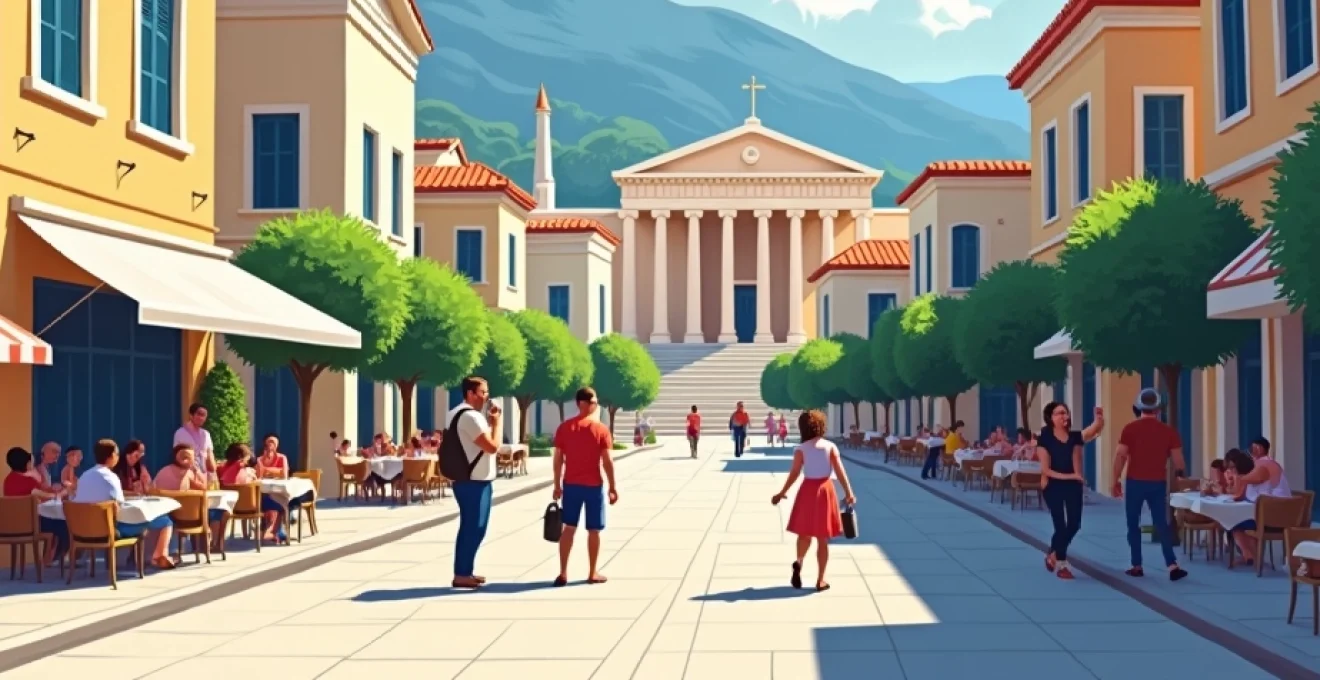
Athens stands as the vibrant capital of Greece, a city where ancient civilisation seamlessly merges with contemporary European culture. This bustling metropolis, home to over 3 million residents in its greater urban area, represents one of the world’s most historically significant destinations, offering visitors an unparalleled journey through time. From the iconic Acropolis perched majestically above the city to trendy neighbourhoods pulsing with modern life, Athens captivates travellers with its unique fusion of millennia-old heritage and dynamic present-day energy. The city’s strategic position in the Mediterranean basin, combined with its rich archaeological treasures and thriving cultural scene, makes it an essential destination for anyone seeking to understand the foundations of Western civilisation whilst experiencing the warmth and hospitality of modern Greek culture.
Athens: ancient capital and modern greek administrative centre
Athens officially became the capital of the modern Greek state in 1834, following the country’s independence from Ottoman rule after four centuries of foreign domination. This pivotal decision marked a symbolic return to the city’s ancient glory as the cradle of Western civilisation, democracy, and philosophy. The choice of Athens as the capital wasn’t merely sentimental; it represented a strategic move to rebuild and modernise the city, transforming it from a small provincial town into a thriving European capital worthy of the newly independent Greek nation.
The 19th century witnessed rapid urban development throughout Athens, characterised by the construction of elegant neoclassical buildings and wide boulevards that still define much of the city centre today. This period of intensive growth laid the foundation for the Athens visitors experience now, where ancient ruins stand in striking contrast to modern architecture. The juxtaposition of old and new becomes particularly evident in the city’s skyline, where the Parthenon’s timeless silhouette shares space with contemporary skyscrapers and modern residential developments.
Geographically, Athens sits in the historical region of Attica, surrounded by four distinctive mountains: Aigaleo, Parnitha, Penteli, and Hymettus. This mountainous setting has significantly influenced the city’s urban development patterns, with sprawl extending into the Attica Basin and along the picturesque Saronic Gulf coastline. The Mediterranean climate of Athens, characterised by hot, dry summers and mild winters, contributes substantially to its appeal as a year-round destination for international visitors.
Demographically, modern Athens presents itself as an increasingly diverse and cosmopolitan city. While the majority of residents remain ethnic Greeks, the capital has become notably multicultural in recent decades, welcoming immigrants from the Balkans, Asia, and Africa. This cultural diversity manifests itself in the city’s vibrant neighbourhoods, each displaying its own distinct character and atmospheric charm, from the traditional allure of Plaka to the alternative artistic scene flourishing in Exarcheia.
Archaeological treasures and UNESCO world heritage sites in athens
Athens’ cultural significance on the global stage remains unparalleled, with its ancient landmarks serving as enduring symbols of Western civilisation’s intellectual and artistic achievements. The city boasts an impressive array of UNESCO World Heritage sites, providing testimony to its pivotal role in shaping human history, philosophical thought, and democratic governance systems that continue influencing societies worldwide.
Acropolis of athens and the parthenon temple complex
The Acropolis stands as Athens’ most iconic landmark, representing a monumental testament to the city’s golden age during the 5th century BCE. Perched majestically atop a rocky outcrop 150 metres above sea level, this ancient citadel houses several architecturally significant structures, each bearing its own fascinating historical narrative. The Parthenon , dedicated to the goddess Athena, serves as the crowning jewel of the entire complex, embodying the absolute pinnacle of classical Greek architectural achievement and Doric order perfection.
Adjacent to the Parthenon stands the remarkable Erechtheion , a temple renowned for its distinctive porch supported by six caryatids – intricately sculpted female figures serving as architectural columns. These graceful statues represent some of the finest examples of classical Greek sculpture, combining structural functionality with extraordinary artistic beauty. The smaller yet equally significant Temple of Athena Nike marks the entrance to the Acropolis complex, celebrating Athenian military victories and the goddess’s protective powers over the city-state.
Ancient agora archaeological site and museum of the ancient agora
The Ancient Agora, once the beating heart of Athenian public life, provides visitors with a fascinating window into the daily routines and social interactions of ancient citizens. This expansive archaeological site served multiple functions throughout antiquity, operating simultaneously as a marketplace, political centre, and social gathering place where Athenian democracy took shape through public discourse and civic participation.
The reconstructed Stoa of Attalos , a magnificent colonnaded walkway originally built in the 2nd century BCE, now houses the comprehensive Agora Museum, showcasing thousands of artefacts discovered during extensive excavations. The exceptionally well-preserved Temple of Hephaestus dominates the western edge of the Agora, offering visitors one of the finest examples of Doric architecture remaining in Greece, with its columns and pediments still largely intact after more than two millennia.
Temple of olympian zeus and Roman-Era monuments
The colossal Temple of Olympian Zeus, known locally as the Olympieion, represents one of ancient Greece’s most ambitious architectural projects, requiring over 700 years to complete from its initial conception to final construction under Roman Emperor Hadrian in 131 CE. This massive temple complex originally featured 104 Corinthian columns, each standing 17 metres high, though only 15 remain standing today as silent witnesses to ancient architectural ambition.
The surrounding archaeological area includes numerous Roman-era monuments that demonstrate Athens’ continued importance during the imperial period. Hadrian’s Arch, constructed in 131 CE, marked the boundary between the ancient Greek city and the new Roman quarter, symbolising the cultural continuity between these two great civilisations whilst acknowledging their distinct contributions to urban development.
Kerameikos cemetery and ancient athenian burial practices
The Kerameikos archaeological site offers unique insights into ancient Athenian burial customs and artistic traditions through its extensive ancient cemetery and pottery workshops. This area, located northwest of the Acropolis, served as Athens’ primary burial ground from the 11th century BCE through Roman times, providing archaeologists with invaluable information about social structures, religious beliefs, and artistic development throughout different historical periods.
The site’s museum displays an exceptional collection of funerary monuments, painted pottery, and grave goods that illuminate daily life in ancient Athens. Visitors can explore the Sacred Way, the ancient road connecting Athens to Eleusis, lined with elaborate tombstones and sculptural monuments that demonstrate the wealth and artistic sophistication of prominent Athenian families.
National archaeological museum’s classical greek artefacts
The National Archaeological Museum houses the world’s most comprehensive collection of Greek antiquities, covering an extensive chronological period from prehistoric times through late antiquity. This magnificent institution serves as the premier repository for understanding Greek civilisation’s artistic and cultural evolution, featuring masterpieces that have influenced Western art for centuries.
Notable exhibits include the legendary Mask of Agamemnon, a gold funeral mask from Mycenae dating to the 16th century BCE, and the fascinating Antikythera Mechanism, an ancient analog computer demonstrating sophisticated Greek technological knowledge. The museum’s extensive collection of classical sculptures, painted pottery, and metalwork provides visitors with a comprehensive overview of Greek artistic achievement and technological innovation throughout antiquity.
Athenian culinary heritage and traditional greek gastronomy
Athens’ culinary landscape reflects the city’s rich cultural heritage, blending traditional Greek flavours with contemporary gastronomic innovations that have earned international recognition. The capital’s dining scene encompasses everything from humble street food stalls serving authentic souvlaki to Michelin-starred establishments pushing the boundaries of Mediterranean cuisine. Greek gastronomy, renowned for its fresh ingredients, bold flavours, and health-conscious preparation methods, takes centre stage throughout the city’s diverse neighbourhoods, offering visitors authentic tastes that have sustained Greek culture for millennia.
Athens has emerged as a destination for serious culinary enthusiasts, with several restaurants earning Michelin recognition for their innovative approaches to traditional Greek ingredients and cooking techniques.
Psyrri district tavernas and authentic souvlaki establishments
The vibrant Psyrri district has transformed from a formerly industrial area into one of Athens’ premier dining and nightlife destinations, renowned for its concentration of traditional tavernas and authentic souvlaki establishments. This neighbourhood perfectly embodies the modern Athenian approach to dining, where centuries-old recipes meet contemporary presentation and atmosphere. Local tavernas in Psyrri serve time-honoured dishes such as moussaka , slow-cooked lamb, and fresh seafood prepared according to recipes passed down through generations of Greek families.
Souvlaki, arguably Greece’s most famous culinary export, reaches its pinnacle of perfection in Psyrri’s specialised establishments. These venues focus exclusively on grilled meat skewers, typically featuring pork, chicken, or lamb, served with warm pita bread, fresh vegetables, and traditional sauces like tzatziki . The preparation process involves careful selection of high-quality meat, expert seasoning, and precise grilling techniques that have remained virtually unchanged for centuries.
Central market of athens and traditional greek delicacies
The Central Market of Athens, known locally as Varvakeios Agora, stands as a food enthusiast’s paradise and the beating heart of the city’s culinary culture. This 19th-century public market serves as the primary distribution point for fresh produce, seafood, meat, and specialty items throughout the greater Athens area. Visitors can witness the daily spectacle of vendors unloading fresh fish from the Aegean Sea, seasonal vegetables from Greek islands, and aromatic herbs gathered from mountain slopes across the country.
The market’s specialty food sections offer an extraordinary array of traditional Greek delicacies, including various types of olives, aged cheeses, cured meats, and honey varieties from different regions. Feta cheese , produced according to strict traditional methods, represents one of the market’s most sought-after products, alongside regional specialities such as Kalamata olives, Macedonian honey, and Cretan olive oil that reflect Greece’s diverse agricultural heritage.
Plaka neighbourhood’s Byzantine-Era cooking techniques
The historic Plaka neighbourhood, often called the “Neighbourhood of the Gods” due to its proximity to the Acropolis, preserves numerous Byzantine-era cooking techniques that have survived over a thousand years of cultural evolution. Traditional restaurants in this area specialise in preparation methods that originated during the Byzantine Empire, including slow-braising techniques, herb combinations, and preservation methods that maximise flavour whilst maintaining nutritional value.
Local establishments in Plaka demonstrate these ancient cooking techniques through dishes such as kokoras krasatos (wine-braised rooster), arni me skortho (garlic-studded lamb), and various legume preparations that formed the foundation of Byzantine monastic cuisine. These cooking methods emphasise the use of local ingredients, minimal processing, and time-intensive preparation that allows natural flavours to develop fully, creating dishes that connect modern diners with Greece’s medieval culinary traditions.
Monastiraki flea market’s artisanal food producers
The bustling Monastiraki area, famous for its eclectic flea market, also hosts numerous artisanal food producers who specialise in handcrafted products using traditional Greek methods. These small-scale producers focus on quality over quantity, creating specialty items such as handmade pasta, artisanal breads, traditional sweets, and preserved foods that reflect regional Greek culinary traditions from across the country.
Visitors to the Monastiraki market can discover unique food products that aren’t available in conventional supermarkets, including trahanas (fermented grain and dairy product), handmade phyllo pastry , traditional loukoumades (honey-soaked doughnuts), and various regional cheese varieties. These artisanal producers maintain family recipes and production methods that have been transmitted through generations, preserving authentic flavours that represent the true essence of Greek culinary heritage.
Contemporary cultural institutions and modern athens architecture
Athens has undergone a remarkable cultural renaissance in recent decades, establishing itself as a dynamic centre for contemporary art, innovative architecture, and cutting-edge cultural programming that attracts international attention. The city’s modern cultural institutions successfully balance respect for ancient heritage with bold contemporary expression, creating spaces where historical continuity meets artistic innovation. This cultural evolution reflects Athens’ determination to position itself as a major European cultural capital whilst maintaining its unique identity rooted in classical civilisation.
The architectural landscape of contemporary Athens demonstrates this same balance between tradition and modernity, with internationally acclaimed architects creating buildings that complement rather than compete with the city’s ancient monuments. The Stavros Niarchos Foundation Cultural Center, designed by Renzo Piano, exemplifies this approach through its innovative design that incorporates sustainable technologies whilst respecting the visual relationship with the nearby Acropolis. Similarly, the Onassis Cultural Centre has become a focal point for contemporary performing arts, hosting international productions and experimental works that push artistic boundaries.
Modern Athens museums such as the Benaki Museum’s contemporary wing and the Museum of Cycladic Art regularly feature exhibitions that dialogue between ancient and modern artistic expression. These institutions have developed innovative curatorial approaches that demonstrate the continuing relevance of classical themes in contemporary art, attracting both Greek and international artists who seek to explore connections between past and present cultural expression.
The city’s commitment to cultural innovation extends beyond individual institutions to encompass neighbourhood-wide cultural districts such as the emerging Gazi area, formerly an industrial zone that has been transformed into a vibrant cultural quarter. This district showcases how Athens successfully repurposes industrial heritage for contemporary cultural use, creating spaces where experimental theatre, contemporary dance, and multimedia installations coexist with traditional Greek cultural forms.
Transportation infrastructure and athens international connectivity
Athens boasts a comprehensive and modern transportation infrastructure that efficiently connects the city with both domestic Greek destinations and international locations worldwide. The Eleftherios Venizelos International Airport, located approximately 35 kilometres from the city centre, serves as the primary gateway for the millions of visitors who arrive in Athens annually. This award-winning airport facility handles over 25 million passengers yearly, offering direct connections to major European capitals, North American cities, and destinations throughout the Middle East and Asia.
The city’s public transportation system underwent extensive modernisation in preparation for the 2004 Olympic Games, resulting in a comprehensive network that includes metro lines, buses, trams, and suburban railway connections. The Athens Metro system operates three main lines that connect major tourist destinations, residential areas, and transportation hubs, with several stations featuring archaeological displays that showcase discoveries made during construction. The integration of archaeological preservation with modern infrastructure development represents a unique aspect of Athens’ approach to urban planning.
Maritime transportation plays a crucial role in Athens’ connectivity, with the port of Piraeus serving as Greece’s largest port and one of the Mediterranean’s most significant maritime hubs. Ferry services from Piraeus connect Athens with dozens of Greek islands, making the capital an ideal base for exploring the Aegean archipelago. High-speed hydrofoil services provide rapid connections to nearby islands such as Aegina, Poros, and Hydra, allowing day trips that complement an Athens-based holiday.
The seamless integration of ancient heritage preservation with modern transportation infrastructure makes Athens one of the most accessible historical capitals in Europe, where visitors can travel from airport to Acropolis in under an hour.
Rail connections link Athens with major Greek cities and provide international services to neighbouring Balkan countries. The suburban railway system extends the metro network to coastal areas, including popular beach destinations along the Apollo Coast, enabling easy access to seaside recreation without leaving the greater Athens area. This comprehensive transportation network ensures that visitors can efficiently explore both urban attractions and natural beauty within a single visit.
Seasonal tourism patterns and optimal athens visitation periods
Understanding Athens’ seasonal tourism patterns enables visitors to optimise their experience based on weather conditions, crowd levels, and cultural programming throughout the year. The city experiences distinct seasonal variations that significantly impact both visitor comfort and the availability of outdoor activities, archaeological site access, and cultural events. Spring and autumn represent the most favourable periods for exploring Athens, offering mild temperatures, reduced tourist crowds, and optimal conditions for walking tours of archaeological sites.
Summer months from June through August bring intense Mediterranean heat, with temperatures frequently exceeding 35°C (95°F), making midday exploration of open archaeological sites particularly challenging. However, summer also coincides with the Athens Festival, an internationally renowned cultural event featuring performances at ancient venues such as the Odeon of Herodes Atticus beneath the Acropolis. The extended daylight hours during summer enable late-afternoon and evening sightseeing when temperatures become more comfortable
, and evening exploration of archaeological sites becomes possible as the sun sets later in the day.
Winter months present Athens at its most authentic, with fewer international visitors and a stronger sense of local daily life. December through February typically brings mild temperatures ranging from 8-15°C (46-59°F), occasional rainfall, and shorter daylight hours that require careful planning of outdoor activities. However, winter also offers unique advantages, including immediate access to major archaeological sites without advance booking, intimate museum experiences, and the opportunity to observe Athenian life during its most genuine seasonal rhythms.
Spring (March through May) emerges as perhaps the ideal time for visiting Athens, combining comfortable temperatures with blooming landscapes that transform the city’s parks and archaeological sites. The mild weather during this period, typically ranging from 15-25°C (59-77°F), creates perfect conditions for extended walking tours while avoiding the intense summer heat. Additionally, spring coincides with Greek Orthodox Easter celebrations, providing visitors with opportunities to experience traditional religious festivities that have remained largely unchanged for centuries.
Autumn represents another optimal visiting period, particularly September and October, when summer heat subsides but warm weather continues, creating ideal conditions for exploring both indoor museums and outdoor archaeological sites without the peak season crowds.
The shoulder seasons of late spring and early autumn also offer significant practical advantages, including reduced accommodation costs, greater availability at popular restaurants, and more personalised attention at guided tours and cultural attractions. During these periods, visitors can experience Athens’ cultural offerings without the overwhelming crowds that characterise peak summer months, while still enjoying warm weather suitable for outdoor dining and extended sightseeing activities.
Seasonal cultural programming varies significantly throughout the year, with major festivals and events typically scheduled during periods when outdoor venues can be utilised effectively. The Athens International Film Festival in September, the Athens Classic Marathon in November, and various music festivals during spring months provide visitors with unique cultural experiences that complement the city’s permanent attractions. Understanding these seasonal patterns enables travellers to align their visit with specific interests, whether prioritising optimal weather conditions, cultural events, or budget considerations that vary significantly throughout the annual cycle.