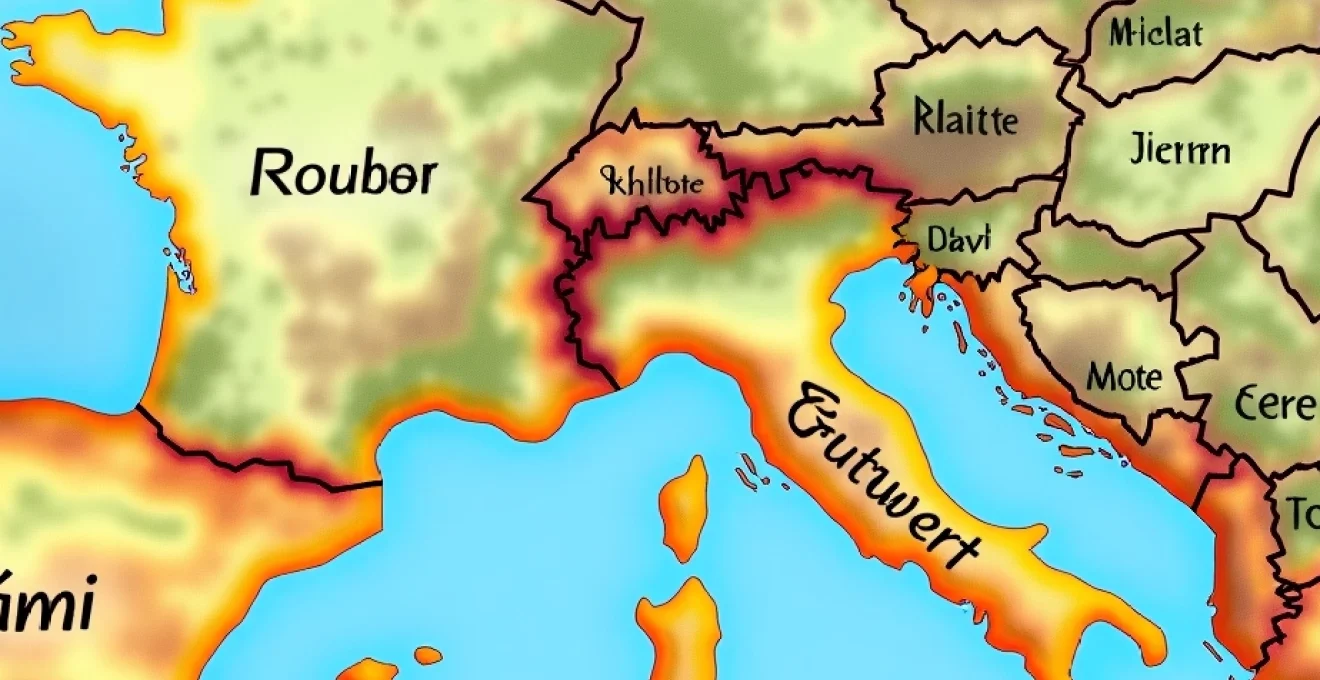
The intricate geographical tapestry of Switzerland, France, and Italy presents one of Europe’s most compelling travel destinations, where alpine peaks meet Mediterranean shores and ancient cultures converge across modern borders. A comprehensive travel map of these three nations serves as far more than a simple navigation tool—it becomes an essential companion for understanding the complex interplay of natural barriers, transportation networks, and cultural boundaries that have shaped this remarkable region for centuries.
The strategic importance of accurate cartographic analysis cannot be overstated when planning journeys through this tri-national area. From the snow-capped summits of Mont Blanc to the sun-drenched terraces of Cinque Terre, each destination demands careful route planning that considers elevation changes, seasonal accessibility, and the sophisticated transport infrastructure that connects these diverse landscapes. Modern travellers benefit from digital mapping technologies that integrate real-time data with traditional cartographic principles, creating unprecedented opportunities for seamless multi-country exploration.
Cartographic analysis of swiss, french, and italian territorial boundaries
Understanding the territorial boundaries between Switzerland, France, and Italy requires sophisticated cartographic analysis that goes beyond simple political demarcations. These borders follow natural geographical features, particularly mountain ridges and watersheds, creating complex patterns that influence everything from weather systems to transportation routes. The precision of modern boundary mapping has evolved significantly since the Treaty of Turin in 1860, which established much of the current Swiss-Italian frontier, and subsequent agreements that refined Franco-Swiss and Franco-Italian borders.
Contemporary digital mapping systems utilise satellite imagery and GPS coordinates to provide accuracy within centimetres, enabling travellers to understand precisely where they cross from one nation to another. This precision becomes particularly valuable when planning hiking routes that traverse multiple countries or when understanding customs and immigration requirements at specific crossing points.
Alpine border demarcation between valais and Haute-Savoie regions
The border between Switzerland’s Valais canton and France’s Haute-Savoie département exemplifies how natural alpine features create both barriers and corridors for international travel. This boundary follows the watershed divide along the Pennine Alps, with the frontier running through some of Europe’s highest peaks, including portions of the Mont Blanc massif. Detailed topographical maps reveal how this border influences weather patterns, with the northern slopes receiving different precipitation levels than southern exposures.
Travellers crossing between Chamonix and the Valais region encounter dramatic elevation changes that affect both climate and accessibility. Maps showing seasonal road closures become essential planning tools, as passes like the Great St Bernard can remain snow-bound for months, forcing alternative routing through lower valleys or tunnel systems.
Mediterranean coastal mapping from côte d’azur to liguria
The transition from France’s glamorous Côte d’Azur to Italy’s rugged Ligurian coast presents a fascinating study in coastal cartography. Maps of this region must account for dramatic topographical changes where the Maritime Alps plunge directly into the Mediterranean Sea, creating the spectacular but challenging terrain that defines this stretch of coastline. The border between Menton and Ventimiglia represents one of the most scenic international crossings in Europe, yet the mountainous terrain behind the coast creates complex transportation challenges.
Accurate mapping of this coastal region requires integration of bathymetric data showing underwater topography alongside terrestrial features. This information becomes crucial for understanding how coastal roads wind through clifftop positions and why certain sections remain vulnerable to weather-related closures. The famous Corniche roads rely on engineering solutions that cartographers must represent clearly to help travellers understand route characteristics and potential alternatives.
Cross-border railway networks: Geneva-Milan corridor visualisation
The railway connection between Geneva and Milan represents one of Europe’s most engineering-intensive international rail corridors, requiring sophisticated cartographic representation to illustrate the complex infrastructure involved. This route traverses three countries, utilising mountain tunnels, valley floors, and strategic passes to overcome the formidable Alpine barrier. Modern rail maps must show not only the track alignment but also elevation profiles, tunnel locations, and connection points with local transportation networks.
The Simplon Tunnel, at nearly 20 kilometres long, fundamentally transformed travel between Switzerland and Italy when it opened in 1906 . Contemporary maps illustrate how this engineering marvel enables year-round connectivity despite harsh mountain conditions that would otherwise isolate communities for months. Understanding these railway corridors through detailed mapping helps travellers appreciate the monumental engineering achievements that make modern Alpine travel possible.
Topographical elevation data across mont blanc massif
The Mont Blanc massif presents unique cartographic challenges due to its extreme elevation changes, complex glacier systems, and tri-national jurisdiction. Accurate topographical mapping of this region requires integration of Swiss, French, and Italian survey data, each following slightly different cartographic standards and coordinate systems. The result is a sophisticated understanding of how elevation affects everything from weather patterns to telecommunications coverage across international boundaries.
Modern digital elevation models provide unprecedented detail about the massif’s topography, enabling travellers to understand exposure risks, optimal viewing positions, and seasonal accessibility patterns. These detailed elevation maps reveal how the massif’s geography creates distinct microclimates within short distances , information that becomes essential for planning activities ranging from mountaineering to photography.
Strategic route planning through alpine transport networks
The complexity of Alpine transportation networks demands strategic route planning that considers multiple factors beyond simple distance calculations. Weather patterns, seasonal closures, traffic congestion, and infrastructure maintenance all influence optimal routing decisions. Modern mapping systems integrate real-time data feeds covering road conditions, public transport schedules, and weather forecasts to provide dynamic routing recommendations that adapt to changing conditions.
The interconnected nature of Swiss, French, and Italian transport systems creates opportunities for multi-modal journeys that combine various transportation methods. Understanding these connections through comprehensive mapping enables travellers to optimise their routes for efficiency, cost, or scenic value depending on their priorities. The integration of cable cars, mountain railways, and conventional transport modes requires sophisticated cartographic representation to illustrate connection points and transfer requirements.
Great st bernard pass: historical trade route optimisation
The Great St Bernard Pass has served as a crucial Alpine crossing for over two millennia, with its historical significance reflected in modern cartographic analysis of the region. Contemporary maps must balance historical context with current infrastructure realities, showing how modern road and tunnel systems complement ancient pathways. The pass closure during winter months, typically from October to June, requires alternative routing through the Great St Bernard Tunnel, information that maps must clearly convey to prevent travellers from encountering unexpected obstacles.
Strategic planning for routes utilising the Great St Bernard crossing involves understanding not just the primary route but also alternative options when weather or maintenance issues arise. The hospice at the pass summit, established by Saint Bernard of Menthon around 1050, continues to serve modern travellers , representing continuity between historical and contemporary travel patterns that maps must accurately represent.
Gotthard base tunnel integration for Multi-Modal journey planning
The Gotthard Base Tunnel revolutionised Alpine transportation when it opened in 2016, becoming the world’s longest railway tunnel at 57.1 kilometres. This engineering marvel requires sophisticated mapping representation to illustrate how it integrates with existing transportation networks while providing weather-independent connectivity between northern and southern Europe. Maps showing the tunnel’s alignment must also indicate surface routes and elevation profiles to help travellers understand the dramatic geographical barriers it overcomes.
Multi-modal journey planning through the Gotthard corridor involves understanding connections between high-speed rail services, regional trains, and road networks on both sides of the Alps. The tunnel’s impact on travel times has fundamentally altered routing strategies for journeys between Switzerland and Italy, with maps needing to reflect these new realities while maintaining information about traditional mountain passes that remain relevant for scenic routing.
Rhine valley corridor: basel to lake constance navigation
The Rhine Valley provides a natural transportation corridor that connects Switzerland with both France and Germany, requiring multi-national mapping coordination to represent the complex jurisdictional arrangements along this international waterway. The river’s role as both a transportation route and a political boundary creates unique cartographic challenges, particularly where the Rhine forms borders between countries while simultaneously serving as a navigation channel for commercial and recreational traffic.
Navigation through the Rhine Valley corridor involves understanding flood plains, lock systems, bridge clearances, and seasonal water level variations. Maps of this region must integrate hydrological data with transportation infrastructure information, showing how water levels affect road access to riverbank facilities and influence the operation of ferry services that connect communities across international boundaries.
Maritime access points: genoa port connectivity analysis
Genoa’s position as Italy’s principal port creates transportation connections that extend far beyond national boundaries, requiring cartographic analysis that shows how maritime access integrates with Alpine transportation networks. The port’s connectivity to Switzerland through the Gotthard corridor and to France through coastal highways makes it a crucial node in tri-national transportation planning. Maps illustrating these connections must show elevation profiles and infrastructure capacity to help travellers understand journey characteristics and potential constraints.
The complexity of accessing Genoa from inland Alpine regions involves understanding how different transportation modes complement each other. Rail connections through mountain passes, highway tunnels, and coastal routes all play roles in creating seamless connectivity between maritime facilities and inland destinations across the three-country region.
Digital mapping technologies for Tri-Nation navigation
The evolution of digital mapping technologies has transformed how travellers navigate the complex geographical relationships between Switzerland, France, and Italy. Modern GPS systems integrate multiple data sources including real-time traffic information, weather conditions, and infrastructure status to provide dynamic routing recommendations that adapt to changing conditions. These technologies overcome traditional limitations of paper maps by offering continuously updated information that reflects current accessibility and optimal routing options.
Smartphone applications now provide offline mapping capabilities that remain functional in areas with limited cellular coverage, a crucial consideration in Alpine regions where connectivity can be intermittent. The integration of augmented reality features enables travellers to overlay digital information onto real-world views , helping them understand complex geographical relationships and identify landmarks across international boundaries. These technological advances make it possible to navigate confidently through regions where traditional signage might be limited or language barriers could create confusion.
The synchronisation of mapping data across different national systems remains an ongoing challenge, as each country maintains its own cartographic standards and coordinate systems. However, European Union initiatives promote data harmonisation that improves the accuracy and consistency of cross-border mapping information. This standardisation benefits travellers by ensuring that digital maps provide reliable information regardless of which country’s territory they currently occupy.
Advanced mapping algorithms now consider factors such as vehicle type, load capacity, and driver experience levels when calculating optimal routes through challenging Alpine terrain.
The integration of crowd-sourced data from other travellers adds another dimension to digital mapping accuracy. Real-time updates about road conditions, construction activities, and temporary closures come from users who share their experiences, creating a collaborative approach to maintaining current information. This community-driven data enhancement proves particularly valuable in mountainous regions where conditions can change rapidly and traditional monitoring systems may have limited coverage.
Cultural heritage waypoint identification systems
The rich cultural heritage spanning Switzerland, France, and Italy requires sophisticated waypoint identification systems that help travellers locate and understand significant historical and cultural sites. Modern mapping technologies incorporate databases of monuments, museums, architectural landmarks, and cultural events that provide context for the diverse heritage encountered across these three nations. These systems must account for seasonal accessibility, opening hours, and special requirements for visiting various heritage sites.
The complexity of managing cultural information across multiple countries with different languages and classification systems presents unique cartographic challenges. Digital mapping platforms now incorporate multilingual databases that provide consistent information regardless of the user’s language preferences, enabling seamless cultural exploration across international boundaries.
UNESCO world heritage site geolocation: jungfraujoch to cinque terre
The geographical distribution of UNESCO World Heritage Sites across the three-country region creates opportunities for themed itineraries that connect locations based on cultural or natural significance. From Switzerland’s Jungfraujoch and Aletsch Glacier to Italy’s Cinque Terre and France’s Mont-Saint-Michel, these sites require precise geolocation data that helps travellers understand spatial relationships and plan efficient visiting sequences.
Advanced mapping systems now include detailed information about each UNESCO site, including optimal visiting seasons, accessibility requirements, and connections to transportation networks. The integration of virtual tour capabilities allows travellers to preview sites before visiting , helping them make informed decisions about time allocation and preparation requirements. This technological enhancement proves particularly valuable for sites with seasonal restrictions or limited daily visitor capacity.
Romanesque architecture trail mapping through burgundy and lombardy
The extensive network of Romanesque churches and monasteries spanning from France’s Burgundy region into Italy’s Lombardy creates opportunities for specialised cultural mapping that highlights architectural continuities across national boundaries. These thematic trails require detailed waypoint mapping that considers not only the locations of significant buildings but also the historical trade routes and pilgrimage paths that connected them during medieval times.
Modern digital mapping systems can overlay historical route information onto contemporary road networks, helping travellers understand how ancient pathways influence current accessibility to Romanesque sites. The integration of architectural dating, stylistic analysis, and historical context provides educational value that enhances the travel experience beyond simple navigation assistance.
Michelin-starred restaurant geographic distribution analysis
The concentration of Michelin-starred restaurants across the three-country region reflects both culinary traditions and tourism infrastructure development patterns. Mapping these establishments requires integration with reservation systems, seasonal operating schedules, and transportation connections that enable travellers to plan gastronomic itineraries effectively. The geographical distribution reveals interesting patterns related to proximity to tourist destinations, transportation hubs, and cultural centres.
Advanced culinary mapping systems now include information about chef backgrounds, signature dishes, price ranges, and booking requirements. The integration of real-time availability data helps travellers secure reservations at desired establishments while providing alternative suggestions when preferred venues are fully booked. This sophisticated approach to culinary mapping transforms restaurant discovery from a matter of chance into strategic planning.
Seasonal weather pattern overlays for trip optimisation
The dramatic elevation changes and diverse climatic zones across Switzerland, France, and Italy create complex weather patterns that significantly influence travel planning decisions. Modern mapping systems integrate meteorological data to provide seasonal weather overlays that help travellers understand optimal timing for different activities and destinations. These systems must account for microclimates created by mountain topography, coastal influences, and elevation-dependent temperature variations.
Alpine weather patterns can vary dramatically within short distances, with valley floors experiencing different conditions from mountain peaks just kilometres away. Digital mapping technologies now provide elevation-specific weather forecasts that help travellers prepare for condition changes as they gain or lose altitude during their journeys. This detailed meteorological integration proves essential for outdoor activities where weather conditions directly impact safety and enjoyment.
The seasonal accessibility of mountain passes and high-altitude destinations requires sophisticated modelling that considers historical closure patterns, snow accumulation data, and maintenance schedules. Advanced mapping systems can predict optimal visit timing based on multiple years of weather data , helping travellers avoid disappointment from unexpected closures or poor conditions. This predictive capability becomes particularly valuable for once-in-a-lifetime trips where timing flexibility may be limited.
Weather pattern analysis reveals that optimal travel windows often differ significantly between destinations separated by just a few hundred kilometres of Alpine terrain.
The integration of real-time weather monitoring with historical pattern analysis enables dynamic trip optimisation that adapts recommendations based on current conditions. Satellite imagery and ground-based monitoring stations provide continuous updates about snow levels, road conditions, and visibility that influence routing decisions and activity planning. This real-time integration ensures that travellers receive current information rather than relying on outdated seasonal generalisations.
Cross-border legal requirements and documentation zones
Navigation across the borders between Switzerland, France, and Italy involves understanding complex legal requirements that vary depending on citizenship, purpose of visit, and duration of stay. Modern mapping systems increasingly incorporate information about visa requirements, customs regulations, and documentation zones that help travellers prepare appropriately for international movement. Despite Switzerland’s participation in the Schengen Agreement through bilateral treaties, its unique position outside the European Union creates specific requirements that differ from typical EU travel.
The practical implementation of border controls varies significantly depending on the crossing point and current security conditions. While many border crossings between these countries operate with minimal formalities, certain circumstances can trigger enhanced security measures that require additional documentation or longer processing times. Digital mapping systems now include information about border crossing facilities, operating hours, and alternative routes when primary crossings experience delays or closures.
Currency requirements present another layer of complexity, as Switzerland maintains the Swiss Franc while France and Italy use the Euro. Mapping systems that include information about currency exchange facilities, ATM availability, and electronic payment acceptance help travellers manage financial requirements across different monetary zones. The integration of current exchange rates and transaction fees enables cost-effective planning for multi-country journeys.
Insurance and emergency service coverage varies between countries and may require additional arrangements for comprehensive protection during cross-border travel. Modern mapping applications can include information about emergency contact numbers, hospital locations, and insurance validity across different national jurisdictions. This safety-oriented information integration helps travellers prepare for unexpected situations while exploring the tri-national Alpine region where rapid weather changes and challenging terrain can create emergency situations requiring immediate response.