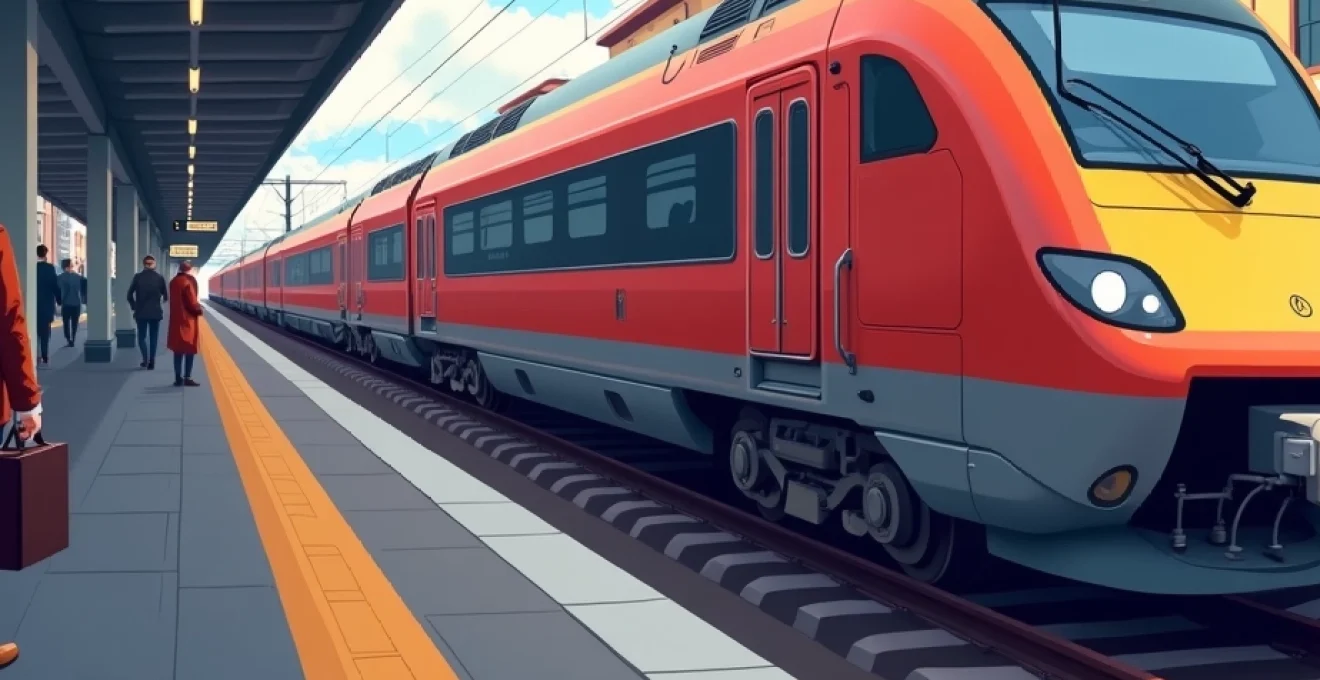
The rail connection between Livorno and Florence represents one of Tuscany’s most vital transport arteries, seamlessly linking the region’s principal port city with its cultural and economic capital. This 78-kilometre route serves thousands of passengers daily, offering both business travellers and tourists efficient access between the Mediterranean coast and the Renaissance heartland. The journey traverses diverse Tuscan landscapes, from coastal plains through rolling hills to the Arno valley, providing passengers with scenic views whilst maintaining excellent connectivity standards.
Modern rail infrastructure along this corridor supports multiple service types, from high-speed Frecciargento trains completing the journey in just over an hour to regional services that provide comprehensive local connectivity. The route’s strategic importance extends beyond passenger transport, forming a crucial component of Italy’s broader rail network that connects northern industrial centres with southern ports and destinations.
Trenitalia regional and intercity services between livorno centrale and firenze santa maria novella
Trenitalia operates the comprehensive passenger rail service connecting Livorno Centrale with Florence’s main terminus at Santa Maria Novella station. The service portfolio encompasses multiple train categories, each designed to meet specific passenger requirements and journey time preferences. Regional Veloce services form the backbone of local connectivity, whilst Intercity trains provide enhanced comfort and reduced journey times for longer-distance travellers.
The operational framework includes approximately 38 daily departures, ensuring consistent service availability from early morning until late evening. First departures commence at midnight, with the final service typically scheduled around 22:43, providing extensive coverage for various travel patterns. This frequency reflects the route’s significance within Tuscany’s regional transport network and supports both commuter traffic and leisure travel demands.
Regional veloce train operations and frequency schedules
Regional Veloce services constitute the primary train category operating between Livorno and Florence, offering reliable connectivity with strategic intermediate stops. These trains typically complete the journey in approximately 90 minutes, serving key stations including Pisa Centrale and Empoli, where passengers can access connections to other regional destinations. The rolling stock employed features modern air-conditioned carriages with power outlets and fold-down tables, ensuring passenger comfort throughout the journey.
Service patterns vary throughout the day, with peak-hour frequencies designed to accommodate commuter flows and off-peak schedules optimised for leisure travel. The Regional Veloce network integrates seamlessly with local transport systems at major stations, providing comprehensive connectivity options for passengers continuing their journeys within Florence or to other Tuscan destinations.
Intercity service classifications and rolling stock configuration
Intercity trains operating on the Livorno-Florence route offer premium service standards with enhanced onboard amenities and reduced journey times. These services feature modern carriages equipped with spacious seating arrangements , retractable tables, power sockets, and comprehensive luggage storage facilities. The typical journey time for Intercity services ranges from 68 to 75 minutes, depending on intermediate stopping patterns and operational requirements.
The rolling stock configuration includes both Second Class Easy and First Class Plus accommodations, allowing passengers to select service levels appropriate to their requirements and budgets. Air conditioning systems maintain comfortable cabin temperatures year-round, whilst courtesy lighting and noise reduction measures enhance the overall travel experience. Food and beverage services aboard Intercity trains include vending machines offering snacks, drinks, and dietary-specific options including gluten-free and lactose-free alternatives.
Firenze rifredi alternative terminal and connection protocols
Florence Rifredi station serves as an important alternative terminus for certain services, particularly during peak periods or when maintenance activities affect Santa Maria Novella operations. Located in Florence’s northern suburbs, Rifredi provides excellent connectivity to the city centre via local transport services and represents a strategic operational hub for regional train management.
The station’s configuration supports efficient passenger interchange, with dedicated platforms for regional services and clear signage directing passengers to onward transport options. Connection protocols at Rifredi ensure seamless integration with Florence’s public transport network, including bus services and future tramway extensions that will further enhance accessibility to central destinations.
Peak hour capacity management and seat reservation systems
Capacity management during peak travel periods employs sophisticated reservation systems and dynamic train formations to accommodate demand fluctuations. The busiest periods typically occur during morning and evening commuter hours, summer tourist seasons, and major cultural events in Florence that attract significant visitor numbers. Trenitalia’s operational strategy includes deployment of longer train formations during peak periods and coordination with high-speed services to distribute passenger loads effectively.
Reservation systems for Intercity services provide passengers with guaranteed seating whilst maintaining operational flexibility for last-minute bookings. Regional services operate on an open-access basis, though passengers are encouraged to validate tickets before boarding to ensure compliance with fare regulations and avoid potential penalties.
Railway infrastructure and signalling systems along the Pisa-Florence corridor
The railway infrastructure connecting Livorno to Florence represents a sophisticated integration of traditional engineering principles with modern technological systems. The line forms part of the broader Pisa-Florence corridor, incorporating double-track sections, advanced signalling systems, and comprehensive safety protocols that ensure reliable operations across varying traffic densities. Infrastructure investments over recent decades have enhanced capacity, reduced journey times, and improved overall service reliability for passengers.
The corridor’s strategic importance within Italy’s national rail network necessitates continuous infrastructure maintenance and periodic upgrades to accommodate evolving traffic patterns and technological advances. Engineering specifications meet European interoperability standards, ensuring compatibility with both domestic and international rolling stock whilst maintaining the highest safety standards throughout the network.
Electrification specifications and 3kv DC power distribution
The entire Livorno-Florence route operates under 3kV DC electrification, providing efficient power distribution for all train categories operating along the corridor. This electrification standard, widely employed throughout Italy’s rail network, ensures compatibility across different train types whilst maintaining operational efficiency and environmental benefits compared to diesel traction. Power distribution infrastructure includes strategically positioned substations that maintain consistent voltage levels throughout the network.
The overhead line system employs modern catenary construction techniques, incorporating tension regulation systems that accommodate thermal expansion and ensure reliable current collection across varying weather conditions. Regular maintenance protocols include comprehensive inspections of electrical systems, conductor replacement schedules, and emergency response procedures for power disruptions that might affect service operations.
SCMT safety control and monitoring technology implementation
The Sistema di Controllo Marcia Treno (SCMT) represents Italy’s advanced train protection system, providing comprehensive safety monitoring and automatic intervention capabilities along the Livorno-Florence corridor. This technology continuously monitors train speeds, signal compliance, and operational parameters, automatically applying brakes when safety thresholds are exceeded or signal violations detected.
SCMT implementation includes trackside beacons that transmit critical safety information to onboard systems, enabling real-time monitoring of train operations and immediate intervention when necessary. The system’s integration with existing signalling infrastructure enhances overall network safety whilst maintaining operational efficiency through optimised traffic management and reduced headway times between services.
Track gauge standards and maximum operational speed limits
The Livorno-Florence line employs standard European gauge of 1,435mm, ensuring compatibility with international rolling stock and supporting efficient cross-border operations where applicable. Track construction standards accommodate maximum speeds of up to 160 km/h on certain sections, though operational speeds vary according to local conditions, curve radii, and station approaches that require speed restrictions for safety considerations.
Continuous welded rail construction minimises track joints and reduces noise levels whilst enhancing ride quality for passengers. Ballasted track systems provide excellent stability and drainage characteristics essential for reliable operations across Tuscany’s varied topographical conditions, from coastal plains to hillier terrain approaching Florence.
Station platform configuration at empoli junction interchange
Empoli station serves as a crucial junction point along the Livorno-Florence route, providing interchange facilities for passengers travelling to other Tuscan destinations including Siena and regional branch lines. The station’s platform configuration supports efficient passenger flow with dedicated areas for different train categories and clear directional signage for onward connections.
Platform lengths accommodate the longest train formations operating on the route whilst maintaining adequate clearances for passenger safety. Accessibility features include step-free access, tactile guidance systems for visually impaired passengers, and comprehensive passenger information systems that provide real-time updates on train schedules and platform assignments.
Ticketing platforms and fare structure analysis for Livorno-Florence route
The ticketing ecosystem for Livorno-Florence rail services encompasses multiple sales channels and fare categories designed to accommodate diverse passenger requirements and travel patterns. Digital platforms now dominate ticket sales, with online booking systems offering advance purchase discounts and seat reservations for premium services. Traditional station ticket offices remain available for passengers requiring assistance or preferring face-to-face transactions, though automated systems handle the majority of routine bookings.
Fare structures reflect journey distance, service quality, and booking timing, with advance purchases typically offering significant savings compared to day-of-travel rates. Base fares start from approximately £9.92 for regional services, with premium categories commanding higher prices that reflect enhanced comfort levels and reduced journey times. The pricing strategy balances revenue optimisation with accessibility, ensuring rail transport remains competitive with alternative modes whilst supporting network investment and service quality improvements.
Advance booking can reduce ticket costs by up to 60% compared to last-minute purchases, particularly during peak travel periods when demand exceeds available capacity on popular services.
Integrated ticketing systems support seamless connectivity with local transport networks in both Livorno and Florence, allowing passengers to combine rail travel with bus services, urban transport, and parking facilities where applicable. Digital ticketing platforms provide real-time journey planning tools that incorporate multiple transport modes and optimise connections based on passenger preferences and time constraints.
Promotional fare categories target specific passenger segments, including youth discounts for travellers under 30, senior citizen reductions for passengers over 60, and family packages that provide group savings. Corporate booking systems accommodate business travel requirements with flexible change policies and dedicated customer support services. The fare structure also includes seasonal variations that reflect demand patterns, with higher prices during summer months and major cultural events in Florence.
Journey duration optimisation and route planning strategies
Effective journey planning between Livorno and Florence requires understanding the various service options and their respective advantages for different travel scenarios. High-speed Frecciargento services offer the fastest connections, completing the journey in approximately 68 minutes with limited intermediate stops, making them ideal for time-sensitive business travel or tourists maximising sightseeing opportunities. These premium services include onboard Wi-Fi, power outlets, and food service facilities that enhance productivity during travel.
Regional Veloce services provide excellent value for money with journey times typically ranging from 85 to 100 minutes, depending on stopping patterns and operational conditions. Strategic intermediate stops at Pisa Centrale and Empoli offer connection opportunities for passengers travelling to other Tuscan destinations, whilst the longer journey time allows for scenic appreciation of the countryside between destinations.
Optimal departure timing considerations include avoiding peak commuter periods when trains experience higher passenger loads and potential delays due to increased traffic density. Morning departures between 09:00 and 11:00 often provide the best combination of seat availability and punctuality, whilst afternoon services after 15:00 may experience some crowding due to commuter traffic returning from Florence to coastal areas.
Journey planning applications now provide real-time updates on train delays, platform changes, and alternative routing options, enabling passengers to adapt their travel plans dynamically based on current operational conditions.
Weather-related considerations can significantly impact journey planning, particularly during summer months when coastal fog may affect services departing Livorno, and winter conditions occasionally cause delays due to reduced visibility or track conditions. Passengers should monitor weather forecasts and consider earlier departure times during periods of potential disruption to ensure timely arrival at their destination.
Multi-modal journey planning increasingly incorporates bicycle transport options, with designated storage areas on many trains and bike-sharing facilities at major stations. This integration supports sustainable transport choices and provides last-mile connectivity solutions in both Livorno and Florence, where historic city centres benefit from non-motorised transport options for short-distance travel.
Accessibility features and passenger assistance services at terminal stations
Both Livorno Centrale and Florence Santa Maria Novella stations provide comprehensive accessibility infrastructure designed to ensure equal access for passengers with mobility challenges or other support requirements. Modern platform designs incorporate step-free access via lifts and ramps, tactile guidance systems for visually impaired travellers, and clearly marked designated areas for wheelchair users on train platforms. These facilities comply with European accessibility standards and undergo regular maintenance to ensure consistent availability.
Passenger assistance services operate through dedicated booking systems that allow travellers to request support in advance of their journey. Trained assistance personnel provide boarding and alighting support, luggage handling, and guidance through station facilities as required. The service extends beyond basic mobility assistance to include support for passengers with sensory impairments, cognitive disabilities, or temporary mobility restrictions due to injury or illness.
Audio announcement systems at both terminal stations provide clear information about train arrivals, departures, and platform assignments in multiple languages, whilst visual display systems offer real-time updates that complement auditory information. Emergency communication systems ensure immediate access to assistance services throughout station facilities, with clearly marked help points positioned at regular intervals along platforms and in main concourse areas.
Accessible toilet facilities, designated waiting areas, and priority queuing systems at ticket offices demonstrate comprehensive commitment to inclusive travel experiences. Station staff receive regular training updates on disability awareness and assistance techniques, ensuring professional and effective support for all passenger requirements. Integration with local transport networks includes accessible bus connections and taxi services equipped for wheelchair users, providing seamless onward connectivity from both terminal stations.