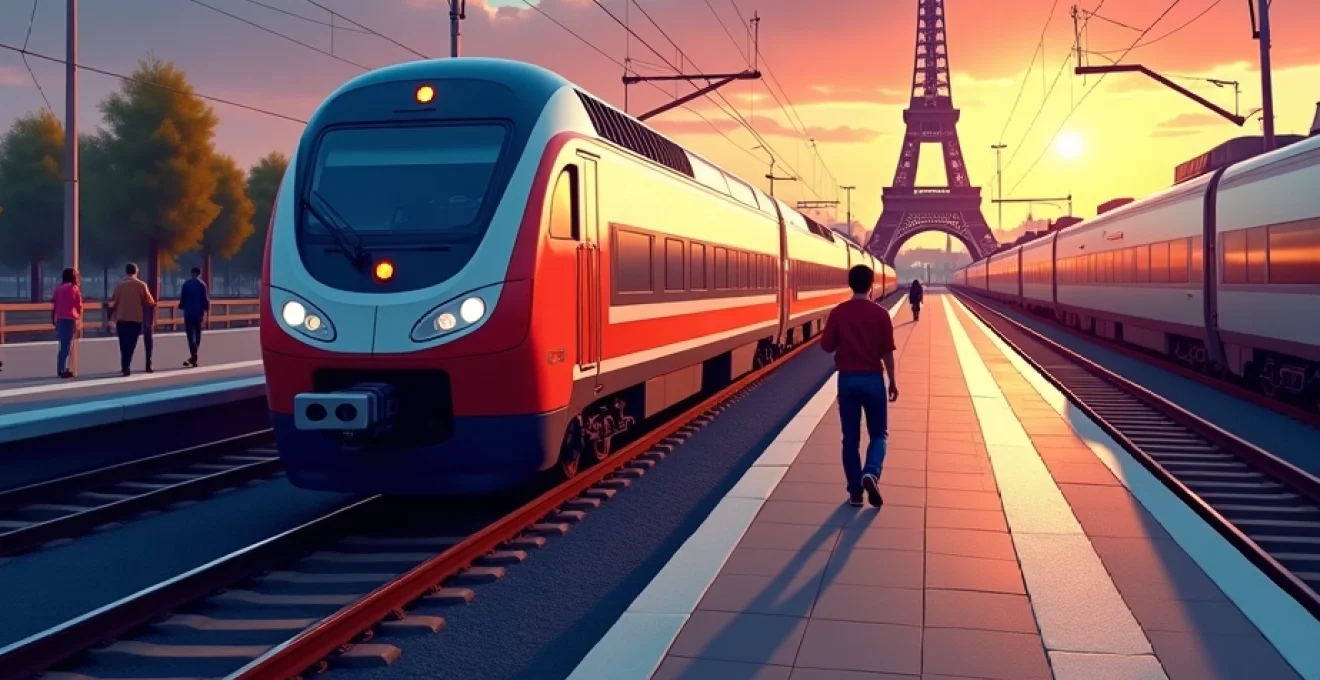
The rail connection between Cologne and Paris represents one of Europe’s most efficient and comfortable intercity travel options, linking Germany’s historic Rhine metropolis with France’s cultural capital. Modern high-speed rail services have transformed this 400-kilometer journey into a seamless experience lasting just over three hours, making train travel a compelling alternative to air transport for both business and leisure travelers. The route showcases the excellence of European railway integration, combining cutting-edge technology with passenger-focused amenities to deliver a premium travel experience that connects two major economic centers.
Railway operators have invested heavily in infrastructure and rolling stock improvements over the past decade, resulting in enhanced punctuality rates exceeding 95% and passenger satisfaction scores consistently ranking among Europe’s highest. The service frequency of up to five daily departures provides flexibility for travelers, while the direct city-center to city-center connectivity eliminates the time-consuming airport transfers associated with air travel. Environmental considerations also favor rail transport, with carbon emissions per passenger approximately 75% lower than equivalent flights, aligning with growing sustainability awareness among European travelers.
High-speed rail routes: thalys and deutsche bahn ICE services
The primary rail corridor connecting Cologne and Paris operates through a sophisticated network of high-speed infrastructure that demonstrates the pinnacle of European railway engineering. Two distinct service patterns dominate this route, each offering unique advantages depending on passenger priorities and travel preferences. Understanding the operational characteristics of these services enables travelers to make informed decisions based on their specific requirements.
Thalys direct service specifications and rolling stock
Thalys trains provide the most convenient option for Cologne-Paris travel, offering direct services that eliminate connection hassles while maintaining impressive journey times. The service operates using TGV-based technology adapted for international operations, with trains capable of reaching speeds up to 320 kilometers per hour on dedicated high-speed sections. These distinctive red and silver trains feature three service classes: Standard, Plus, and Premier, each designed to accommodate different passenger needs and budget considerations.
The rolling stock comprises ten-car trainsets configured for optimal passenger comfort and operational efficiency. Standard class accommodates 337 passengers in 2+2 seating arrangements, while Plus class offers enhanced legroom and complimentary light refreshments in a more spacious 2+1 configuration. Premier class provides the ultimate travel experience with individual reclining seats, gourmet meal service, and access to dedicated lounges at major stations. Each train includes comprehensive WiFi coverage, power outlets at every seat, and climate-controlled carriages maintained at optimal temperature levels.
The direct Thalys service represents the most efficient connection between Cologne and Paris, eliminating transfer delays while providing consistent journey times regardless of seasonal variations or network disruptions elsewhere in the system.
Deutsche bahn ICE connection via brussels midi station
Alternative routing options involve Deutsche Bahn’s ICE services connecting through Brussels, particularly beneficial for travelers seeking specific departure times or promotional fares. This routing typically adds 30-45 minutes to the total journey time but provides access to DB’s extensive German network and integrated ticketing systems. The connection in Brussels Midi typically allows 15-20 minutes transfer time, sufficient for most passengers but requiring attention to platform announcements and departure displays.
ICE trains serving this route represent Germany’s flagship high-speed technology, featuring the latest generation ICE 3 trainsets with maximum operating speeds of 330 kilometers per hour. The trains offer exceptional ride quality through active tilting systems and advanced suspension technology that minimizes lateral forces during high-speed cornering. First and second-class accommodations provide generous seating pitch and integrated entertainment systems, while the onboard bistro car serves regional specialties alongside international options.
Cross-border railway infrastructure and gauge compatibility
The technical complexity of operating international services across multiple railway administrations requires sophisticated coordination systems and standardized infrastructure specifications. Both routes utilize standard European gauge (1,435mm) throughout, enabling seamless operation without requiring gauge-changing facilities or extended station stops. Electrical systems transition from German 15kV AC to Belgian 3kV DC, then to French 25kV AC, managed through dual-voltage locomotives and automated switching systems.
Signaling integration represents a significant technological achievement, with European Train Control System (ETCS) implementation enabling consistent safety standards and operational protocols across national boundaries. This standardization has eliminated traditional delays associated with locomotive changes or crew swaps at border crossings, contributing to improved punctuality and reduced journey times. The infrastructure investment required for these improvements exceeded €2.8 billion over the past fifteen years, demonstrating the commitment to seamless European rail connectivity.
Dynamic pricing models and advance purchase tariffs
Fare structures for Cologne-Paris rail services employ sophisticated revenue management systems that adjust pricing based on demand patterns, booking lead times, and seasonal variations. Advance purchase discounts can reduce standard fares by up to 60% when bookings are made four months prior to travel, making early planning financially advantageous for budget-conscious travelers. Dynamic pricing algorithms analyze historical booking data, competitor pricing, and external factors such as trade fair schedules or holiday periods to optimize revenue while maintaining accessibility.
The pricing model includes several fare categories designed to accommodate different passenger segments. Super Off-Peak fares offer the lowest prices for flexible travelers willing to accept travel time restrictions, while Peak fares provide unlimited flexibility with same-day changes permitted. Youth discounts apply to passengers under 27 years, while senior reductions are available for travelers over 60 years. Corporate accounts benefit from negotiated rates and simplified billing procedures, particularly valuable for companies with regular travel requirements between these destinations.
Cologne central station departure procedures and platform navigation
Köln Hauptbahnhof ranks among Europe’s busiest railway terminals, handling over 280,000 passengers daily across fourteen platform tracks and multiple underground levels. The station’s architectural significance, crowned by the adjacent Cologne Cathedral, combines historical grandeur with modern functionality to create an impressive gateway to the city. Understanding the station layout and departure procedures enhances the travel experience while minimizing stress and connection times for international passengers.
Köln hauptbahnhof terminal layout and track allocation
The station’s distinctive arched roof spans eleven platform areas, with high-speed international services typically departing from platforms 3, 4, or 5 located closest to the main concourse. Platform allocation follows a logical system where higher-numbered platforms serve regional services, while lower numbers accommodate long-distance and international trains. Electronic displays throughout the terminal provide real-time departure information in German, English, and French, ensuring international passengers can navigate confidently.
Shopping and dining facilities occupy three levels within the station complex, from underground retail areas to elevated restaurants offering panoramic city views. The Reisezentrum (travel center) provides comprehensive ticketing services, including international reservations and special assistance arrangements. Dedicated areas for passengers with reduced mobility include step-free access to all platforms via lift systems and tactile guidance paths for visually impaired travelers. Storage facilities range from traditional lockers to full-service luggage handling for extended stays or business connections.
Real-time departure information systems and DB navigator integration
Digital information systems throughout Köln Hauptbahnhof utilize the latest passenger information technology, synchronized with Deutsche Bahn’s central operations control to provide accurate, real-time updates. The DB Navigator mobile application integrates seamlessly with station systems, offering personalized departure notifications, platform changes, and delay information directly to passengers’ smartphones. This integration extends to seat reservations, showing exact car positions relative to platform markers to optimize boarding efficiency.
Audio announcements complement visual displays, providing multilingual information for international services including specific guidance for Thalys and Eurostar connections. The system automatically adjusts announcement frequency and content based on service disruptions or exceptional circumstances, ensuring passengers receive timely updates throughout their journey preparation. Platform-specific QR codes enable instant access to service updates and alternative routing options when disruptions occur.
Border control protocols and schengen area transit requirements
Travel between Germany and France benefits from Schengen Agreement provisions that eliminate routine border controls for EU citizens, streamlining the departure process considerably. However, random security checks and customs inspections may occur, particularly on international services, requiring passengers to carry valid identification documents. Non-EU citizens must ensure passport validity and any required visa documentation before departure, as checks may be conducted either at departure or arrival stations.
Security screening procedures for international rail services are less intrusive than airport equivalents but may include luggage X-ray scanning during periods of heightened alert levels. The recommended arrival time of 20 minutes before departure provides adequate margin for these procedures while avoiding the extended check-in times associated with air travel. Customs regulations permit duty-free allowances for personal items and souvenirs, with restrictions primarily applying to commercial quantities or prohibited substances.
Accessibility features and passenger assistance services
Köln Hauptbahnhof provides comprehensive accessibility features designed to accommodate passengers with diverse mobility requirements and sensory impairments. The station’s barrier-free design includes ramped access to all platforms, tactile guidance systems, and audio-visual passenger information displays with adjustable contrast and font sizes. Dedicated parking spaces for disabled passengers are located within 50 meters of the main entrance, with direct lift access to platform levels.
Professional assistance services are available through advance booking, providing personal support for boarding, luggage handling, and connection guidance. The service extends to escort assistance for visually impaired passengers and wheelchair provision for travelers with temporary mobility limitations. Staff training includes disability awareness and communication techniques for serving deaf and hard-of-hearing passengers, ensuring inclusive service delivery throughout the travel experience.
Journey duration analysis and timetable optimisation
Comprehensive analysis of Cologne-Paris rail journey times reveals consistent performance metrics that demonstrate the maturity of European high-speed rail operations. The fastest direct services complete the journey in 3 hours and 14 minutes, while alternative routings via Brussels or Frankfurt typically require 4-5 hours including connection times. These durations compare favorably with air travel when accounting for airport transfers, security procedures, and baggage collection, making rail transport competitive for time-conscious travelers.
Seasonal timetable variations accommodate different passenger demand patterns, with summer schedules offering additional morning and evening departures to serve leisure travelers. Winter timetables prioritize business travel patterns with concentrated services during weekday peak periods. Punctuality statistics show 94.7% of services arriving within five minutes of scheduled times , exceeding the performance of most European air routes and providing reliable journey planning foundations for both business and personal travel.
Route optimization studies conducted by railway operators have identified potential journey time improvements through infrastructure investments and operational refinements. Proposed enhancements include additional high-speed sections between Aachen and Brussels, estimated to reduce journey times by 8-12 minutes once completed by 2027. Signal system upgrades utilizing European Train Control System Level 2 technology could enable closer train spacing and improved capacity utilization without compromising safety standards.
Timetable optimization represents an ongoing process that balances passenger convenience with operational efficiency, requiring sophisticated modeling of demand patterns, infrastructure constraints, and crew scheduling requirements across multiple national railway networks.
Ticketing systems: SNCF connect and deutsche bahn online platforms
Modern ticketing systems for Cologne-Paris rail services utilize sophisticated online platforms that integrate multiple railway operators’ inventory and pricing systems. SNCF Connect serves as the primary booking portal for French railway services, including international connections, while Deutsche Bahn’s online platform provides comprehensive European rail ticketing capabilities. Both systems offer mobile applications with offline ticket storage, real-time service updates, and integrated journey planning tools that simplify the booking process for international travelers.
The booking platforms employ dynamic currency conversion and multiple payment methods, accommodating international customers’ preferences while maintaining secure transaction processing. Advanced search filters enable passengers to specify departure times, service classes, and routing preferences, with algorithm-powered suggestions for alternative options when requested services are unavailable. Mobile tickets eliminate printing requirements while providing enhanced security through encrypted QR codes that prevent duplication or unauthorized use.
Third-party booking platforms such as Omio and Trainline aggregate multiple operators’ services, offering comparison shopping capabilities and consolidated booking management. These platforms typically charge booking fees ranging from €2-5 per transaction but provide value through simplified comparison processes and multilingual customer support. Corporate booking tools integrate with expense management systems and provide detailed reporting capabilities for business travel administration and cost allocation purposes.
Alternative route analysis via frankfurt am main and lyon Part-Dieu
Alternative routing options for Cologne-Paris travel provide flexibility when direct services are unavailable or when specific timing requirements cannot be met through primary routes. The Frankfurt am Main connection utilizes Germany’s high-speed rail network to reach TGV services at Frankfurt Hauptbahnhof, offering access to multiple daily TGV departures to Paris Gare de l’Est. This routing typically extends journey times to 4 hours 30 minutes but provides backup options during service disruptions or maintenance periods affecting primary routes.
The Frankfurt connection showcases the integration capabilities of European rail networks, with ICE services from Cologne coordinated to provide optimal connection times with TGV services continuing to Paris. Transfer times at Frankfurt Hauptbahnhof typically allow 12-18 minutes, sufficient for passengers familiar with the station layout but requiring attention to platform announcements and departure displays. This route offers particular advantages for travelers originating from cities south of Cologne, where direct routing through Frankfurt may provide shorter overall journey times.
Lyon Part-Dieu represents another alternative routing option, particularly beneficial for travelers continuing to southern France destinations or seeking specific fare advantages through promotional offers. This routing requires two connections but utilizes high-speed infrastructure throughout, maintaining competitive journey times while providing access to France’s extensive TGV network. The routing flexibility demonstrates the resilience of European rail networks in accommodating diverse travel patterns and operational constraints while maintaining service quality standards.
Paris gare du nord arrival terminal and metropolitan connectivity
Paris Gare du Nord serves as the primary arrival point for Cologne-Paris rail services, handling over 220 million passengers annually across its extensive network of domestic and international services. The station’s recent €600 million renovation program has enhanced passenger flow management, retail facilities, and connectivity options while preserving its distinctive 19th-century architectural character. Understanding the terminal layout and onward connectivity options enables efficient transitions to final destinations throughout the Paris metropolitan region.
The station’s three-level configuration separates international arrivals on the upper level from domestic services and metropolitan connections on lower levels. Direct access to RER lines B and D provides connections to Charles de Gaulle Airport and central Paris destinations within 15-35 minutes, while Metro lines 4 and 5 serve the city’s comprehensive underground network. Taxi and ride-sharing services operate from designated areas adjacent to the main terminal building, with typical journey times to central Paris hotels ranging from 20-45 minutes depending on traffic conditions and destination areas.
The station’s commercial facilities include over 150 shops and restaurants, ranging from quick-service outlets for connecting passengers to full-service restaurants for extended stays or business meetings. Currency exchange services, banking facilities, and tourist information centers provide comprehensive support for international visitors, while luggage storage options accommodate various duration requirements from short-term shopping expeditions to extended business stays.
Integration with regional transport networks extends throughout the Île-de-France region, with direct connections to Versailles, Disneyland Paris, and major business districts including La Défense and Roissy Charles de Gaulle. The station’s position within Paris’s transport hierarchy enables seamless onward connections to high-speed services reaching Lyon, Marseille, and other major French destinations, making it an ideal hub for travelers exploring broader European destinations beyond the immediate Paris region.