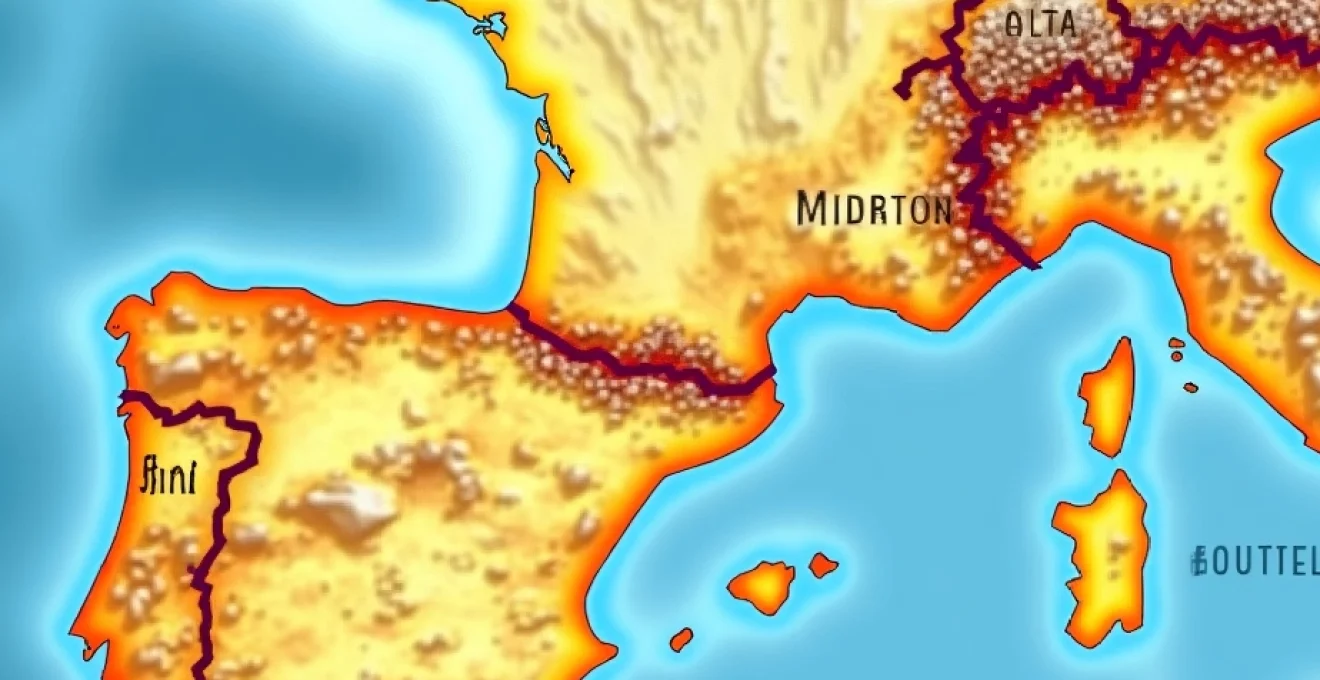
The southwestern corner of Europe presents one of the continent’s most captivating travel corridors, where France, Spain, and Portugal converge in a tapestry of diverse landscapes, rich cultural heritage, and interconnected histories. This tri-national region encompasses everything from the snow-capped Pyrenees to sun-drenched Mediterranean beaches, medieval pilgrimage routes to cutting-edge high-speed rail networks, and UNESCO World Heritage sites to hidden gastronomic gems. Modern travellers benefit from seamless border crossings, excellent transportation infrastructure, and sophisticated mapping technologies that make navigating this remarkable region both efficient and rewarding. Whether you’re planning a comprehensive grand tour or focusing on specific cultural themes, understanding the geographical relationships and logistical connections between these three nations opens up extraordinary possibilities for exploration and discovery.
Strategic route planning through the iberian peninsula and southern france
Effective route planning across France, Spain, and Portugal requires understanding the natural geographical barriers and corridors that have shaped human movement for millennia. The Pyrenees mountain range creates a dramatic frontier between France and Spain, with only a handful of practical crossing points that funnel traffic through strategic passes. Similarly, the western spine of the Iberian Peninsula influences north-south movement between Spain and Portugal, creating natural travel corridors along the Atlantic coast and through specific river valleys.
The most efficient routing strategies typically follow one of several established patterns. East-west travellers often utilise the Mediterranean coastal route, which provides relatively flat terrain and consistent infrastructure quality from the French Riviera through Catalonia to Valencia. North-south routes through the interior require more careful planning, as mountain ranges and river systems create bottlenecks that can significantly impact travel times. The Atlantic coastal route offers spectacular scenery but involves numerous peninsulas and estuaries that can complicate direct routing.
Camino de santiago pilgrimage routes from le Puy-en-Velay to santiago de compostela
The ancient pilgrimage routes to Santiago de Compostela represent some of Europe’s most historically significant travel corridors, with the Camino Francés serving as the primary artery connecting France and Spain. Beginning in Le Puy-en-Velay in south-central France, this route traverses the Pyrenees at Roncevaux Pass before following the northern spine of Spain through Pamplona, Burgos, and León. Modern infrastructure closely parallels these medieval pathways, creating excellent opportunities for contemporary travellers to experience both historical authenticity and practical convenience.
Alternative routes include the Camino del Norte along Spain’s Atlantic coast, offering dramatic clifftop scenery and access to Basque cultural sites, and the Camino Portugués from Porto through Galicia. These routes showcase the interconnected nature of Iberian pilgrimage networks and demonstrate how traditional travel patterns continue to influence modern tourism infrastructure. GPS mapping systems now include detailed waypoint data for all major Camino routes, making navigation straightforward even for inexperienced pilgrims.
Mediterranean coastal drive: costa brava to algarve via french riviera
The Mediterranean coastal corridor represents one of Europe’s premier scenic driving routes, combining excellent road infrastructure with consistent access to beaches, cultural sites, and gastronomic destinations. From Nice and Cannes on the French Riviera, the route follows the A8 and AP-7 motorways through Barcelona and Valencia before transitioning to coastal highways through Murcia and Andalusia. The final segment requires crossing into Portugal via the A22 motorway to reach the Algarve region.
This route showcases remarkable diversity in landscape and cultural influences, from the Alpine backdrop of the Côte d’Azur to the Moorish architecture of southern Spain and Portugal’s distinctive maritime heritage. Planning considerations include seasonal variations in traffic density, particularly around major resort areas during summer months, and the need to account for numerous toll sections that can significantly impact overall travel costs.
Trans-pyrenean mountain passes: col du tourmalet to picos de europa
Mountain enthusiasts seeking dramatic alpine scenery will find exceptional opportunities in the Pyrenean crossing routes that connect French ski resorts with Spanish mountain regions. The Col du Tourmalet, famous from Tour de France coverage, provides access to high-altitude terrain and spectacular views before descending into the Spanish provinces of Huesca and Lleida. Further west, passes like Col du Somport and Col du Pourtalet offer alternative crossings with varying difficulty levels and seasonal accessibility.
The route extends naturally into Spain’s Cordillera Cantábrica and the spectacular Picos de Europa National Park, where limestone peaks create some of Europe’s most dramatic mountain landscapes. Modern mapping applications provide essential real-time information about weather conditions and road closures, as many of these high-altitude routes become impassable during winter months. Travellers should also consider the significant elevation changes involved, which can impact vehicle performance and fuel consumption.
Historic cities circuit: Toulouse-Barcelona-Madrid-Porto-Bordeaux connection
A carefully planned circuit connecting major historic cities creates opportunities to experience the full cultural diversity of the region while maintaining efficient travel logistics. Beginning in Toulouse, with its distinctive pink brick architecture and aerospace industry heritage, the route proceeds southeast to Barcelona, showcasing Gaudí’s architectural masterpieces and Catalan cultural identity. The central segment continues to Madrid, Spain’s political and cultural capital, before turning west to Porto, renowned for its port wine heritage and UNESCO-listed historic centre.
The northern return leg through Bordeaux completes the circuit, highlighting France’s premier wine region and demonstrating the economic and cultural connections that have linked these cities for centuries. This routing strategy maximises exposure to diverse architectural styles, culinary traditions, and linguistic variations while minimising backtracking and redundant travel. High-speed rail connections between several of these cities offer alternatives to driving for specific segments.
Essential transportation infrastructure and border crossings
The transportation infrastructure connecting France, Spain, and Portugal reflects decades of European Union investment in cross-border connectivity and integration. Modern travellers benefit from standardised road signage, unified currency systems, and seamless border protocols that eliminate traditional barriers to movement. However, understanding the specific characteristics of each nation’s transportation networks remains crucial for efficient trip planning and cost management.
High-speed rail networks: TGV, AVE, and alfa pendular integration
Europe’s high-speed rail revolution has transformed travel possibilities across the France-Spain-Portugal corridor, though integration remains incomplete in certain areas. France’s TGV network extends to the Spanish border at Perpignan, where it connects with Spain’s AVE system serving Barcelona, Madrid, and Seville. The Barcelona-Madrid connection, in particular, offers journey times under three hours, making rail travel highly competitive with air transportation for this crucial corridor.
Portugal’s Alfa Pendular service provides high-speed connections between Lisbon and Porto, though cross-border rail services to Spain remain limited and often require transfers in smaller border towns. The planned extension of high-speed rail infrastructure will eventually create direct connections between major cities across all three nations, but current travellers must carefully research connection points and transfer requirements when planning rail-based itineraries.
High-speed rail represents the future of sustainable intercity travel in southwestern Europe, though current network gaps require strategic planning to maximise efficiency and minimise connection times.
Major airport hubs: charles de gaulle, Barcelona-El prat, and francisco sá carneiro
Air transportation infrastructure provides crucial connectivity for international travellers and long-distance domestic routes within the region. Paris Charles de Gaulle serves as the primary international gateway for northern approaches, offering extensive connections to North America, Asia, and other European destinations. The airport’s location northeast of Paris creates strategic advantages for travellers continuing overland to Spain and Portugal, with excellent rail and motorway connections.
Barcelona-El Prat Airport has emerged as a major Mediterranean hub, particularly for low-cost carriers serving European destinations. Its proximity to both the French border and major Spanish cities makes it an excellent entry point for multi-country itineraries. Francisco Sá Carneiro Airport in Porto provides primary access to northern Portugal, while Lisbon’s Humberto Delgado Airport serves as the main gateway to Portugal’s capital region and southern territories.
Schengen zone border protocols between France-Spain and Spain-Portugal
Border crossings between France, Spain, and Portugal operate under Schengen Agreement protocols, eliminating routine passport controls and customs inspections for EU citizens and many international visitors. However, occasional random checks and security operations do occur, particularly at major crossing points and during periods of heightened security concern. Travellers should carry valid identification documents at all times, as requirements can change rapidly in response to security situations.
The France-Spain border features numerous crossing points, from major motorway intersections at La Jonquera and Irún to smaller mountain passes used primarily by local traffic. The Spain-Portugal border offers similar variety, with major crossings at Tui-Valença and Badajoz-Elvas handling most commercial and tourist traffic. Understanding these crossing point characteristics helps travellers select routes that match their specific needs and preferences.
Toll road systems: autopistas, autoroutes, and portuguese A-Roads
Toll road systems across the three nations follow different operational models that can significantly impact travel costs and route selection strategies. French autoroutes utilise a ticket-based system where drivers collect entry tickets and pay upon exit based on distance travelled. This system provides flexibility but can create delays at toll plazas during peak travel periods. Electronic payment systems like Télépéage offer faster passage for frequent users.
Spanish autopistas employ both distance-based and flat-rate toll systems depending on the specific route and concessionaire. Some sections charge tolls only for certain vehicle categories, while others apply universal charges. Portuguese A-roads predominantly use electronic toll collection systems, requiring either electronic transponders or post-payment arrangements for visitors. Understanding these variations helps travellers budget accurately and select appropriate payment methods before beginning their journeys.
Regional climate zones and seasonal travel optimisation
The France-Spain-Portugal region encompasses multiple distinct climate zones, from the temperate oceanic conditions of northern France to the Mediterranean warmth of southern Spain and the Atlantic-influenced weather patterns of Portugal’s coast. These variations create both opportunities and challenges for travellers, as optimal visiting conditions vary dramatically by location and season. Understanding these climate patterns enables strategic trip planning that maximises comfort while avoiding adverse weather conditions.
Northern regions, including much of France and Spain’s Atlantic coast, experience temperate oceanic climates with moderate temperatures year-round but significant precipitation during winter months. The Mediterranean coastal areas enjoy warm, dry summers and mild winters, making them attractive for extended visits but potentially crowded during peak season. Portugal’s climate reflects strong Atlantic influences, with moderate temperatures but variable precipitation patterns that differ significantly between northern and southern regions.
Seasonal considerations extend beyond weather to include cultural events, holiday periods, and tourism infrastructure availability. Summer months bring ideal weather conditions to most of the region but also create peak demand for accommodation and transportation services. Spring and autumn offer excellent weather with reduced crowds, making these periods particularly attractive for cultural tourism and outdoor activities. Winter travel presents opportunities for lower costs and authentic cultural experiences, though some tourist services may operate on reduced schedules.
Mountain regions require special consideration due to altitude effects and seasonal accessibility issues. The Pyrenees and Spanish mountain ranges can experience snow and adverse weather conditions well into spring and beginning in early autumn. Many high-altitude routes become completely inaccessible during winter months, requiring alternative routing strategies for cross-border travel. Coastal areas generally remain accessible year-round, though storm systems can create challenging driving conditions along exposed cliff roads.
UNESCO world heritage sites and cultural landmarks navigation
The France-Spain-Portugal corridor contains one of Europe’s highest concentrations of UNESCO World Heritage Sites, reflecting the region’s extraordinary cultural and historical significance. These sites range from prehistoric cave paintings to medieval pilgrimage routes, Islamic architectural masterpieces to modern engineering marvels. Strategic planning allows travellers to experience multiple sites efficiently while understanding their historical connections and cultural contexts.
French medieval architecture: carcassonne fortifications and Mont-Saint-Michel
France’s contributions to the regional UNESCO inventory include some of Europe’s most spectacular medieval architectural achievements. The fortified city of Carcassonne represents the pinnacle of medieval military architecture, with its double walls and 52 towers creating an almost fairy-tale appearance that belies its serious defensive purposes. The site’s strategic location near the Spanish border made it crucial for controlling trade and military movements between France and Iberia throughout the medieval period.
Mont-Saint-Michel, though geographically distant from the Iberian Peninsula, demonstrates architectural and cultural influences that connect it to the broader pilgrimage networks leading to Santiago de Compostela. The abbey’s Gothic architecture and tidal island setting create one of Europe’s most recognisable landmarks, while its historical role as a stopping point for pilgrims establishes clear connections to the broader regional pilgrimage infrastructure.
Spanish architectural marvels: sagrada família, alhambra, and santiago cathedral
Spain’s UNESCO sites showcase remarkable diversity in architectural styles and cultural influences. Barcelona’s Sagrada Família represents Antoni Gaudí’s revolutionary approach to Gothic and Art Nouveau forms, creating a unique architectural language that has influenced designers worldwide. The building’s ongoing construction demonstrates how historical architectural traditions continue to evolve and adapt to contemporary contexts.
The Alhambra in Granada epitomises Islamic architectural achievement in Europe, with its intricate geometric patterns and sophisticated water management systems creating spaces of extraordinary beauty and functionality. The complex demonstrates the sophisticated cultural synthesis that characterised medieval Iberia, where Islamic, Christian, and Jewish traditions created unique artistic expressions. Santiago de Compostela’s cathedral serves as the spiritual and architectural culmination of the pilgrimage routes, combining Romanesque, Gothic, and Baroque elements that reflect centuries of continuous development and devotion.
Portuguese maritime heritage: jerónimos monastery and belém tower
Portugal’s UNESCO recognition focuses heavily on sites related to the nation’s maritime exploration heritage and unique architectural traditions. The Jerónimos Monastery in Lisbon showcases the distinctive Manueline architectural style, which incorporates maritime motifs and global influences reflecting Portugal’s 15th and 16th-century exploration achievements. The monastery’s location in Belém connects it directly to departure points for many famous Portuguese expeditions.
Belém Tower serves both defensive and symbolic functions, representing Portuguese maritime power while demonstrating sophisticated military engineering adapted to coastal conditions. Together with other Portuguese UNESCO sites like the Batalha Monastery and Óbidos medieval town, these locations illustrate Portugal’s unique cultural development and its connections to broader European and global historical movements.
Cross-border prehistoric sites: côa valley petroglyphs and altamira caves
Prehistoric sites throughout the region demonstrate human occupation and artistic expression dating back tens of thousands of years. The Côa Valley petroglyphs in northeastern Portugal represent one of Europe’s largest collections of Paleolithic rock art, with thousands of images depicting animals, human figures, and abstract symbols. The site’s outdoor location allows visitors to experience the art in its original environmental context, unlike many cave art sites that require controlled access.
Spain’s Altamira Caves contain some of the world’s finest examples of Paleolithic cave painting, though access to the original caves is now severely restricted to protect the artwork. The associated museum and replica cave provide excellent interpretation while preserving the original site. These prehistoric sites demonstrate the deep historical connections between different areas of the region and highlight the importance of cross-border cooperation in cultural heritage preservation.
Gastronomic regions and culinary trail mapping
The culinary landscape of France, Spain, and Portugal reflects complex interactions between geography, history, and cultural exchange that have created some of the world’s most distinctive regional food traditions. Understanding these gastronomic regions enhances travel experiences while providing insights into local culture and social customs. Modern food tourism has elevated many regional specialities to international recognition, creating opportunities for focused culinary exploration alongside traditional sightseeing activities.
French gastronomic regions each maintain distinctive characteristics shaped by local ingredients, climate conditions, and historical influences. The southwest regions bordering Spain showcase influences from Basque culture, with specialities like cassoulet and foie gras reflecting both French techniques and regional ingredients. Bordeaux’s wine culture extends far beyond viticulture to encompass sophisticated food pairing traditions and restaurant culture that influence dining customs throughout the region.
Spanish culinary diversity reflects the nation’s complex regional identities and varied geographic conditions. Basque cuisine, centered around San Sebastián and Bilbao, has achieved international recognition for its innovative approaches to traditional ingredients and techniques. Catalonian cuisine combines Mediterranean ingredients with distinctive preparation methods, while Andalusian food culture reflects centuries of Moorish influence alongside Spanish traditions. The tapas culture facilitates social dining experiences that enhance cultural understanding for visitors.
Portuguese cuisine emphasises maritime ingredients and preservation techniques developed during the age of exploration. Coastal regions specialise in seafood preparations that highlight local catch varieties and traditional cooking methods. Interior regions focus on hearty meat dishes and distinctive sausage varieties
that reflect interior agricultural traditions and Portuguese adaptations of international culinary influences. Portuguese wine regions, particularly the Douro Valley and Vinho Verde areas, offer distinctive wine tourism experiences that complement food exploration.
The concept of culinary trails has emerged as an effective way to explore regional food cultures while experiencing diverse landscapes and communities. These trails typically connect restaurants, markets, producers, and cultural sites that showcase specific food traditions or ingredients. Modern GPS mapping systems can incorporate customised waypoints for culinary destinations, creating personalised food tourism routes that match individual interests and dietary preferences. Many regional tourism organisations now provide detailed culinary trail maps that highlight seasonal availability and special events.
Digital navigation tools and offline mapping solutions
Modern digital mapping technology has revolutionised travel planning and navigation across the France-Spain-Portugal region, offering unprecedented access to real-time information and customised routing options. Contemporary travellers benefit from sophisticated smartphone applications that integrate multiple data sources, including traffic conditions, weather updates, points of interest, and user-generated content. These tools have largely replaced traditional paper maps while providing capabilities that were unimaginable just a decade ago.
Google Maps remains the dominant navigation platform for most travellers, offering comprehensive coverage of all three countries with regular updates and extensive point-of-interest databases. The platform’s ability to download offline maps proves particularly valuable in mountainous regions or areas with limited cellular coverage. Alternative applications like Waze excel at real-time traffic information and crowd-sourced updates about road conditions, while Apple Maps provides seamless integration with iOS devices and increasingly competitive feature sets.
Specialised mapping applications cater to specific travel interests and requirements. Hiking and outdoor enthusiasts benefit from applications like ViewRanger or Komoot, which provide detailed topographic maps and trail information for mountain regions and national parks. Camino pilgrimage routes are supported by dedicated applications that include waypoint marking, accommodation booking, and community features for sharing experiences with fellow pilgrims.
Offline mapping capabilities become essential when travelling through remote areas or when managing international data costs. Most major mapping applications allow users to download regional maps for offline use, though the level of detail and functionality varies between platforms. Paper backup maps remain advisable for critical routes or when batteries might become depleted. The Philip’s road atlases mentioned in travel literature continue to provide comprehensive coverage with detailed inset maps for major urban areas.
Vehicle-specific navigation requirements deserve special consideration for different types of travel. Motorhome and caravan users need applications that account for vehicle dimensions, weight restrictions, and bridge clearances. Motorcycle touring benefits from applications that emphasise scenic routes and road surface quality information. Cycling navigation requires bicycle-specific routing that avoids major highways while highlighting dedicated cycling infrastructure and elevation profiles.
International travellers must also consider data roaming charges and connectivity requirements when selecting digital navigation tools. European Union regulations have reduced roaming charges significantly, but non-EU visitors may face substantial costs for continuous data usage. Pre-planning with offline maps and local SIM card purchases can provide cost-effective solutions while maintaining full navigation capabilities throughout extended trips.
The integration of real-time traffic data, weather conditions, and user-generated content has transformed digital navigation from simple route calculation into comprehensive travel intelligence systems that enhance both safety and efficiency.
Emerging technologies continue to expand digital mapping capabilities, with augmented reality features beginning to appear in premium navigation applications. These developments promise to further enhance the travel experience by overlaying directional information and points of interest directly onto camera views of the actual environment. Voice-activated navigation and integration with vehicle infotainment systems provide hands-free operation that improves safety while maintaining full access to navigation features.
The combination of multiple digital tools creates robust navigation systems that can handle virtually any travel scenario across the France-Spain-Portugal region. Successful long-distance travellers typically employ layered approaches that combine primary navigation applications with backup systems and traditional resources. This redundancy ensures continued navigation capability even when individual systems fail or prove inadequate for specific situations.
Regular updates to mapping data and application features require travellers to maintain current versions of their chosen navigation tools. Road construction, new infrastructure, and changing traffic patterns can render outdated mapping information unreliable or even dangerous. Most applications provide automatic update features, though travellers should verify that their maps reflect current conditions before departing on significant journeys.
The transformation from paper-based navigation to digital systems represents one of the most significant changes in travel methodology over the past generation. While these tools provide remarkable capabilities and convenience, successful navigation still requires fundamental understanding of geographic relationships, route planning principles, and backup strategies. The most effective approach combines technological sophistication with traditional travel wisdom, creating navigation strategies that enhance rather than replace sound travel planning practices.