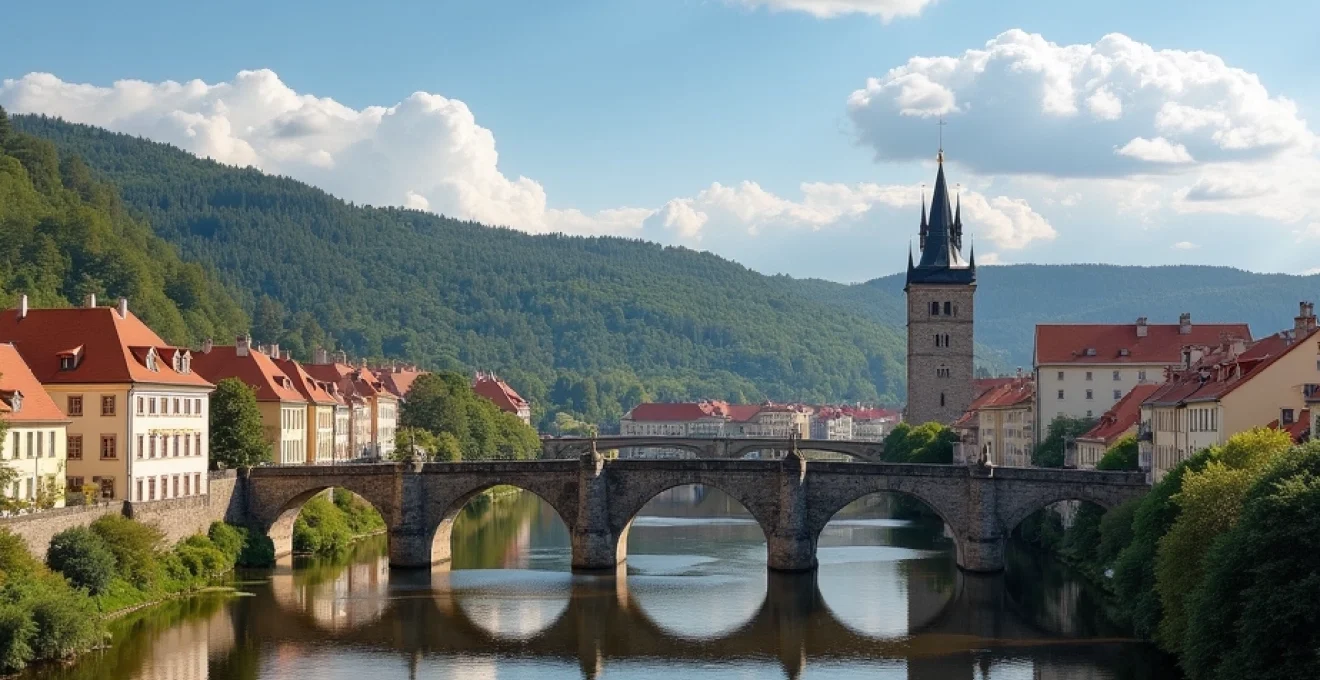
The Czech Republic stands as Central Europe’s hidden gem, offering travellers an extraordinary blend of medieval architecture, pristine natural landscapes, and rich cultural traditions that have captivated visitors for centuries. From the fairy-tale spires of Prague’s ancient castles to the dramatic sandstone formations of Bohemian Switzerland, this landlocked nation presents diverse experiences that cater to every type of adventurer. Whether you’re drawn to the UNESCO World Heritage sites scattered throughout historic city centres, seeking outdoor adventures in protected national parks, or eager to explore world-renowned spa towns and wine regions, the Czech Republic delivers authentic experiences that remain deeply rooted in tradition yet surprisingly accessible to modern travellers.
Prague’s UNESCO world heritage sites and gothic architecture
Prague’s designation as a UNESCO World Heritage Site encompasses an remarkable collection of architectural treasures spanning nearly a millennium of European history. The city’s Gothic, Renaissance, and Baroque elements create an unparalleled urban landscape that has survived wars, political upheavals, and the passage of time with remarkable integrity. Each historic district tells its own story through stone facades, cobblestone streets, and intricate decorative details that showcase the craftsmanship of bygone eras.
Prague castle complex and st. vitus cathedral
Prague Castle represents one of the world’s largest ancient castle complexes, covering over 70,000 square metres and serving as the seat of Czech kings, Holy Roman emperors, and presidents for more than a thousand years. The complex houses several distinct architectural gems, with St. Vitus Cathedral standing as the crown jewel of Czech Gothic architecture. Construction of this magnificent cathedral began in 1344 under the direction of French architect Matthias of Arras, later continued by Peter Parler, whose innovative approach to Gothic design influenced cathedral construction throughout Central Europe.
The cathedral’s soaring spires reach 96.6 metres into the Prague skyline, while its interior houses the tomb of St. Wenceslas, patron saint of Bohemia, adorned with precious stones and medieval frescoes. Visitors can explore the cathedral’s remarkable stained glass windows, including the famous rose window designed by František Kysela in the early 20th century, which demonstrates how modern artistic interpretations can complement ancient architectural frameworks.
Charles bridge medieval engineering and baroque statuary
Charles Bridge exemplifies medieval engineering prowess, having spanned the Vltava River for over 650 years without requiring major structural modifications. Emperor Charles IV commissioned the bridge’s construction in 1357, employing architect Peter Parler to create a crossing that would withstand both natural disasters and human conflicts. The bridge’s 16 arches rest on foundations reinforced with egg whites, a medieval building technique that contributed to its exceptional durability and resistance to flooding.
The bridge’s 30 Baroque statues, added primarily during the 17th and 18th centuries, transform this functional structure into an outdoor art gallery. Each statue represents different saints and religious figures significant to Czech Catholic tradition, with the statue of St. John of Nepomuk being the most famous and frequently touched by visitors seeking good fortune. The interplay between Gothic engineering and Baroque artistic expression creates a unique aesthetic experience that captures the evolution of Prague’s cultural identity.
Old town square astronomical clock mechanism
The Prague Astronomical Clock, installed in 1410, represents one of the world’s oldest functioning astronomical clocks and demonstrates the sophisticated understanding of celestial mechanics possessed by medieval craftsmen. Master clockmaker Mikuláš of Kadaň and Jan Šindel, a professor of mathematics and astronomy at Charles University, collaborated to create this complex timepiece that displays multiple temporal systems simultaneously. The clock’s intricate mechanisms track not only standard time but also Old Czech Time, Babylonian time, and sidereal time, providing medieval citizens with comprehensive temporal information essential for both daily activities and religious observances.
The clock’s hourly performance features animated figures representing the Twelve Apostles, Death nodding his head, and a crowing rooster, creating a spectacle that has entertained visitors for over six centuries. The astronomical dial displays the positions of the sun and moon in the zodiac, while the calendar dial shows the months of the year with corresponding zodiacal signs and rural work activities appropriate to each season.
Lesser town baroque palaces and gardens
Lesser Town, situated beneath Prague Castle, showcases the finest collection of Baroque palaces in Central Europe, reflecting the wealth and architectural ambitions of the 17th and 18th-century nobility. Following the devastating Thirty Years’ War, Catholic aristocratic families rebuilt this district with grand palaces featuring elaborate facades, decorative stucco work, and magnificent formal gardens that demonstrate Italian Baroque influence on Czech architectural traditions. The Wallenstein Palace, built between 1624 and 1630, exemplifies High Baroque architecture with its monumental sala terrena and geometric gardens featuring artificial grottos and bronze statues.
The district’s terraced gardens, including the Vrtba Garden and Ledeburg Garden, represent masterpieces of Baroque landscape architecture that integrate natural topography with formal design principles. These gardens feature cascading staircases, ornamental fountains, and carefully planned sight lines that create dramatic visual experiences while providing peaceful retreats from the bustling city streets below.
Jewish quarter synagogues and historic cemetery
Prague’s Jewish Quarter, known as Josefov, preserves one of Europe’s most significant collections of Jewish historical monuments, testament to the community’s thousand-year presence in the city despite centuries of persecution and restrictions. The Old Jewish Cemetery, established in the 15th century, contains approximately 12,000 tombstones layered in up to twelve levels due to Jewish burial customs and space limitations imposed by Christian authorities. The cemetery’s crowded arrangement of weathered tombstones creates a haunting landscape that speaks to the community’s resilience and continuity through generations of hardship.
The district’s six synagogues each represent different periods of Jewish architectural development, from the Gothic Old-New Synagogue, built around 1270 and Europe’s oldest active synagogue, to the ornate Spanish Synagogue with its Moorish Revival interior completed in 1893. These buildings now house the Jewish Museum’s extensive collections, documenting both the rich cultural traditions and tragic history of Czech and Moravian Jewish communities.
Bohemian switzerland national park adventure tourism
Bohemian Switzerland National Park protects a unique sandstone landscape carved by millions of years of erosion into dramatic gorges, towering rock formations, and mysterious labyrinthine passages that attract adventure tourists from across Europe. This protected area, established in 2000, encompasses 79 square kilometres of pristine wilderness where dense forests cloak ancient rock formations, creating microhabitats that support rare plant and animal species found nowhere else in Central Europe. The park’s distinctive sandstone towers and deep ravines offer world-class rock climbing, hiking, and nature photography opportunities within easy reach of Prague’s urban conveniences.
Pravčická gate sandstone arch formation
Pravčická Gate stands as Europe’s largest natural sandstone arch, spanning 26.5 metres in width and rising 16 metres above the forest floor, creating a dramatic natural monument that has inspired artists and writers for centuries. The arch formed through millions of years of erosion that gradually dissolved softer sandstone layers while leaving the harder caprock intact, demonstrating geological processes that shaped much of northern Bohemia’s distinctive landscape. Romantic painter Caspar David Friedrich immortalized this formation in his 1823 masterpiece “Rocky Landscape in the Elbe Sandstone Mountains,” establishing Pravčická Gate as a symbol of sublime natural beauty.
The surrounding area offers numerous hiking trails that provide different perspectives of the arch formation, including the challenging ascent to Falcon’s Nest restaurant, which offers panoramic views across the Elbe River valley into Saxon Switzerland. The gate’s fragile structure requires careful conservation management, with restricted access ensuring this natural wonder remains intact for future generations while still allowing visitors to experience its magnificent presence.
Bastei bridge rock climbing routes
The Bastei region provides some of Central Europe’s most technical and aesthetically stunning rock climbing routes, with over 1,000 established climbs ranging from beginner-friendly ascents to extreme challenges that test the skills of international climbing professionals. The area’s unique sandstone formations create vertical walls, overhangs, and chimney systems that require specialized climbing techniques developed specifically for this soft rock type. Local climbing ethics emphasize environmental protection through strict regulations that limit the use of permanent anchors and require climbers to use traditional protection methods that minimize long-term impact on the rock faces.
The region’s climbing routes follow historical pathways established by 19th-century mountaineers who developed innovative climbing techniques still used today. These pioneers created a grading system and climbing philosophy that emphasizes harmony with the natural environment, treating each ascent as both physical challenge and spiritual communion with the landscape.
Kamenice gorge boat navigation
The Kamenice River gorges offer unique boat navigation experiences through narrow channels carved deep into sandstone bedrock, where visitors can glide silently between towering walls that rise up to 150 metres above the water surface. Professional boat operators guide traditional wooden boats called pramice through these confined waterways, pointing out geological formations, rare plants growing on inaccessible cliff faces, and wildlife that inhabits these protected aquatic ecosystems. The gorges remain cool even during summer months, creating refreshing microclimates that support moisture-loving plant species and provide natural air conditioning for visitors exploring these hidden waterways.
Two distinct gorge sections, Edmund’s Gorge and Wild Gorge, each offer different navigation experiences ranging from gentle floating through wide pools to more adventurous passages through narrow channels where boat operators must use poles to maneuver around rock obstacles and through shallow sections.
Edmund’s gorge via ferrata climbing
Edmund’s Gorge features Central Europe’s most accessible via ferrata route, providing safely guided climbing experiences along steep sandstone walls equipped with permanent cables, ladders, and platforms that allow adventurous visitors to experience vertical terrain without requiring extensive technical climbing skills. The via ferrata concept, originally developed in the Italian Dolomites during World War I, adapts perfectly to Bohemian Switzerland’s unique geological conditions, allowing participants to traverse spectacular cliff faces while maintaining continuous safety connections to fixed protection systems.
The route combines physical challenge with unparalleled scenic rewards, including aerial perspectives of the gorge system and forest canopy that remain inaccessible through conventional hiking. Experienced guides provide safety instruction and technical support, making this extreme adventure accessible to participants with moderate fitness levels and no previous climbing experience.
Moravian wine region viticulture and terroir
Moravia’s wine regions represent a hidden treasure within Central European viticulture, producing exceptional wines from vineyards that benefit from a continental climate moderated by warm air currents from the Pannonian Basin. The region’s 96% share of Czech wine production stems from ideal growing conditions created by limestone-rich soils, optimal sun exposure on south-facing slopes, and a long tradition of winemaking that dates back to Roman times. Modern Moravian vintners combine centuries-old techniques with contemporary technology, creating wines that compete successfully in international competitions while maintaining distinctive regional characteristics that reflect the unique terroir of each subregion.
Znojmo region riesling production
The Znojmo wine region specializes in Riesling production that rivals Germany’s finest expressions of this noble grape variety, benefiting from similar climate conditions and soil compositions that create ideal growing environments for this temperamental cultivar. The region’s steep vineyard sites along the Dyje River valley provide excellent drainage and sun exposure while protecting vines from harsh continental winds that could damage delicate grape clusters during critical ripening periods. Znojmo’s Riesling wines demonstrate remarkable mineral complexity derived from underlying granite and gneiss bedrock, creating distinctive flavor profiles that express both the grape’s inherent characteristics and the unique geological signature of each vineyard site.
Local vintners employ traditional German winemaking techniques adapted to Moravian conditions, including controlled fermentation in stainless steel tanks and extended lees contact that develops complex textural elements while preserving the variety’s characteristic acidity and aromatic intensity. The region’s reputation for quality Riesling continues to grow among international wine critics who recognize these wines’ exceptional value and distinctive regional expression.
Mikulov limestone terroir characteristics
Mikulov’s limestone-dominated terroir creates unique growing conditions that produce wines with exceptional mineral depth and natural acidity, particularly evident in white varieties such as Sauvignon Blanc, Chardonnay, and Grüner Veltliner that thrive in these calcareous soils. The region’s Jurassic limestone formations provide excellent drainage while retaining sufficient moisture during dry periods, creating stable growing conditions that allow vines to develop deep root systems that access mineral-rich subsoil layers. This geological foundation contributes distinctive chalky minerality to finished wines, creating flavor profiles that wine experts describe as uniquely Moravian within the broader context of Central European viticulture.
The area’s baroque wine cellars, carved directly into limestone hillsides, provide ideal aging conditions with naturally stable temperatures and humidity levels that enhance wine development without requiring modern climate control systems. These historical storage facilities continue to play essential roles in contemporary winemaking, demonstrating how traditional infrastructure adapts to modern quality standards.
Velké pavlovice pinot noir cultivation
Velké Pavlovice has emerged as Moravia’s premier Pinot Noir region, where continental climate conditions and diverse soil types create optimal growing environments for this challenging variety that demands precise vineyard management and careful winemaking techniques. The region’s success with Pinot Noir reflects both favorable natural conditions and dedicated viticulturists who have invested decades in clone selection, canopy management, and harvest timing optimization that maximizes this grape’s potential for producing complex, age-worthy red wines. Local producers achieve remarkable consistency in their Pinot Noir expressions despite vintage variations, demonstrating mastery of vineyard techniques that mitigate climate challenges while enhancing positive terroir characteristics.
The region’s Pinot Noir wines exhibit characteristics that distinguish them from New World expressions, showing more restrained fruit intensity balanced by earthy complexity and structured tannins that reflect European winemaking philosophies emphasizing finesse over power.
Traditional moravian wine cellar architecture
Moravian wine cellars represent architectural solutions perfectly adapted to regional climate conditions and traditional winemaking requirements, featuring underground chambers carved into hillsides or constructed with thick stone walls that maintain stable temperatures year-round without modern refrigeration systems. These cellars, many dating from the 16th and 17th centuries, demonstrate sophisticated understanding of thermal dynamics and ventilation principles that create ideal environments for wine fermentation, aging, and storage. The cellars’ barrel-vaulted ceilings distribute structural loads efficiently while providing adequate space for large wooden casks and modern stainless steel equipment used in contemporary wine production.
Many historic cellars feature elaborate decorative elements including carved stone portals, wrought iron details, and painted ceiling decorations that reflect the cultural importance of wine in Moravian society. These architectural details transform functional spaces into cultural monuments that preserve regional artistic traditions while continuing to serve their original purposes in modern wine operations.
Český krumlov medieval town planning and renaissance elements
Český Krumlov exemplifies medieval urban planning principles perfectly preserved within a UNESCO World Heritage Site that showcases how 14th-century town developers integrated defensive considerations with commercial functionality and aesthetic appeal. The town’s layout follows natural topography along the meandering Vltava River, creating a compact urban core surrounded by protective walls and dominated by an imposing castle complex that demonstrates the evolution of fortification architecture from Gothic origins through Renaissance modifications. The settlement’s remarkable preservation results from centuries of economic stagnation that prevented destructive modernization, inadvertently creating one of Europe’s most authentic medieval townscapes.
The town’s Renaissance elements, added primarily during the 16th century under the patronage of the Rosenberg family, demonstrate how Italian artistic influences spread throughout Central Europe during the height of the Renaissance movement. The castle’s baroque theater, completed in 1682, remains one of the world’s few intact period theaters with original stage machinery, painted backdrops, and period costumes that provide unprecedented insight into early modern entertainment culture. The integration of Gothic structural elements with Renaissance decorative programs creates unique architectural syntheses that reflect the cultural sophistication of Bohemian noble courts.
The preservation of Český Krumlov represents more than architectural conservation; it maintains a living laboratory where visitors can experience medieval urban environments as they actually functioned, complete with narrow streets, covered walkways, and integrated castle-town relationships that defined Central European settlement patterns.
Modern conservation efforts balance tourist accessibility with historical authenticity, employing specialized restoration techniques that preserve original materials and construction methods while ensuring structural stability for continued use. The town’s designation as a UNESCO World Heritage Site requires strict adherence to international preservation standards that maintain architectural integrity while allowing for sensitive adaptive reuse of historical buildings for contemporary functions including hotels, restaurants, and cultural venues.
Karlovy vary thermal spring hydrology and spa treatments
Karlovy Vary’s reputation as Europe’s premier spa destination rests on unique hydrogeological conditions that produce
twelve distinct thermal springs that emerge from depths of up to 2,000 metres with temperatures ranging from 41 to 73 degrees Celsius, each containing unique mineral compositions that target specific health conditions and therapeutic applications. The springs’ hydrogeological origins trace back to deep groundwater circulation through fractured granite bedrock, where water absorbs beneficial minerals during its decades-long journey through underground thermal systems before emerging at the surface with remarkable consistency in temperature and chemical composition.
The town’s most famous spring, Vřídlo, produces approximately 2,000 litres of mineral water per minute at 73 degrees Celsius, creating dramatic geyser-like fountains that have attracted visitors since the 14th century when Emperor Charles IV discovered the springs’ therapeutic properties during a hunting expedition. The spring water contains high concentrations of sodium sulfate, sodium bicarbonate, and carbon dioxide, creating a distinctive taste and therapeutic profile that addresses digestive disorders, metabolic conditions, and stress-related ailments through both internal consumption and external bathing treatments.
Modern spa treatments at Karlovy Vary combine traditional hydrotherapy methods with contemporary wellness techniques, offering comprehensive therapeutic programs that address both physical ailments and mental well-being. The town’s spa facilities provide specialized treatments including mineral baths, inhalation therapy, and drinking cures that follow precise medical protocols developed over centuries of empirical observation and modern clinical research. Visitors can experience authentic spa culture by purchasing traditional porcelain drinking cups and following prescribed daily routines that include specific spring water consumption schedules, thermal bath sessions, and guided walks through the town’s beautifully landscaped spa parks.
Bohemian crystal manufacturing and glassblowing traditions
Bohemian crystal manufacturing represents one of the Czech Republic’s most distinguished craft traditions, combining centuries-old techniques with innovative artistic expression to produce glassware renowned worldwide for its exceptional clarity, brilliant light refraction, and intricate decorative details. The region’s crystal industry developed from abundant local supplies of high-quality silica sand and potash, combined with skilled craftsmen who perfected glassmaking techniques that originated in Venetian workshops but evolved into distinctly Bohemian styles characterized by deep cutting, engraving, and colored glass applications that remain unmatched in their technical sophistication.
Traditional glassblowing workshops throughout Bohemia continue to operate using methods passed down through generations of master craftsmen, where molten glass heated to temperatures exceeding 1,000 degrees Celsius is shaped using breath-powered techniques, hand tools, and precise timing that requires years of apprenticeship to master. The process begins with gathering molten glass on the end of a hollow steel pipe, then inflating and shaping the material through controlled breathing while rotating the piece to achieve uniform wall thickness and desired forms. Each piece requires multiple heating cycles and careful temperature control to prevent cracking or structural weaknesses that could compromise the finished product’s durability and optical properties.
Modern Bohemian crystal manufacturers blend traditional craftsmanship with contemporary design sensibilities, creating both classical patterns that honor historical precedents and innovative artistic expressions that push the boundaries of glass as an artistic medium. The industry’s commitment to hand-crafted production methods ensures that each piece maintains the subtle irregularities and unique characteristics that distinguish authentic Bohemian crystal from mass-produced alternatives. Leading manufacturers like Moser and Precioso continue to employ traditional lead crystal formulations containing 24% lead oxide, which creates the distinctive brilliance and weight that collectors associate with premium Bohemian glassware.
The crystal cutting and engraving processes represent perhaps the most technically demanding aspects of Bohemian glassmaking, requiring master craftsmen to create intricate patterns using copper wheels, diamond-tipped tools, and abrasive compounds that gradually remove glass material to create deep geometric patterns, floral motifs, and figurative designs. These decorative techniques transform simple glass forms into complex artistic objects that demonstrate the cutter’s skill through precise depth control, pattern symmetry, and surface finishing that achieves mirror-like brilliance without compromising structural integrity. The tradition of Bohemian crystal engraving includes both traditional patterns dating back centuries and contemporary designs that reflect modern artistic movements while maintaining the technical excellence that defines this distinguished craft heritage.
Bohemian crystal represents more than mere craftsmanship; it embodies a cultural tradition that connects contemporary artisans with centuries of technical innovation and artistic excellence, creating objects that serve both functional and aesthetic purposes while preserving irreplaceable cultural knowledge for future generations.
Visitors can experience these traditional manufacturing processes firsthand at numerous glassworks throughout the Czech Republic, where guided tours demonstrate each stage of crystal production from initial glass melting through final quality inspection and packaging. Many workshops offer hands-on experiences where participants can try basic glassblowing techniques under expert supervision, gaining appreciation for the skill and precision required to create even simple glass objects. These educational opportunities provide insight into how traditional crafts adapt to modern market demands while preserving essential techniques and cultural knowledge that define Czech artistic identity.