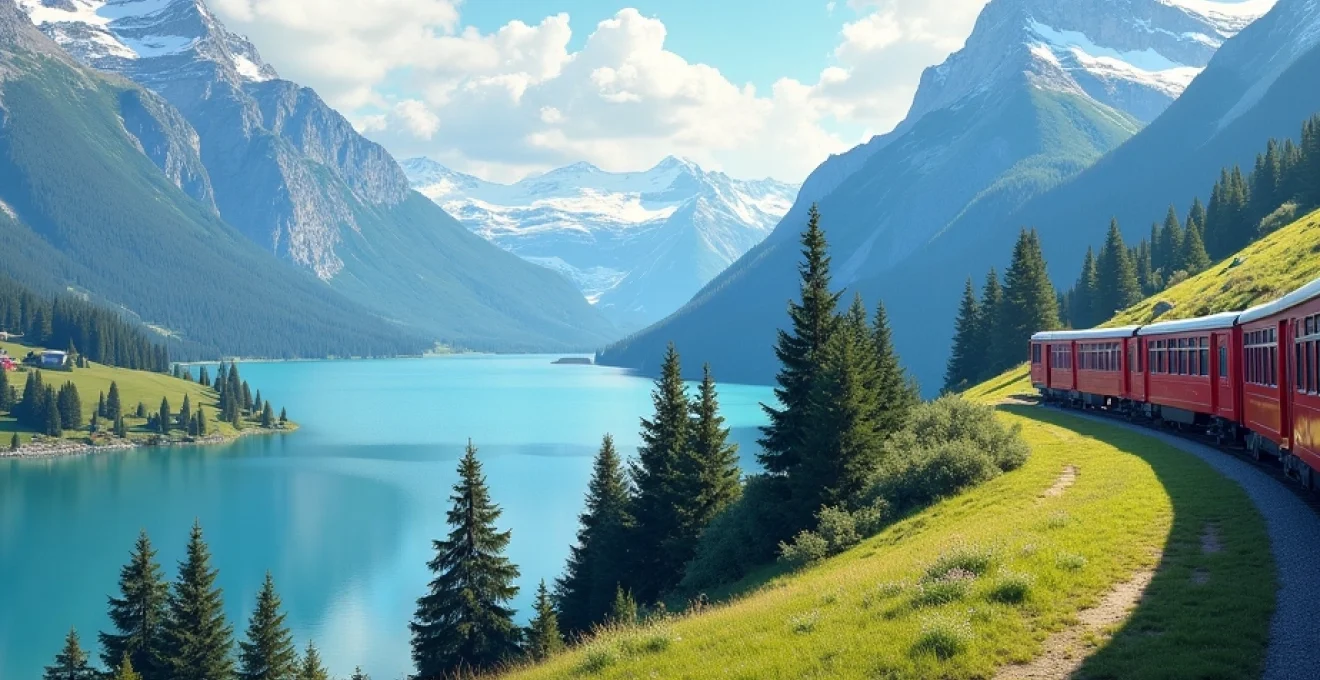
Switzerland’s railway network represents one of the world’s most sophisticated mountain transportation systems, weaving through landscapes that seem almost too perfect to be real. The country’s commitment to rail excellence has produced a collection of scenic routes that transform ordinary journeys into extraordinary adventures through towering peaks, pristine lakes, and valleys carved by millennia of geological forces. These railways don’t simply connect destinations; they provide front-row seats to some of Europe’s most breathtaking natural theatres, where every tunnel emergence reveals a new postcard-worthy vista.
The Swiss approach to scenic railway design goes beyond mere transportation functionality. Engineers have crafted routes that maximise visual impact whilst conquering seemingly impossible terrain, creating experiences that blur the line between practical travel and pure spectacle. From the engineering marvel of spiral tunnels bored through solid rock to observation cars featuring panoramic windows spanning nearly 270 degrees, Switzerland’s scenic railways represent the pinnacle of alpine transportation innovation.
Glacier express: engineering marvel through the swiss alps
The Glacier Express stands as perhaps the most celebrated scenic railway journey in the world, earning its reputation through a masterful combination of engineering prowess and natural beauty. This legendary route connects the glamorous resort towns of Zermatt and St. Moritz, traversing 291 kilometres of some of Switzerland’s most challenging terrain over an unhurried eight-hour journey. The train’s deliberately slow pace, averaging just 36 kilometres per hour, allows passengers to fully absorb the constantly changing Alpine panorama whilst savouring exceptional onboard dining services.
What makes the Glacier Express truly remarkable is its ability to navigate extreme elevation changes and treacherous mountain passes without compromising passenger comfort or safety. The route crosses 291 bridges and passes through 91 tunnels, each representing a triumph of Swiss engineering precision. The railway’s designers solved numerous logistical challenges, including how to maintain stable service across terrain where temperature variations can exceed 30 degrees Celsius between valley floors and mountain passes.
The Glacier Express journey represents more than transportation; it’s a moving observation deck that transforms the Swiss Alps into an accessible wilderness experience for travellers of all physical capabilities.
Landwasser viaduct: 65-metre limestone arch engineering
The Landwasser Viaduct stands as one of Switzerland’s most photographed railway structures, representing a masterpiece of early 20th-century engineering that continues to inspire awe more than a century after its construction. This 65-metre-high limestone arch spans the Landwasser Valley with six graceful arches, creating a dramatic entrance to the Landwasser Tunnel that appears to swallow trains into the mountainside. The viaduct’s construction required innovative techniques for working at extreme heights in challenging Alpine conditions, with workers suspended on ropes to position the precisely cut limestone blocks.
Engineers designed the viaduct to withstand not only the enormous weight of fully loaded trains but also the extreme weather conditions typical of this elevation. The structure’s elegant curve follows the natural contours of the valley whilst maintaining the precise gradients necessary for safe railway operation. The viaduct has become an iconic symbol of Swiss engineering excellence, featured on everything from postage stamps to tourism posters, yet its primary function remains unchanged: providing safe passage for trains carrying thousands of passengers annually through one of Europe’s most challenging mountain environments.
Oberalp pass: highest railway point at 2,033 metres
The Oberalp Pass represents the Glacier Express route’s highest point, where trains traverse the continental divide at 2,033 metres above sea level amidst a landscape that changes dramatically with the seasons. During winter months, the pass transforms into a snow-covered wilderness where avalanche protection systems and specialized snow-clearing equipment ensure continued railway operations despite extreme weather conditions. The engineering challenges of maintaining year-round service at this elevation include dealing with temperature fluctuations, high winds, and snow accumulations that can exceed several metres in depth.
At this elevation, passengers experience a unique atmospheric phenomenon where the air clarity creates extraordinary visibility on clear days, allowing views that extend across multiple Swiss cantons and into neighbouring countries. The railway infrastructure at Oberalp Pass includes sophisticated weather monitoring systems and heated track sections that prevent ice formation during the harshest winter conditions. The station facilities at the pass are designed to withstand extreme weather whilst providing essential services for passengers and crew during the brief stops that punctuate this high-altitude segment of the journey.
Rhône glacier panoramic windows: 270-degree viewing technology
The Glacier Express’s panoramic viewing cars feature innovative window technology that provides passengers with an unprecedented 270-degree field of vision, transforming the train interior into a mobile observatory for Alpine scenery. These specially designed observation carriages utilize curved glass panels that extend from floor to ceiling and wrap around the train’s sides, eliminating traditional visual barriers that might obstruct the constantly changing mountain vistas. The window system incorporates UV protection and anti-glare coatings that enhance visibility whilst protecting passengers from the intense high-altitude sunlight.
The engineering behind these panoramic windows required solving complex challenges related to structural integrity, weather sealing, and passenger safety at high speeds through mountain terrain. The curved glass panels must withstand significant pressure differentials, temperature extremes, and potential impact from debris whilst maintaining optical clarity throughout years of continuous service. Climate control systems work in conjunction with the expansive glass surfaces to maintain comfortable interior conditions regardless of external weather, ensuring that passengers can enjoy unobstructed views without sacrificing comfort during the eight-hour journey.
Albula railway UNESCO world heritage spiral tunnels
The Albula Railway section of the Glacier Express route showcases some of the world’s most ingenious railway engineering solutions, including the famous spiral tunnels that allow trains to gain significant elevation within relatively short horizontal distances. These UNESCO World Heritage-listed engineering marvels represent early 20th-century innovations that solved the seemingly impossible challenge of creating railway gradients gentle enough for safe operation whilst climbing steep mountain slopes. The spiral tunnel system includes the Brusio Circular Viaduct, where trains literally travel in a complete circle whilst ascending, creating the surreal experience of crossing over their own tracks.
The engineering principles behind these spiral tunnels involve precise mathematical calculations that balance gradient requirements with structural feasibility, ensuring that trains can maintain safe speeds whilst ascending or descending significant elevations. Each tunnel required extensive geological surveys and innovative construction techniques that worked within the constraints of solid rock formations and unstable mountain terrain. The heritage designation recognizes not only the technical achievements but also the cultural significance of these railways in connecting previously isolated Alpine communities and transforming Switzerland’s economic and social landscape.
Bernina express: transalpine railway through graubünden
The Bernina Express represents Switzerland’s most direct route between the German-speaking north and the Mediterranean-influenced south, traversing a remarkable landscape transition that encompasses glacial peaks, alpine meadows, and palm-lined Italian lakeshores within a single four-hour journey. This transalpine railway adventure begins in the sophisticated resort atmosphere of St. Moritz or the historic city of Chur and concludes in the charming Italian town of Tirano, crossing international borders whilst maintaining Switzerland’s legendary precision in scheduling and service quality.
The route’s engineering significance lies in its ability to cross the Bernina Pass without requiring rack-and-pinion assistance, relying instead on precise gradient calculations and innovative track design to maintain adhesion on steep Alpine slopes. The railway reaches its highest point at 2,253 metres above sea level, making it one of the highest adhesion railways in the world. The dramatic elevation changes provide passengers with an ever-changing climate experience, from snow-covered peaks to Mediterranean vegetation, often within the span of a single journey.
The Bernina Express offers travellers the unique opportunity to experience multiple climate zones and cultural landscapes within a single railway journey, showcasing the remarkable diversity contained within Switzerland’s compact geography.
Brusio circular viaduct: 360-degree spiral track design
The Brusio Circular Viaduct represents one of railway engineering’s most visually striking solutions to the challenge of managing steep gradients in mountainous terrain. This 360-degree spiral track design allows trains to complete a full circle whilst maintaining the gentle gradients necessary for safe adhesion railway operation, creating the spectacular sight of trains crossing over their own tracks in a graceful stone spiral. The viaduct’s construction required precise calculations to ensure that the circular design would provide sufficient elevation gain whilst maintaining structural integrity under the dynamic loads imposed by moving trains.
Engineers designed the nine-arch limestone viaduct to integrate seamlessly with the natural landscape whilst providing a functional solution to the gradient challenge presented by the valley’s steep slopes. The structure’s elegant proportions and careful stonework demonstrate the Swiss commitment to creating infrastructure that enhances rather than detracts from the natural environment. The viaduct has become one of Switzerland’s most photographed railway structures, attracting enthusiasts who time their visits to capture trains completing the full circular traverse against the backdrop of the surrounding Alpine scenery.
Morteratsch glacier viewing corridor
The Morteratsch Glacier viewing segment of the Bernina Express route provides passengers with an extraordinary opportunity to observe one of the Alps’ most significant glacial formations from the comfort of a moving train. This glacial observation corridor offers unparalleled views of the Morteratsch Glacier’s terminus and the dramatic icefall formations that characterize this dynamic frozen river flowing from the Bernina massif. The railway alignment takes advantage of natural viewing angles that maximize visibility of the glacier’s surface features, including crevasse patterns and ice movement indicators that fascinate both casual observers and glaciological enthusiasts.
The viewing experience is enhanced by the train’s precisely timed schedule, which allows optimal lighting conditions for glacier observation during most daylight journeys. Railway officials have positioned information panels and audio commentary systems to coincide with the best viewing opportunities, educating passengers about glacial formation processes and the environmental factors that influence ice movement and retreat patterns. The glacier’s accessibility via railway makes it possible for travellers with limited mobility to experience close-up glacial environments that would otherwise require extensive hiking through challenging Alpine terrain.
Alp grüm station: 2,091-metre alpine photography platform
Alp Grüm Station serves as more than a simple railway stop; it functions as a purpose-built observation platform positioned at 2,091 metres above sea level to maximize passenger access to some of the Bernina Express route’s most spectacular panoramic views. The station’s design incorporates extended platforms and strategically positioned viewing areas that allow passengers to disembark safely and capture photographs of the surrounding peaks, glaciers, and valley systems that define this high-Alpine environment. The facility includes weather-protected areas that enable comfortable observation even during the harsh conditions that frequently characterize this elevation.
The station’s location provides unobstructed views of the Palü Glacier and the distinctive pyramid peak of Piz Palü, creating photography opportunities that rank among the most sought-after Alpine railway experiences. Railway schedules are structured to allow sufficient time for passengers to disembark, experience the high-altitude environment, and capture images of the dramatic landscape transitions visible from this elevated vantage point. The station facilities include multilingual information displays that explain the geological processes and climbing history associated with the visible peaks, enhancing the educational value of the stop for passengers interested in Alpine geography and mountaineering culture.
Poschiavo valley descent: 1,828-metre elevation change
The descent through the Poschiavo Valley represents one of the most dramatic elevation changes accessible by adhesion railway, with trains losing 1,828 metres in altitude whilst traversing a landscape that transitions from high-Alpine tundra to Mediterranean-influenced vegetation zones. This remarkable elevation transition occurs over a relatively short horizontal distance, requiring sophisticated braking systems and precise speed control to ensure passenger safety and comfort throughout the descent. The engineering challenges include managing the thermal effects of continuous braking and maintaining stable train handling characteristics across varying gradient sections.
The valley descent provides passengers with a unique opportunity to observe distinct vegetation and climate zones within a single journey segment, with changes in flora and architecture reflecting the dramatic altitude differences encountered along the route. Traditional Alpine chalets give way to Italian-influenced architecture as trains descend toward Tirano, whilst the vegetation transitions from hardy mountain plants to deciduous forests and eventually to vine-covered hillsides. The railway infrastructure includes multiple safety systems designed to manage the sustained steep gradients, including emergency track brakes and automated speed monitoring systems that ensure safe operation regardless of weather or loading conditions.
Goldenpass express: interlaken to montreux scenic corridor
The GoldenPass Express creates a seamless scenic connection between the adventure tourism hub of Interlaken and the elegant lakeside resort of Montreux, traversing a route that encompasses eight pristine lakes and numerous snow-capped peaks within its approximately two-and-a-half-hour journey. This elegant scenic railway combines three distinct railway segments with different track gauges, requiring innovative rolling stock that can adapt to varying infrastructure specifications whilst maintaining passenger comfort and scheduling precision. The route showcases Switzerland’s incredible landscape diversity, from the dramatic peaks surrounding Interlaken to the vine-covered slopes of Lake Geneva’s UNESCO-listed Lavaux region.
The GoldenPass experience emphasizes luxury and comfort through specially designed panoramic carriages that feature enhanced viewing capabilities and premium service levels. The route’s engineering significance lies in its integration of multiple railway systems, each originally built to serve different regional transportation needs but now unified into a single premium tourist experience. The Belle Époque-style carriages evoke the golden age of European railway travel whilst incorporating modern safety and comfort technologies that ensure contemporary travel standards.
Passengers experience remarkable landscape transitions as trains descend from the high-Alpine environment around Interlaken through the rolling hills of the Simme Valley and finally arrive at Lake Geneva’s Mediterranean-influenced shores. The railway alignment maximizes scenic opportunities through careful routing that takes advantage of natural viewing corridors and strategic positioning relative to lakes, mountains, and historic settlements. The service includes multilingual commentary that explains the cultural and natural significance of landmarks visible from the train, enhancing the educational value of this already spectacular journey.
The GoldenPass Express operates year-round, with each season offering distinct scenic advantages and different atmospheric conditions that transform the same route into completely different visual experiences. Winter journeys provide snow-covered mountain vistas and frozen lake surfaces, whilst summer travel showcases lush green meadows and active lake recreation. The railway’s commitment to seasonal service excellence includes specialized equipment for winter operations and heating systems that ensure passenger comfort during the coldest months whilst maintaining clear window visibility for uninterrupted scenic enjoyment.
Jungfraujoch railway: cogwheel system to europe’s highest station
The Jungfraujoch Railway stands as one of Switzerland’s most ambitious mountain railway projects, utilizing sophisticated cogwheel technology to reach Europe’s highest railway station at 3,454 metres above sea level. This extraordinary mountain railway system begins its ascent from the charming village of Kleine Scheidegg and climbs through a combination of open Alpine terrain and tunnels carved directly through the Eiger and Mönch mountains to reach the “Top of Europe” designation that has made Jungfraujoch famous worldwide. The engineering challenges overcome during construction included working at extreme altitudes where oxygen levels significantly impact both human performance and mechanical equipment efficiency.
The cogwheel railway system employs rack-and-pinion technology that provides the mechanical advantage necessary for trains to climb gradients that would be impossible for conventional adhesion railways, with some sections reaching gradients exceeding 25 percent. The infrastructure includes multiple safety systems designed to prevent runaway trains and ensure passenger safety during emergency situations at high altitude. Weather conditions at the terminus can change rapidly and dramatically, requiring specialized station facilities that protect passengers from extreme cold, high winds, and sudden weather changes that are characteristic of high-Alpine environments.
The journey to Jungfraujoch provides passengers with unique insights into high-Alpine geology and glaciology, with strategic stops at intermediate stations that allow observation of the massive Aletsch Glacier system and the dramatic north faces of the Eiger, Mönch, and Jungfrau peaks. The railway’s construction required innovative solutions for working in permanently frozen ground conditions and managing the logistics of transporting materials and equipment to construction sites accessible only by the railway itself. The completed system represents one of the world’s most successful examples of sustainable high-altitude tourism infrastructure that provides mass access to wilderness environments whilst minimizing environmental impact through careful engineering and operational practices.
Passenger facilities at Jungfraujoch include research stations, observation decks, and specialized buildings designed to function reliably in extreme weather conditions that can include temperatures below -20°C and wind speeds exceeding 100 kilometres per hour. The station complex incorporates advanced life support systems and emergency protocols necessary for safe operation at altitudes where atmospheric pressure is significantly reduced compared to sea level conditions. The railway maintains year-round service despite challenging conditions, utilizing specialized snow removal equipment and heating systems that ensure reliable operation during the harshest Alpine winter conditions.
Rhine valley express: chur to bad ragaz vineyard routes
The Rhine Valley Express provides scenic railway access through Switzerland’s premier wine-producing region, connecting the historic city of Chur with the renowned spa destination of Bad Rag
az through landscapes that showcase some of Switzerland’s most productive viticulture alongside dramatic Rhine Valley geology. This scenic vineyard railway route follows the Rhine River’s course through terraced hillsides where centuries of winemaking tradition have created a cultural landscape that harmoniously blends agricultural productivity with natural beauty. The railway alignment provides elevated viewing perspectives of vineyard plots that change character dramatically with the seasons, from winter’s stark geometric patterns to autumn’s brilliant colour displays when grape harvests transform the valley into a tapestry of gold and crimson hues.
The engineering of this route required careful consideration of gradient management through terrain that alternates between river-level plains and elevated vineyard terraces, necessitating sophisticated track design that maintains comfortable passenger experiences whilst providing optimal viewing angles of the agricultural landscape. The railway infrastructure includes strategically positioned stations that allow passengers to disembark and explore local wineries, creating opportunities for authentic cultural experiences that extend beyond passive scenic observation. Climate-controlled carriages ensure year-round comfort whilst large windows maximize visibility of the constantly changing vineyard and river landscapes that define this distinctive Swiss region.
The Rhine Valley Express operates through terrain where geological processes have created ideal conditions for viticulture, with south-facing slopes that maximize solar exposure and river proximity that moderates temperature extremes throughout the growing season. Passengers can observe traditional winemaking techniques alongside modern vineyard management practices, with the railway schedule coordinated to highlight seasonal activities such as pruning, harvesting, and grape processing. The route connects several historic towns whose economies have been shaped by wine production for over a millennium, providing insights into Switzerland’s lesser-known but significant contribution to European winemaking traditions.
Centovalli railway: cross-border alpine bridge network
The Centovalli Railway represents Switzerland’s most spectacular cross-border scenic railway experience, connecting Locarno in the Italian-speaking canton of Ticino with Domodossola in Italy through the dramatically named “Valley of a Hundred Valleys.” This international alpine bridge network traverses terrain characterized by deep gorges, cascading waterfalls, and dense forests that create an almost tropical microclimate unique within Switzerland’s diverse geographical regions. The railway’s engineering significance lies in its extensive bridge system, which includes over 80 bridges and viaducts that span ravines and valleys where conventional road construction would be prohibitively expensive and environmentally destructive.
The route’s narrow-gauge design allows trains to navigate tight curves and steep gradients that follow the natural contours of this geologically complex region, where tectonic activity has created a landscape of exceptional diversity within a relatively small geographical area. Engineering challenges included constructing stable foundations in terrain prone to landslides and managing seasonal water flow variations that can transform peaceful streams into torrential rivers during spring snowmelt and autumn rainfall periods. The railway’s designers created infrastructure that harmonizes with the natural environment whilst providing reliable year-round transportation service between Swiss and Italian communities.
The Centovalli Railway demonstrates how international railway cooperation can create scenic experiences that transcend political boundaries whilst serving essential transportation needs for isolated mountain communities.
Passengers experience remarkable cultural and linguistic transitions as trains cross the Swiss-Italian border, with architecture, vegetation, and even agricultural practices reflecting the Mediterranean influences that characterize this unique corner of Switzerland. The railway schedule accommodates both tourist travel and local transportation needs, providing essential connectivity for communities that would otherwise be isolated by the challenging mountain terrain. Seasonal variations create dramatically different scenic experiences, with spring journeys featuring abundant wildflowers and cascading waterfalls, whilst autumn travel showcases brilliant foliage displays that rival the more famous deciduous forests of North America.
The bridge engineering throughout the Centovalli route represents innovative solutions to the challenge of crossing numerous deep ravines whilst maintaining gentle gradients suitable for narrow-gauge railway operation. Stone arch bridges blend seamlessly with the natural landscape, whilst steel viaducts span the widest gorges with minimal environmental impact. The railway’s commitment to environmental stewardship includes wildlife crossing provisions and noise reduction measures that protect the diverse ecosystems that thrive in this climatically unique region where Alpine and Mediterranean environments intersect.