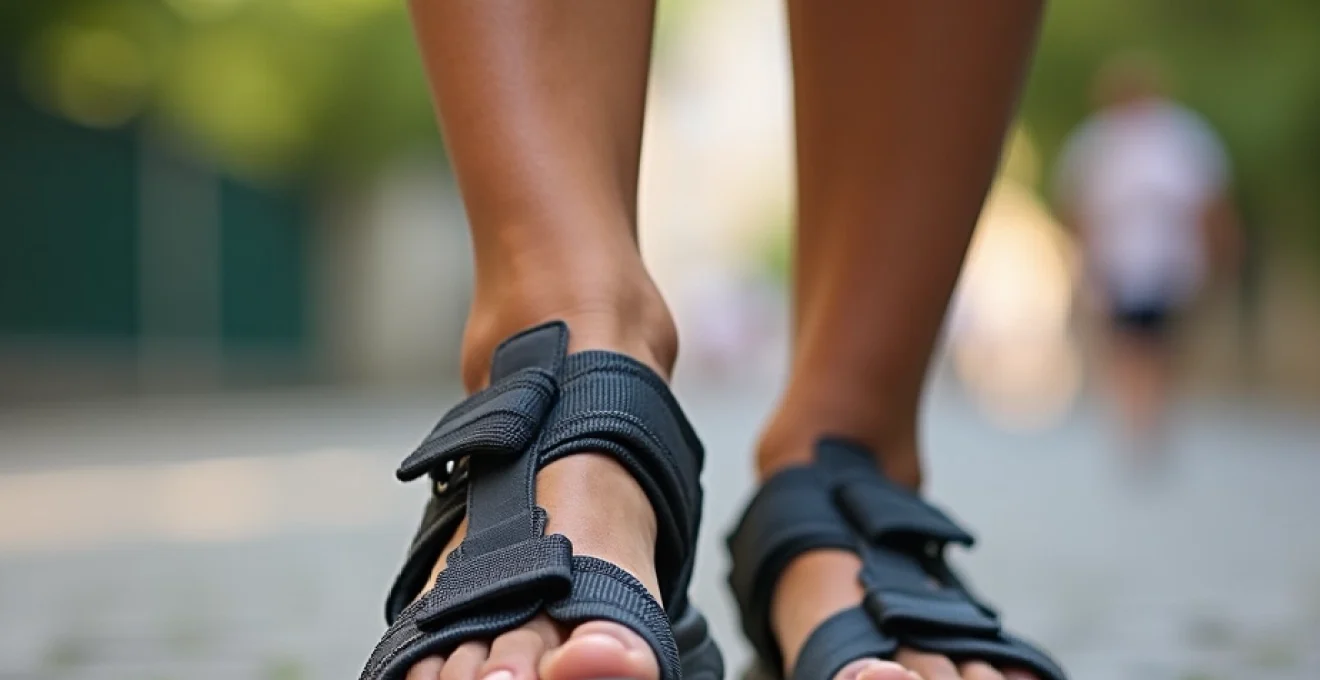
Walking across Europe’s diverse landscapes requires footwear that can adapt to everything from Amsterdam’s canal-side cobblestones to the rugged trails of the Swiss Alps. The right pair of walking sandals becomes your most trusted travel companion, transforming potentially exhausting days into comfortable adventures. Modern walking sandals combine advanced biomechanical engineering with climate-adaptive materials, offering the perfect balance of support, breathability, and style for the discerning European traveller.
European travel presents unique challenges that standard footwear simply cannot address effectively. Ancient cobblestone streets demand superior traction and shock absorption, while Mediterranean heat requires exceptional breathability. Northern European trails call for water resistance, and the sheer variety of terrain across a single trip necessitates remarkable versatility. Professional walking sandals have evolved to meet these specific demands through innovative design and materials science.
Essential biomechanical features for european cobblestone navigation
European cobblestone streets create a distinctive walking environment that challenges traditional footwear design principles. These irregular surfaces, dating back centuries, require sandals with specific biomechanical features to ensure comfort and safety during extended urban exploration. Understanding these essential features helps you select footwear that will perform reliably across diverse European cities.
Arch support systems for extended urban walking
Proper arch support becomes critically important when navigating uneven cobblestone surfaces for hours at a time. The constant micro-adjustments your feet make on irregular terrain place additional stress on the plantar fascia and surrounding structures. Advanced arch support systems in quality walking sandals incorporate contoured footbeds that distribute pressure evenly across the entire foot surface.
Modern walking sandals employ various arch support technologies, from moulded EVA foam to rigid thermoplastic plates. The most effective designs feature graduated support that provides stability without restricting natural foot movement. This becomes particularly important in cities like Edinburgh or Prague, where steep inclines combined with cobblestone surfaces create challenging walking conditions that can lead to fatigue and discomfort without proper support.
Heel-to-toe drop ratios for uneven medieval surfaces
The heel-to-toe drop ratio significantly impacts walking comfort on uneven medieval surfaces found throughout European city centres. Traditional sandals often feature excessive drop ratios that can cause instability on irregular terrain. Optimal walking sandals maintain a minimal drop ratio, typically between 4-8mm, promoting a more natural gait pattern.
This design consideration becomes especially relevant when walking through historic districts like Venice’s narrow streets or Bruges’ medieval quarter. The reduced heel elevation encourages midfoot striking rather than heel striking, distributing impact forces more effectively across uneven surfaces. Research indicates that lower drop ratios reduce fatigue and improve proprioception, essential for maintaining balance on unpredictable cobblestone terrain.
Lateral stability technology for rome’s trastevere district
Lateral stability technology addresses the sideways forces experienced when walking on cambered and uneven surfaces common in European historic districts. Traditional footwear often lacks adequate lateral support, leading to ankle fatigue and potential injury risk. Advanced stability systems incorporate wider sole platforms and strategic heel cup design to control excessive foot movement.
The narrow, winding streets of Rome’s Trastevere district exemplify the need for superior lateral stability. These ancient pathways feature significant camber and irregular stone placement that can challenge ankle stability. Quality walking sandals address this through reinforced sidewalls and strategic strap placement that secures the foot without restricting circulation or comfort during extended wear.
Forefoot flexibility mechanics for barcelona’s gothic quarter
Forefoot flexibility mechanics play a crucial role in maintaining comfort while navigating the tight turns and varying elevations of historic European quarters. The Gothic Quarter in Barcelona, with its maze-like streets and frequent direction changes, demands footwear that accommodates rapid directional transitions. Flexible forefoot design allows natural toe splay while maintaining structural integrity.
Strategic flex grooves in the sole design enable natural foot mechanics during push-off phases of walking. This becomes particularly important when ascending and descending the numerous staircases found throughout European historic centres. The optimal balance between flexibility and support ensures that feet remain comfortable during the constant acceleration and deceleration required for urban exploration.
Climate-adaptive materials for mediterranean and northern european conditions
European travel often encompasses dramatic climate variations within a single trip, from the sun-baked shores of the Mediterranean to the misty highlands of Scotland. Climate-adaptive materials in modern walking sandals address these diverse conditions through innovative fabric technologies and construction methods that provide appropriate protection and comfort regardless of environmental challenges.
Quick-dry synthetic uppers for santorini’s coastal humidity
Coastal humidity in Mediterranean destinations creates unique challenges for footwear materials, particularly in volcanic island environments like Santorini. Quick-dry synthetic uppers utilise hydrophobic treatments and open-weave constructions that facilitate rapid moisture evacuation while maintaining durability against salt air exposure.
Advanced synthetic materials offer superior performance compared to traditional leather in humid coastal environments. These materials resist salt crystallisation that can cause stiffening and cracking in natural materials. Additionally, synthetic uppers maintain their structural integrity when repeatedly wetted and dried, essential for island-hopping adventures where sandals may encounter sea spray, swimming activities, and high ambient humidity levels.
Breathable mesh integration for prague’s summer heat waves
Urban heat islands in European cities like Prague can create surprisingly intense conditions during summer months, making breathability a critical factor in footwear selection. Integrated mesh panels provide strategic ventilation without compromising structural integrity or aesthetic appeal. These panels are typically positioned over high-heat areas of the foot.
Modern mesh integration employs engineered fabrics that balance airflow with durability. The placement of these ventilation zones follows thermal mapping of foot temperature distribution, ensuring maximum cooling efficiency. This technology proves particularly valuable when walking through Prague’s expansive old town during peak summer temperatures, where radiant heat from stone surfaces compounds ambient temperature effects.
Water-resistant treatments for scotland’s highland trails
Scotland’s Highland trails present challenging conditions that require robust water-resistant treatments without sacrificing breathability. Advanced water-resistant coatings employ nanotechnology to create surfaces that repel water while allowing vapour transmission. These treatments prove essential for highland walking where sudden weather changes are common.
Modern water-resistant treatments utilise durable water repellent (DWR) finishes that maintain effectiveness through repeated exposure cycles. Unlike waterproof membranes that can become clammy in active use, these treatments allow feet to remain comfortable while protecting against stream crossings, sudden showers, and dew-soaked vegetation typical of Highland hiking conditions.
UV protection coatings for provence walking routes
Extended exposure to Mediterranean sun along Provence’s scenic walking routes necessitates UV protection for both foot health and material longevity. UV-resistant coatings prevent material degradation while protecting exposed foot areas from harmful radiation. These treatments are particularly important for lighter-coloured sandals that may reflect heat but require additional protection.
Quality UV protection extends beyond basic material treatments to include additives that prevent colour fading and structural weakening from ultraviolet exposure. This becomes especially important during multi-day walking tours through sun-exposed terrain where sandals face continuous high-intensity UV exposure that can rapidly degrade untreated materials.
Traction engineering for diverse european terrain types
European terrain diversity demands sophisticated traction engineering that performs equally well on wet limestone in Dubrovnik, muddy forest paths in Bavaria, and polished marble in Florence. Modern walking sandal outsoles employ compound rubber formulations and tread patterns specifically designed to address the unique challenges presented by European walking environments.
Traction engineering begins with rubber compound selection, where different shore hardnesses provide optimal grip on specific surface types. Multi-density outsole construction allows manufacturers to optimise different areas of the sole for specific functions. Heel areas may utilise harder compounds for durability, while forefoot zones employ softer compounds for superior grip on smooth surfaces.
Tread pattern design follows biomechanical principles that maximise contact with irregular surfaces while providing efficient water and debris evacuation. Deep lugs excel on soft surfaces like forest trails, while low-profile patterns with siping perform better on hard surfaces like city pavements. Advanced designs incorporate both elements through strategic pattern placement that adapts to different phases of the walking cycle.
The most effective walking sandal outsoles combine multiple rubber compounds and tread patterns to address the diverse terrain challenges encountered during European travel.
Edge grip technology addresses the specific challenge of navigating stone steps and irregular surfaces common throughout European historic sites. Bevelled sole edges and strategic tread placement on the outsole perimeter improve contact with step edges and uneven surfaces. This technology proves particularly valuable when exploring ancient amphitheatres, castle ruins, and historic stairways where traditional tread patterns may not provide adequate purchase.
Weight distribution analysis for Multi-Day european itineraries
Multi-day European itineraries place unique demands on footwear weight distribution, as travellers typically walk significantly more than their normal daily routine. Effective weight distribution prevents localised pressure points that can develop into painful hotspots during extended wear periods. Strategic weight placement in quality walking sandals ensures comfort throughout long exploration days.
Heel-to-toe weight distribution affects walking efficiency and fatigue levels during extended wear. Properly balanced sandals position the majority of structural weight in the midfoot area, minimising heel strike impact and toe-off energy requirements. This design consideration becomes particularly important when carrying day packs or camera equipment that adds additional load to the walking system.
Footbed contouring contributes significantly to weight distribution by spreading load across the entire foot surface rather than concentrating pressure on specific areas. Advanced footbed designs incorporate graduated density materials that provide firm support in load-bearing areas while offering cushioning in sensitive zones. This approach prevents the localised fatigue that can develop during extensive urban exploration.
Strap positioning affects how sandal weight distributes across the foot and influences overall comfort during extended wear. Ergonomic strap placement follows anatomical lines that distribute tension evenly without creating pressure points. The most effective designs allow for micro-adjustments that accommodate foot swelling and changing comfort requirements throughout long walking days.
Premium walking sandal models: technical specifications and performance metrics
The premium walking sandal market offers several standout models that excel in European travel applications. Each design represents different approaches to solving common challenges faced by travellers, from urban cobblestone navigation to multi-terrain hiking. Understanding the technical specifications and performance characteristics of leading models helps inform optimal selection for specific travel requirements.
Teva universal trail vibram outsole configuration
The Teva Universal Trail incorporates Vibram outsole technology specifically engineered for mixed-terrain performance. Vibram TC5+ compound provides exceptional durability and traction across diverse European surfaces, from wet Scottish granite to sun-baked Mediterranean limestone. The outsole configuration features strategic lug placement that optimises grip without collecting debris.
Technical specifications include a 32mm heel and 28mm forefoot stack height, providing substantial cushioning for extended urban walking while maintaining ground feel for technical terrain. The Universal Trail’s strap system utilises recycled plastic webbing with ladder-lock buckles that allow precise adjustment and secure retention during active use. Weight specifications of 340g per pair (UK size 8) make these sandals suitable for extended wear without causing fatigue.
Merrell kahuna web adjustable strap system
Merrell’s Kahuna Web features an innovative adjustable strap system that provides customisable fit and security across different foot shapes and walking conditions. The webbing configuration distributes pressure evenly while allowing for rapid adjustment as conditions change throughout the day. This system proves particularly effective for travellers experiencing foot swelling during long walking days.
Performance metrics include EVA foam midsole construction with 20% recycled content, providing sustainable cushioning that maintains resilience through temperature variations common in European travel. The air cushion heel technology absorbs impact forces effectively on hard surfaces while maintaining stability on uneven terrain. Antimicrobial treatment prevents odour development during extended wear periods.
KEEN newport H2 toe protection technology
KEEN’s Newport H2 incorporates comprehensive toe protection technology that addresses the hazards of European cobblestone streets and rocky coastal paths. The rubber toe bumper extends around the entire forefoot area, providing protection against impacts while maintaining flexibility for natural toe movement. This feature proves invaluable when navigating crowded European tourist areas where foot impacts are common.
The Newport H2’s quick-dry lining utilises hydrophobic treatment that prevents water retention while maintaining breathability. Cleansport NXT technology provides natural odour control without chemical treatments, important for travellers sharing accommodations. The secure fit lace capture system ensures heel security while allowing easy entry and exit, essential for European travel where frequent shoe removal is required.
Chaco Z/Cloud luvseat footbed architecture
Chaco’s Z/Cloud incorporates Luvseat footbed architecture that provides comprehensive support for extended European walking tours. The dual-density polyurethane construction offers firm arch support with softer heel and forefoot cushioning, optimising comfort for varied terrain and extended wear periods. This technology addresses the biomechanical demands of walking on uneven surfaces for hours at a time.
The Luvseat footbed design in Chaco sandals has been scientifically tested to reduce fatigue and improve alignment during extended walking sessions on irregular surfaces.
Performance specifications include ChacoGrip rubber outsole compound engineered for optimal traction on wet and dry surfaces. The 3mm lug depth provides effective grip without excessive debris retention, while siping enhances surface contact on smooth stones. The continuous webbing system distributes pressure evenly and allows for micro-adjustments throughout the day, accommodating changing foot dimensions and comfort requirements.
Sizing protocols and foot swelling accommodation for extended european tours
Proper sizing becomes critically important for European travel where daily walking distances often exceed normal activity levels by significant margins. Foot swelling accommodation requires sizing strategies that account for the natural expansion that occurs during extended activity periods. Understanding these principles ensures optimal comfort throughout demanding travel itineraries.
European travel typically involves 8-12 hours of daily walking activity, significantly more than most people’s normal routine. This extended activity level causes natural foot expansion that can reach 5-8% by volume in the later stages of active days. Sizing protocols must account for this expansion while maintaining security and support when feet are at their smallest dimensions, typically in the morning hours.
Adjustability features in premium walking sandals address the dynamic nature of foot dimensions throughout active days. Multiple adjustment points allow travellers to modify fit as conditions change, ensuring consistent comfort and security. The most effective systems provide independent adjustment of forefoot, midfoot, and heel retention without requiring complete strap reconfiguration.
Seasonal considerations affect sizing requirements, as warmer European climates typically cause more significant foot expansion than cooler conditions. Mediterranean summer travel may require more generous sizing than northern European spring itineraries. Understanding these variables helps travellers select appropriate sizing for their specific travel plans and personal physiology, ensuring optimal performance throughout their European adventures.