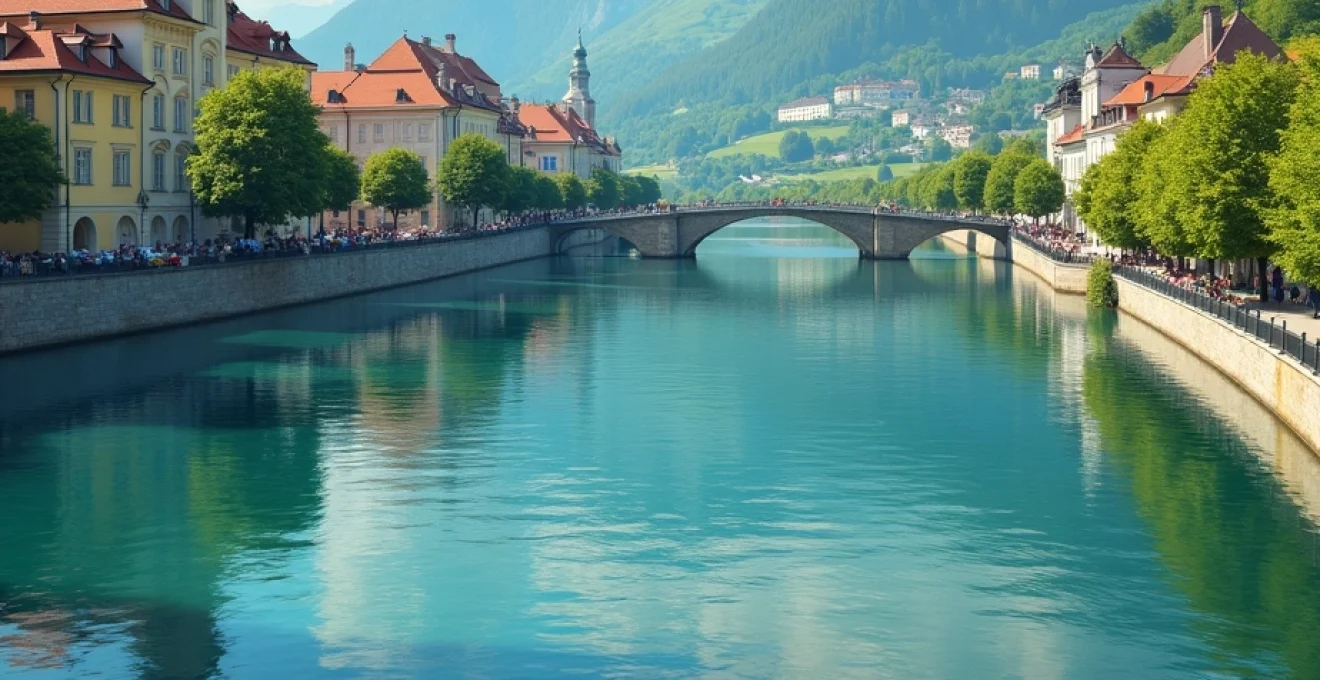
Vienna’s strategic position in the heart of Central Europe transforms the Austrian capital into an exceptional gateway for exploring diverse landscapes, historic treasures, and cultural experiences beyond the city limits. The Danube River, which flows majestically through the region, connects Vienna to charming medieval towns, baroque monasteries, and world-renowned wine valleys that have shaped European history for over a millennium. Whether you’re drawn to imperial palaces that once housed the Habsburg dynasty, pristine alpine lakes nestled in the Salzkammergut region, or ancient Roman settlements that predate the city itself, Vienna’s surroundings offer an extraordinary variety of day trip opportunities.
The convenience of Austria’s efficient public transportation system, combined with the country’s compact geography, means that you can journey from Vienna’s bustling streets to tranquil mountain villages, historic abbey libraries, or thermal spa towns within a matter of hours. These excursions provide the perfect complement to Vienna’s urban sophistication, offering glimpses into Austria’s rural traditions, architectural heritage, and natural splendour that have captivated travellers for centuries.
Imperial day excursions: habsburg palaces and cultural heritage sites
The Habsburg dynasty’s influence extends far beyond Vienna’s borders, creating a network of magnificent palaces, monasteries, and cultural sites that reflect centuries of imperial patronage. These destinations showcase the artistic and architectural achievements that defined Central European culture during the height of the Austro-Hungarian Empire.
Schönbrunn palace gardens and gloriette panoramic views
While technically within Vienna’s boundaries, Schönbrunn Palace deserves recognition as a full-day cultural excursion that transports visitors into the world of imperial grandeur. The palace’s extensive gardens span over 1.2 square kilometres, featuring meticulously maintained baroque landscaping, ornate fountains, and the iconic Gloriette monument that crowns the hillside above the palace grounds. The palace complex houses 1,441 rooms, though visitors can explore 40 of the most significant imperial apartments through guided tours that reveal the daily lives of Empress Elisabeth and Emperor Franz Joseph.
The Gloriette, constructed in 1775, serves as both an architectural masterpiece and a strategic viewpoint offering sweeping panoramas across Vienna’s skyline and the distant Wienerwald. Professional tip: arrive early morning to capture the golden light illuminating the palace façade, and plan to spend at least four hours exploring both the interior rooms and the extensive garden network.
Melk abbey benedictine monastery architecture and manuscript library
Located approximately 90 kilometres west of Vienna along the Danube River, Melk Abbey represents one of Europe’s most spectacular examples of baroque monastic architecture. The Benedictine monastery, which has maintained continuous religious life since 1089, underwent extensive reconstruction during the early 18th century under the direction of architect Jakob Prandtauer. The abbey’s library contains over 100,000 volumes, including 1,888 manuscripts and 750 incunabula that chronicle nearly a millennium of European intellectual history.
The abbey church features stunning frescoes by Johann Michael Rottmayr and elaborate stucco work that exemplifies the Austrian baroque style. The marble hall, with its trompe-l’oeil ceiling paintings, creates an illusion of infinite space that demonstrates the sophisticated artistic techniques employed by 18th-century craftsmen. Transportation note: direct trains from Vienna’s Westbahnhof reach Melk in approximately 1 hour and 15 minutes, with the abbey situated a pleasant 10-minute walk from the station.
Hallstatt UNESCO world heritage salt mining village
Hallstatt, nestled beside a pristine alpine lake in the Salzkammergut region, represents one of Austria’s most photographed destinations and a UNESCO World Heritage Site since 1997. The village’s strategic importance stems from its salt mining operations, which have continued for over 4,000 years and provided the economic foundation for the region’s development. Archaeological excavations have revealed evidence of the Hallstatt culture, a pre-Roman Celtic civilisation that flourished between 800-400 BCE.
The village’s 16th-century wooden houses reflect traditional alpine architecture, while the bone chapel in the local church displays over 1,200 painted skulls, a unique mortuary tradition that developed due to limited cemetery space. The Hallstatt Salt Mine, accessible via funicular railway, offers underground tours through tunnels that miners have worked for millennia. Travel consideration: the journey from Vienna requires approximately 3 hours each way by train and bus, making this a demanding but highly rewarding full-day excursion.
Salzburg mozart birthplace and historic old town walking routes
Salzburg, Mozart’s birthplace and a UNESCO World Heritage Site, lies 300 kilometres west of Vienna and serves as one of Austria’s most culturally significant destinations. The city’s historic centre, largely unchanged since the baroque period, features over 1,000 years of architectural history compressed into a compact area dominated by the Hohensalzburg Fortress. Mozart’s birthplace on Getreidegasse 9 has been converted into a museum displaying the composer’s childhood violin, piano, and original musical manuscripts that provide insight into his early musical development.
The old town’s narrow medieval streets connect baroque churches, aristocratic palaces, and traditional craftsmen’s workshops that maintain centuries-old traditions. The Salzach River divides the historic centre from the Neustadt, where the Mirabell Palace and Gardens offer classical landscaping and mountain views that inspired scenes from “The Sound of Music.” High-speed rail connections from Vienna reach Salzburg in 2 hours and 20 minutes, allowing ample time to explore the city’s musical heritage and architectural treasures.
Danube valley wine region exploration and viticultural experiences
The Danube Valley wine regions surrounding Vienna produce some of Austria’s most celebrated wines, with viticultural traditions dating back to Roman times. These destinations combine spectacular river valley scenery with opportunities to taste world-class Riesling, Grüner Veltliner, and other Austrian wine varietals in their native terroir.
Wachau valley riesling vineyards and terraced hillside tastings
The Wachau Valley, extending 36 kilometres along the Danube between Melk and Krems, produces Austria’s most prestigious dry white wines on steep terraced vineyards that cascade down to the river’s edge. The region’s unique microclimate, protected by the Bohemian Massif to the north and warmed by Pannonian influences from the east, creates ideal conditions for Riesling and Grüner Veltliner cultivation. The valley’s 1,350 hectares of vineyards are divided among 900 small family producers who maintain traditional winemaking methods passed down through generations.
The terraced vineyard system, some dating to medieval times, represents one of Europe’s most dramatic examples of viticulture adapted to challenging topography. Many producers offer guided tastings in historic wine cellars carved directly into the hillsides, providing natural temperature control for wine storage. Seasonal timing matters: visit during autumn harvest season (September-October) to witness the grape picking process and taste the freshest expressions of the region’s signature varietals.
Dürnstein medieval town and richard the lionheart castle ruins
Dürnstein, perhaps the Wachau Valley’s most picturesque village, combines medieval architecture with legendary historical significance as the imprisonment site of England’s King Richard I during the Third Crusade. The castle ruins perched 150 metres above the Danube offer panoramic views across the valley and serve as a hiking destination accessible via well-marked trails. The village’s baroque Stift Dürnstein, a former Augustinian monastery, features a distinctive blue and white church tower that serves as a navigation landmark for Danube river traffic.
The village’s main street preserves medieval proportions and traditional Austrian architecture, with several family-run wine taverns (Heurige) offering local wines alongside regional specialties like Wachauer Marillenknödel (apricot dumplings). Archaeological evidence suggests continuous settlement since Roman times, with the strategic river crossing point contributing to the village’s historical importance. Photography enthusiasts will find optimal lighting conditions during late afternoon when the setting sun illuminates the castle ruins and reflects off the river’s surface.
Krems an der donau wine museums and local grüner veltliner producers
Krems an der Donau, the eastern gateway to the Wachau Valley, serves as the region’s commercial centre and home to Austria’s most comprehensive wine museum and education centre. The city’s Weinstadt Museum chronicles 2,000 years of local viticulture, displaying Roman amphorae, medieval pressing equipment, and modern winemaking technology that illustrates the evolution of Austrian wine production. The Donau-Universität Krems houses Austria’s leading wine research institute, where ongoing studies focus on climate change adaptation and sustainable vineyard management practices.
Local producers in and around Krems specialise in Grüner Veltliner, Austria’s signature white wine grape that thrives in the region’s loess soils and continental climate. The variety’s characteristic pepper and citrus notes reflect the terroir’s mineral complexity, while extended lees aging creates texture and depth that have earned international recognition. Educational opportunities abound through formal wine courses offered by local producers, providing structured learning about Austrian wine classification systems and tasting techniques.
Spitz Thousand-Bucket hill vineyard hiking trails
Spitz an der Donau, a charming riverside village, serves as the trailhead for hiking routes through the famous Tausendeimerberg (Thousand-Bucket Hill), a vineyard site renowned for producing exceptional Riesling wines from some of the Wachau’s steepest slopes. The name derives from the historic yield potential of this prime vineyard site, where optimal sun exposure and dramatic elevation changes create microclimates that concentrate flavour intensity in the grapes. The hiking trails through these vineyards offer spectacular views across the Danube Valley while providing opportunities to observe traditional viticulture techniques still employed on these challenging slopes.
The village itself features well-preserved medieval architecture, including a late-Gothic parish church and traditional vintner houses that reflect the area’s prosperity during the height of Danube river trade. Local wine producers maintain centuries-old cellars carved into the hillsides, where natural rock formations provide consistent temperatures for wine maturation. Trail difficulty varies from gentle riverside paths suitable for all fitness levels to challenging steep ascents that reward hikers with panoramic valley views and direct access to working vineyards.
Alpine adventure day trips: salzkammergut lake district
The Salzkammergut region, stretching across Upper Austria, Salzburg, and Styria, encompasses 76 crystal-clear alpine lakes surrounded by dramatic mountain peaks that have inspired artists, composers, and nature enthusiasts for centuries. This UNESCO World Heritage landscape offers opportunities for outdoor recreation, cultural exploration, and wellness activities that showcase Austria’s natural beauty at its most pristine.
Lake Wolfgang (Wolfgangsee) serves as the region’s most accessible destination from Vienna, combining charming lakeside villages with recreational opportunities ranging from vintage steamboat excursions to mountain railway journeys. The lake’s thermal springs have attracted visitors since Roman times, while the surrounding peaks offer hiking trails suitable for various skill levels. St. Wolfgang village, immortalised in the operetta “Im weissen Rössl,” maintains traditional alpine architecture and hosts classical music festivals during summer months.
Bad Ischl, the former imperial summer residence, provides insight into Habsburg leisure culture while offering modern spa facilities utilising the region’s natural salt springs. Emperor Franz Joseph spent 60 summers in Bad Ischl, making crucial political decisions from his villa that influenced European history. The town’s Kaiservilla, now a museum, displays original furnishings and personal belongings that reveal the private lives of Austria’s imperial family. Transportation logistics: the journey from Vienna requires 2.5-3 hours via train connections through Salzburg or Linz, with regional buses providing access to smaller lake communities.
Lake Hallstatt, despite sharing its name with the famous village, offers distinct experiences including prehistoric salt mining tours, ice cave explorations, and alpine hiking routes that access some of Austria’s most remote mountain terrain. The Dachstein Glacier, accessible via cable car systems, provides year-round snow experiences and panoramic views extending across multiple alpine valleys. Weather considerations significantly impact accessibility, with winter conditions requiring appropriate equipment and limiting some mountain activities, while summer months offer optimal conditions for all recreational pursuits.
Historical battle sites and medieval fortress expeditions
Austria’s strategic location at the crossroads of Europe has resulted in numerous historically significant battle sites and defensive fortifications within day trip distance of Vienna. These destinations provide tangible connections to pivotal moments in European history while showcasing military architecture and archaeological preservation efforts.
Carnuntum Archaeological Park, located 40 kilometres east of Vienna, preserves the remains of a major Roman military base and civilian settlement that protected the empire’s Danube frontier for over 400 years. The site housed the XIV Gemina and XV Apollinaris legions and served as the capital of Pannonia Superior province. Recent archaeological reconstructions, based on extensive research and excavation, have recreated a Roman villa, public baths, and amphitheatre using authentic materials and construction techniques. The civilian city once housed approximately 50,000 inhabitants, making it one of the largest settlements in the Roman province.
Forchtenstein Castle, perched on a dramatic rocky outcrop in Burgenland, houses one of Europe’s most significant historical weapons collections, assembled by the Esterházy family over four centuries. The fortress, continuously occupied since 1300, withstood Ottoman sieges and served as a strategic stronghold during conflicts between Christian Europe and the expanding Ottoman Empire. The castle’s armoury contains over 20,000 pieces, including medieval crossbows, Renaissance firearms, and Ottoman weapons captured during various military campaigns. Strategic positioning on the castle’s ramparts provides commanding views across the Pannonian Plain, illustrating the fortress’s military importance in controlling trade routes and monitoring enemy movements.
Aggstein Castle ruins, dramatically situated on a narrow rocky ridge above the Danube in the Wachau Valley, represent one of Austria’s most romantically positioned medieval fortifications. The 12th-century stronghold served as both a defensive position and a base for collecting river tolls from Danube merchants. Legend associates the castle with Hadmar von Kuenring, known as “Hadmar the Dog,” whose harsh rule and banditry activities made him notorious throughout the region. The ruins require a moderate hike to reach but reward visitors with spectacular valley views and well-preserved defensive architecture that demonstrates medieval military engineering principles.
Thermal spa towns and wellness resort day packages
Austria’s geological diversity has created numerous thermal spring regions within easy reach of Vienna, offering therapeutic waters, modern spa facilities, and wellness traditions that date back to Roman times. These destinations combine relaxation with health benefits, utilising mineral-rich waters that emerge from deep underground sources.
Baden bei Wien, just 25 kilometres south of Vienna, has operated as a spa destination for over 2,000 years, with Emperor Marcus Aurelius among its early notable visitors. The town’s 14 thermal springs produce sulphur-rich waters at temperatures ranging from 22-36°C, with proven therapeutic effects for rheumatic conditions, circulatory disorders, and stress-related ailments. The Römertherme Baden combines historical bathing traditions with modern wellness concepts, featuring indoor and outdoor thermal pools, saunas, and treatment facilities set within landscaped gardens. Architectural highlights include the Kurpark’s neoclassical buildings and the Casino Baden, where Beethoven composed parts of his Ninth Symphony during extended stays.
Bad Vöslau, neighbouring Baden, offers a more intimate spa experience centred around its historic Thermalbad facility, which maintains original 19th-century architecture while providing contemporary wellness amenities. The town’s thermal waters, emerging from 400-metre-deep sources, contain high concentrations of calcium, magnesium, and sulphate minerals that support therapeutic treatments for joint and muscle conditions. The facility’s outdoor thermal lake, heated to 24°C year-round, allows swimming and water exercises in natural surroundings regardless of season. Treatment specialisations include balneotherapy, where therapeutic baths utilise specific water temperatures and mineral concentrations to address individual health conditions.
Semmering, positioned in the alpine foothills 100 kilometres southwest of Vienna, combines thermal wellness with mountain air therapy in Austria’s first alpine spa resort. The destination gained prominence during the late 19th century when Vienna’s aristocracy established summer residences to escape urban heat and pollution. The Semmering Railway, a UNESCO World Heritage Site, provides scenic access through 14 tunnels and over 16 viaducts that demonstrate remarkable 19th-century engineering achievements. Modern spa facilities utilise
alpine spring waters and traditional hydrotherapy methods that complement the region’s reputation for winter sports and mountain recreation.
Transportation logistics and multi-modal journey planning from vienna
Efficient transportation planning transforms Vienna day trips from logistical challenges into seamless cultural adventures, with Austria’s integrated public transport system providing reliable connections to destinations throughout the region. The Österreichische Bundesbahnen (ÖBB) operates high-frequency rail services from Vienna’s four main stations—Hauptbahnhof, Westbahnhof, Meidling, and Franz-Josefs-Bahnhof—each serving specific geographical regions and connecting to local bus networks that reach smaller villages and attractions. The VOR (Verkehrsverbund Ost-Region) ticketing system provides integrated pricing across trains, buses, and boats within a 100-kilometre radius of Vienna, offering day passes that include unlimited regional transport for €31 per adult.
Digital planning tools, including the ÖBB Scotty app and the Vienna public transport journey planner, provide real-time scheduling information, platform changes, and alternative routing options that account for seasonal service variations and weekend timetables. Many destinations offer combined transport and attraction tickets that reduce overall costs while guaranteeing admission to popular sites that might otherwise sell out during peak seasons. Professional recommendation: purchase tickets in advance for weekend travel during summer months, when increased tourist volumes can strain capacity on scenic routes like the Wachau Valley railway line.
Danube river boat services, operating from April through October, provide alternative transport options that combine sightseeing with practical transportation between Wachau Valley destinations. The DDSG Blue Danube fleet operates scheduled services connecting Vienna to Melk, Dürnstein, and Krems, with journey times ranging from 1.5 to 5 hours depending on route and vessel type. Hydrofoil services reduce travel times significantly but operate less frequently and at higher cost than traditional paddle steamers that offer dining facilities and outdoor observation decks.
Car rental services from international providers like Hertz, Avis, and Europcar maintain locations at Vienna International Airport and throughout the city centre, offering flexibility for destinations with limited public transport access or when travelling with large groups. Austria’s well-maintained highway system and clearly marked tourist routes facilitate self-guided exploration, though parking limitations in historic town centres and environmental restrictions in some alpine areas require advance planning. Cost considerations include tolls for highway sections, parking fees in tourist destinations, and fuel costs that can exceed public transport alternatives for single-day excursions.
Organised tour operators provide comprehensive day trip packages that eliminate transportation complexity while offering expert guidance and guaranteed attraction access. Companies like Vienna Sightseeing Tours, Get Your Guide, and Viator operate regular departures to popular destinations like Hallstatt, Salzburg, and the Wachau Valley, with multilingual guides providing historical context and cultural insights that enhance the visitor experience. Group sizes typically range from 16-49 participants, with luxury small-group options available at premium pricing for more personalised attention and flexible itineraries.
Seasonal transportation considerations significantly impact journey planning, with winter weather potentially affecting alpine routes and reducing ferry services, while summer peak seasons create crowding on popular routes and require advance booking for optimal departure times. Spring and autumn offer ideal conditions for most destinations, with moderate weather, reduced tourist volumes, and full transportation schedules providing maximum flexibility for spontaneous travel decisions. The Austrian Federal Railways operates special seasonal services, including steam train excursions and wine harvest shuttles, that provide unique transportation experiences while connecting Vienna to regional attractions during specific periods throughout the year.