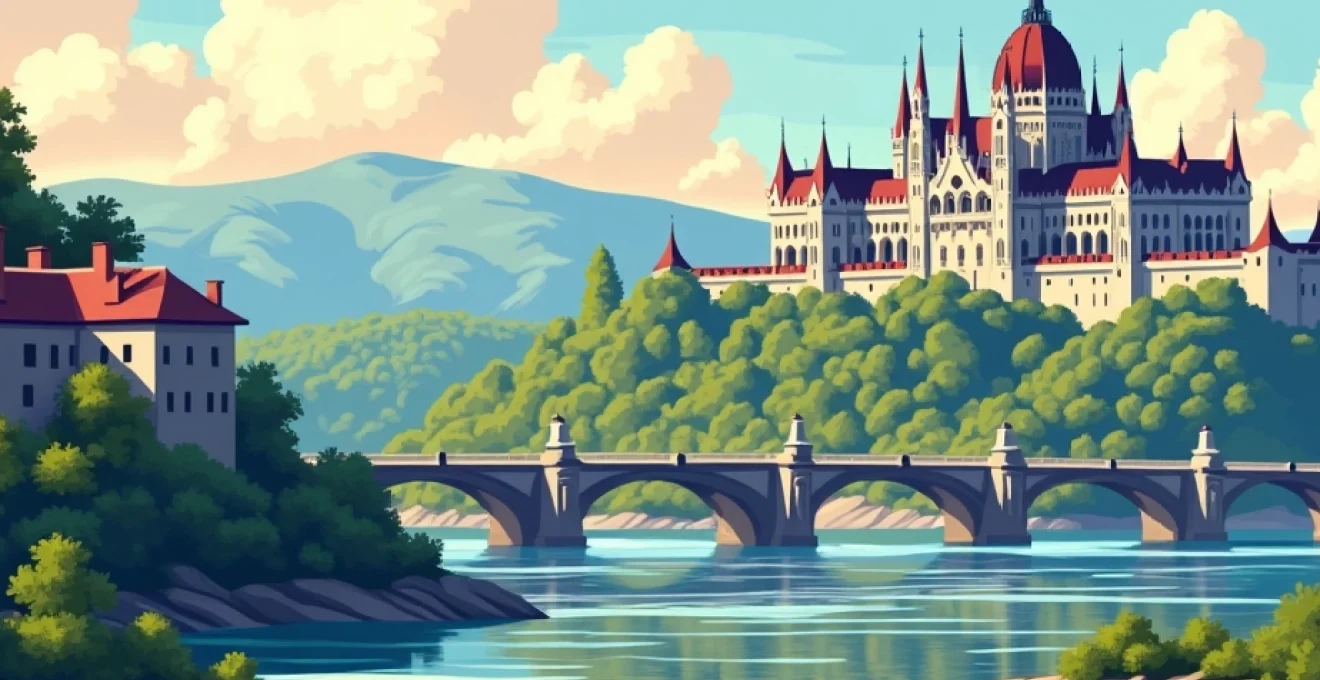
Budapest captivates visitors with its thermal baths, ruin bars, and stunning architecture, but venturing beyond the capital reveals Hungary’s diverse cultural heritage and natural beauty. From medieval villages preserved in time to wine regions that have produced exceptional vintages for centuries, the countryside offers experiences that contrast beautifully with urban sophistication. These carefully curated excursions provide authentic encounters with Hungarian traditions, whether you’re exploring underground cave systems, wandering through lavender fields, or discovering royal palaces that once hosted empires.
The accessibility of these destinations makes them particularly appealing for travellers seeking variety without extensive planning. Most locations connect to Budapest via efficient rail networks or scenic boat routes, allowing you to experience multiple facets of Hungarian culture within comfortable day-trip parameters. Each destination presents unique characteristics that reflect different periods of the nation’s complex history, from Ottoman influences to Habsburg grandeur.
Danube bend cultural heritage excursions: visegrád and szentendre
The Danube Bend represents one of Europe’s most scenic river valleys, where the mighty waterway curves dramatically through forested hills dotted with historic settlements. This region has witnessed pivotal moments in Hungarian history, from medieval royal courts to Ottoman conquests, leaving behind architectural treasures that continue to fascinate contemporary visitors.
Visegrád royal palace archaeological complex and citadel fortress
Perched majestically above the Danube, Visegrád served as the seat of Hungarian kings during the 14th and 15th centuries. The Royal Palace complex showcases remarkable Renaissance architecture, including the ornate Lion Fountain and the impressive Knight’s Hall with its Gothic vaulting. Archaeological excavations have revealed intricate frescoes, marble decorations, and sophisticated heating systems that demonstrate the palace’s former magnificence.
The citadel fortress, accessible via a steep but rewarding climb, offers panoramic views across the Danube Bend that justify the effort required to reach its ramparts. Medieval weaponry displays and interactive exhibitions help visitors understand the strategic importance of this location during centuries of conflict. The fortress walls themselves tell stories of siege warfare and royal ceremonies that shaped Hungarian national identity.
Szentendre serbian orthodox museum quarter and marzipan museum
Szentendre’s cobblestone streets and baroque architecture create an enchanting atmosphere that has attracted artists and craftspeople for generations. The Serbian Orthodox community established here during the 17th century left behind beautifully decorated churches with elaborate iconostases and religious artifacts that showcase Byzantine artistic traditions. The Blagovestenska Church, with its distinctive red tower, houses precious manuscripts and liturgical objects that illuminate the spiritual heritage of this remarkable community.
Beyond its religious significance, Szentendre offers quirky attractions like the renowned Marzipan Museum, where skilled confectioners create edible sculptures that blur the line between art and gastronomy. The museum displays intricate marzipan recreations of famous paintings, architectural landmarks, and whimsical characters that demonstrate the versatility of this sweet medium. Local artisan workshops provide opportunities to observe traditional crafts being practiced with techniques passed down through generations.
Danube river cruise transportation options from vigadó terminal
Mahart PassNave operates regular ferry services from Budapest’s Vigadó Terminal, providing a leisurely alternative to overland transportation that allows passengers to appreciate the river’s natural beauty. These cruises typically include multiple stops along the Danube Bend, enabling flexible exploration of different destinations within a single excursion. The journey itself becomes part of the experience, as passengers witness the landscape transformation from urban Budapest to forested hills and historic settlements.
Seasonal variations affect cruise schedules, with peak summer months offering the most frequent departures and extended operating hours. Spring and autumn provide particularly attractive conditions for river travel, when comfortable temperatures combine with dramatic lighting to create memorable photographic opportunities. Advanced booking becomes essential during peak tourist periods, especially for weekend departures that prove popular with both international visitors and Hungarian families.
Esztergom basilica and hungarian crown jewels exhibition
Esztergom Basilica dominates the skyline as Hungary’s largest religious building, its massive dome visible from considerable distances across the surrounding countryside. The basilica’s interior impresses with its scale and artistic richness, including what many consider the world’s largest painting on a single canvas behind the main altar. The treasury houses an exceptional collection of ecclesiastical artifacts, including medieval reliquaries, ornate vestments, and precious manuscripts that chronicle centuries of Hungarian Christianity.
The basilica’s dome offers breathtaking views across the Danube into Slovakia, providing a unique perspective on Central European geography and political boundaries. Guided tours reveal architectural details and historical anecdotes that enhance appreciation of this monumental structure’s significance within Hungarian national consciousness. The adjacent museum complex presents rotating exhibitions that explore different aspects of religious art and cultural heritage.
Lake balaton wine region day excursions: tihany and balatonfüred
Lake Balaton, often called the “Hungarian Sea,” stretches across 592 square kilometers of Central Europe’s largest freshwater lake. This remarkable body of water has shaped regional culture for millennia, supporting viticulture that dates to Roman times and creating microclimate conditions perfect for producing distinctive white wines. The volcanic soils surrounding the lake contribute unique mineral characteristics to local wines, while the moderating influence of the water extends the growing season and protects vines from extreme temperature fluctuations.
The Balaton region produces some of Hungary’s most celebrated wines, with volcanic terroir creating mineral-rich whites that perfectly complement the lake’s seafood specialties.
Tihany peninsula benedictine abbey and lavender fields
The Tihany Peninsula extends into Lake Balaton like a natural pier, creating a landscape of rolling hills, volcanic craters, and Mediterranean-style vegetation that feels distinctly different from other Hungarian regions. The Benedictine Abbey, founded in 1055, represents one of Hungary’s oldest monastic communities and houses the tomb of King Andrew I. The abbey’s baroque reconstruction showcases elaborate frescoes and carved wooden altarpieces that demonstrate centuries of artistic devotion.
Lavender cultivation on the peninsula creates spectacular purple fields that bloom from late June through August, attracting photographers and nature enthusiasts from across Europe. Local producers offer lavender-based products including essential oils, soaps, and the famous lavender ice cream that has become a regional specialty. The peninsula’s unique geological features include ancient volcanic formations and geyser cones that create a landscape unlike anywhere else in Hungary.
Balatonfüred thermal springs and tagore promenade
Balatonfüred earned recognition as Hungary’s first official resort town, attracting aristocrats and intellectuals who came to take the waters at its renowned thermal springs. The town’s elegant promenade, named after Bengali poet Rabindranath Tagore who recovered here from illness, stretches along the lakeshore beneath ancient plane trees that provide natural shade during summer months. Historic villas and grand hotels reflect the resort’s golden age when it hosted European nobility and prominent cultural figures.
The State Heart Hospital, originally established to treat cardiac conditions using the therapeutic properties of the local mineral springs, continues to operate as a leading medical facility. Visitors can sample the sulfurous waters at the Kossuth Spring, though the taste requires some adjustment for uninitiated palates. The annual Anna Ball, held each July, recreates the elegance of 19th-century social seasons with period costumes and traditional dancing in historical venues.
Badacsony volcanic wine terraces and szürkebarát vineyards
The Badacsony volcanic mountain creates distinctive terraced vineyards where ancient lava flows formed ideal growing conditions for premium wine grapes. Szürkebarát (Pinot Gris) thrives particularly well in these mineral-rich soils, producing complex whites with distinctive volcanic characteristics that reflect the unique terroir. Local winemakers have adapted traditional techniques to work with the challenging terrain, creating narrow terraces that maximize sun exposure while preventing erosion.
Wine cellars carved directly into the volcanic rock provide natural temperature regulation that enhances aging processes and creates atmospheric tasting environments. Many producers offer guided tastings that include education about volcanic viticulture and the specific characteristics that distinguish Badacsony wines from other Hungarian regions. The combination of dramatic landscape views and exceptional wines creates memorable experiences that highlight the intimate connection between geology and gastronomy.
Lake balaton ferry services and regional train connections
An extensive ferry network connects communities around Lake Balaton’s 236-kilometer shoreline, providing scenic transportation that allows passengers to appreciate the lake’s scale and beauty. Car ferries operate between Szántód and Tihany, significantly reducing driving distances for those exploring both northern and southern shores. Passenger ferries serve multiple destinations throughout the summer season, with some routes extending into evening hours to accommodate dinner cruises and sunset excursions.
Regional train services connect Budapest to major Balaton destinations via multiple routes, with the fastest services reaching Balatonfüred in approximately 90 minutes. Weekend trains often include special wine-tasting cars during harvest season, allowing passengers to sample local vintages while traveling through the wine regions. Advanced reservations become essential during peak summer periods when both Hungarian families and international tourists converge on the lake region.
Gödöllő habsburg imperial palace and grassalkovich estate
The Royal Palace at Gödöllő represents one of Europe’s largest baroque palace complexes, originally built by Count Antal Grassalkovich in the 18th century before becoming a beloved retreat for Empress Elisabeth of Austria-Hungary. The palace’s 26 rooms open to the public showcase original furnishings, tapestries, and personal artifacts that provide intimate glimpses into Habsburg court life during the Austro-Hungarian Empire’s golden age.
Empress Elisabeth, affectionately known as Sisi, spent considerable time at Gödöllő pursuing her passion for Hungarian culture and language. The palace exhibitions explore her complex relationship with Hungarian nobility and her role in the 1867 Compromise that created the dual monarchy. Restored private apartments include her study, bedroom, and reception rooms decorated in the Hungarian national colors she favored during her stays.
The palace gardens extend across 29 hectares of landscaped parkland that includes formal baroque sections, English-style informal areas, and remnants of the original 18th-century design. Seasonal concerts and cultural events take advantage of the palace’s exceptional acoustics and elegant settings, with performances ranging from classical music to traditional Hungarian folk dancing. The palace also houses temporary exhibitions that explore different aspects of Habsburg history and Central European cultural development.
Modern restoration efforts have revealed original frescoes, decorative plasterwork, and period furnishings that demonstrate the sophisticated lifestyle enjoyed by European aristocracy. Interactive displays help visitors understand daily life at the imperial court, from elaborate dining ceremonies to diplomatic receptions that shaped European politics. The palace gift shop offers reproductions of period crafts and locally produced items that reflect traditional Hungarian artisanal skills.
Hollókő UNESCO medieval village and nógrád county folklore
Hollókő preserves an authentic medieval village structure that earned UNESCO World Heritage recognition for its exceptional representation of traditional Central European rural architecture. The village’s 67 protected buildings maintain their original 17th and 18th-century appearance, with thatched roofs, whitewashed walls, and wooden galleries that create a remarkably cohesive historical ensemble. This living museum approach allows visitors to experience traditional village life while supporting a community that continues to practice ancestral crafts and customs.
The Palóc ethnic group that settled this region developed distinctive cultural traditions that survive in local festivals, costume designs, and culinary specialties. Traditional costumes feature intricate embroidery patterns and color combinations that identify specific villages and family lineages within the broader Palóc community. Local women continue to practice these embroidery techniques, creating both ceremonial garments and contemporary adaptations that preserve artistic traditions while generating income for village families.
The medieval castle ruins overlooking the village provide panoramic views across the Cserhát Hills while offering insights into medieval defensive architecture. Archaeological excavations have revealed multiple building periods that document the site’s evolution from 13th-century fortress to 16th-century residential complex. Interactive displays explain siege warfare techniques and daily life within medieval fortifications during the turbulent centuries when Hungary faced repeated invasions.
Seasonal festivals showcase traditional Palóc culture through folk dancing, traditional music performances, and demonstrations of historic crafts including pottery, weaving, and woodworking. The Easter Festival features elaborate egg-decorating traditions and religious processions that maintain centuries-old customs. Harvest celebrations include wine pressing demonstrations, traditional cooking methods, and opportunities to participate in folk dances that have been passed down through generations of village families.
Aggtelek national park karst cave system and baradla cave network
Aggtelek National Park protects one of Europe’s most extensive karst cave systems, where underground rivers have carved extraordinary limestone formations over millions of years. The park’s 20,000 hectares encompass diverse ecosystems ranging from ancient beech forests to flower-rich meadows that support rare plant and animal species found nowhere else in Hungary.
Baradla cave speleological formations and guided underground tours
The Baradla Cave system extends over 25 kilometers through the limestone bedrock, creating spectacular underground chambers decorated with stalactites, stalagmites, and flowstone formations that rival any cave system in Europe. Different tour routes accommodate varying fitness levels and interests, from short walks suitable for families to challenging expeditions that penetrate the deepest accessible chambers. The cave maintains a constant temperature of 10°C throughout the year, providing relief during summer heat while requiring warm clothing regardless of surface conditions.
Specialized speleological tours reveal the cave’s geological history and ongoing formation processes, explaining how underground water continues to shape these remarkable chambers. The acoustic properties of certain chambers make them popular venues for underground concerts, where classical music performances create otherworldly experiences enhanced by the cave’s natural acoustics. Advanced lighting systems highlight specific formations while preserving the cave’s natural environment and protecting sensitive ecosystems that exist in absolute darkness.
Jósvafő village traditional architecture and palóc ethnographic heritage
The village of Jósvafő serves as the primary access point for Aggtelek National Park while maintaining its character as a traditional Hungarian farming community. Historic farmhouses display regional architectural features including covered porches, decorative gables, and traditional building materials that reflect local construction techniques adapted to the challenging limestone terrain. Village walking trails connect different architectural examples while providing interpretive information about traditional rural lifestyles.
Local museums preserve Palóc ethnographic collections that illustrate the material culture of this distinctive ethnic group. Traditional farming implements, household objects, and ceremonial items demonstrate the ingenious adaptations that allowed communities to thrive in this challenging environment. Seasonal workshops allow visitors to observe traditional crafts being practiced, including blacksmithing, pottery making, and textile production using techniques virtually unchanged since medieval times.
Aggtelek karst plateau biodiversity and protected species habitats
The karst plateau supports exceptional biodiversity that includes over 60 protected plant species and numerous rare animals adapted to limestone environments. Endemic species found nowhere else include specialized cave-dwelling insects and unique plant communities that evolved in isolation within the limestone landscape. Guided nature walks reveal this hidden biodiversity while explaining the complex ecological relationships that sustain these fragile ecosystems.
Conservation efforts focus on protecting water quality and maintaining traditional land management practices that created the current landscape mosaic. Sheep grazing continues to maintain flower-rich meadows that support rare butterfly species and migratory birds, while forest management preserves ancient beech stands that provide habitat for large mammals including wild boar and deer. The park’s research programs monitor climate change impacts and develop strategies for protecting these sensitive ecosystems for future generations.
Pécs roman archaeological sites and early christian necropolis
Pécs reveals 2,000 years of continuous habitation through exceptional archaeological sites that span Roman, medieval, Ottoman, and modern periods. The city’s location at the crossroads of major trade routes made it a significant urban center throughout history, accumulating cultural layers that create one of Hungary’s most compelling archaeological landscapes. UNESCO World Heritage recognition acknowledges the exceptional preservation of the Early Christian Cemetery, which contains some of Europe’s finest 4th-century burial chambers decorated with remarkable frescoes.
The Roman city of Sopianae flourished as the capital of Valeria province, leaving behind substantial architectural remains including public baths, residential complexes, and the extraordinary painted tombs that demonstrate the sophistication of provincial Roman culture. Archaeological excavations continue to reveal new insights into daily life during the late Roman Empire, when Christianity was beginning to transform European civilization. Modern museum displays integrate archaeological finds with interactive technologies that help visitors visualize how these ancient spaces appeared during their periods of use.
Medieval Pécs became an important episcopal center with impressive Gothic and Romanesque churches that showcase the evolution of Christian architecture in Central Europe. The cathedral complex includes foundations of earlier churches that document the continuous Christian presence from Roman times through the present day. Ottoman
period monuments include several mosques that survived the 150-year Ottoman occupation, most notably the Gazi Kasim Pasha Mosque, which was built inside the medieval cathedral and creates a unique architectural fusion rarely seen elsewhere in Europe.
The Zsolnay Cultural Quarter showcases Pécs’ industrial heritage through beautifully restored porcelain factory buildings that now house contemporary art galleries, design studios, and cultural venues. The Zsolnay family’s innovative ceramic techniques revolutionized European decorative arts during the 19th century, producing the distinctive eosin-glazed tiles that adorn buildings throughout the Austro-Hungarian Empire. Modern exhibitions display both historical Zsolnay pieces and contemporary ceramic art that continues the tradition of innovation in this ancient craft.
University life brings vibrancy to Pécs’ cultural scene, with numerous cafés, bookshops, and student venues creating an atmosphere that balances historical gravitas with youthful energy. The medical university attracts international students who contribute to the city’s cosmopolitan character, while the arts faculties maintain strong connections to local cultural institutions. Evening concerts, theater performances, and art exhibitions provide entertainment options that extend well beyond typical tourist attractions, making Pécs an ideal destination for visitors seeking authentic cultural experiences rather than manufactured tourist spectacles.
Transportation to Pécs requires a longer commitment than other destinations, with direct trains from Budapest taking approximately 2.5 hours. However, the journey traverses some of Hungary’s most scenic countryside, passing through traditional agricultural areas and wine regions that provide glimpses of rural Hungarian life. The city’s compact historic center makes walking the preferred method of exploration, though local buses serve outlying attractions including the Zsolnay mausoleum and various archaeological sites that extend beyond the main tourist areas.