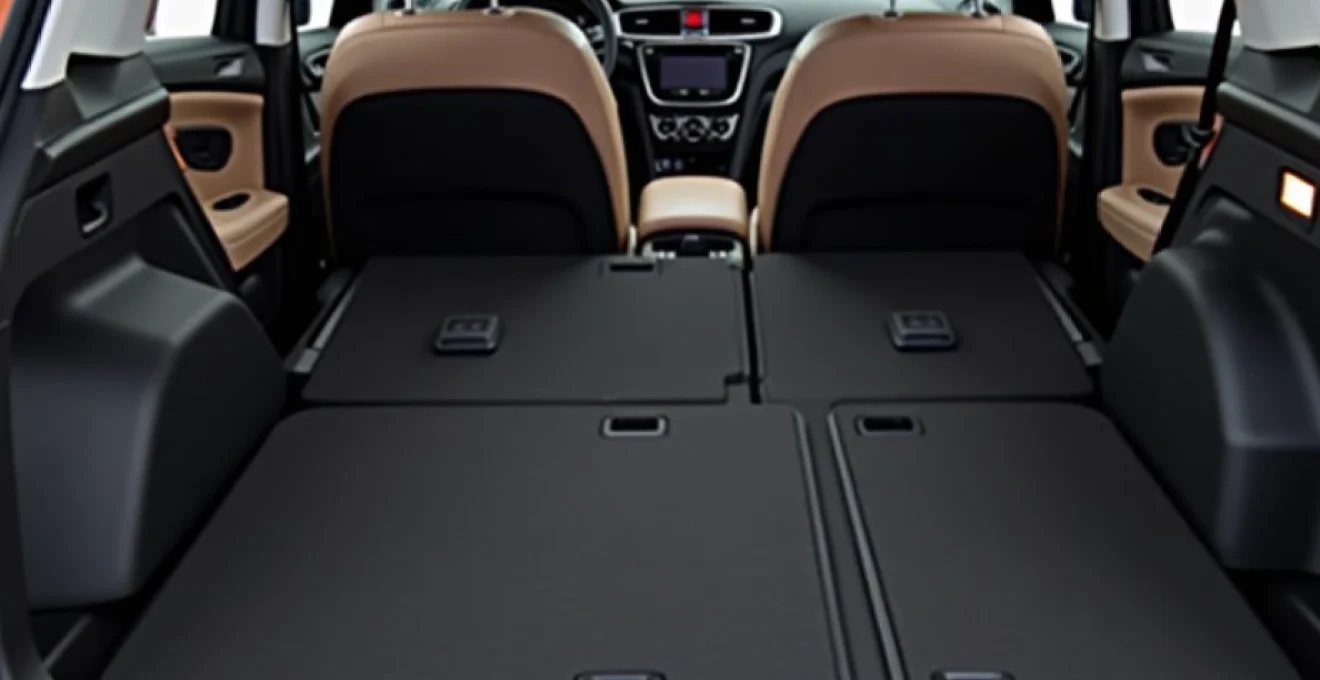
The Opel Mokka has established itself as a compelling proposition in the competitive compact SUV segment, where practicality often becomes the deciding factor for families and active individuals. Understanding the intricacies of the Mokka’s cargo capacity becomes essential when evaluating whether this stylish crossover can accommodate your lifestyle needs. From weekend getaways to daily shopping runs, the boot space configuration plays a pivotal role in determining the vehicle’s real-world usability. The Mokka’s cargo area represents a carefully engineered balance between exterior compactness and interior versatility, designed to maximise utility whilst maintaining the vehicle’s urban-friendly dimensions.
Opel mokka boot capacity specifications across model years
The evolution of the Opel Mokka’s cargo capacity tells a fascinating story of automotive engineering priorities and market demands. Each generation has brought subtle yet significant changes that reflect the manufacturer’s ongoing commitment to improving practical functionality whilst adapting to new powertrain technologies.
First generation mokka X boot volume measurements 2012-2019
The original Mokka, later rebranded as the Mokka X, established a solid foundation for cargo practicality in the compact SUV segment. During this seven-year production run, the vehicle offered 356 litres of boot space with all seats in their upright position. This capacity positioned the first-generation Mokka competitively within its class, providing adequate space for typical family requirements whilst maintaining the vehicle’s compact exterior footprint.
When maximum cargo volume was required, folding the rear seats down transformed the available space dramatically. The first-generation model could accommodate up to 1,372 litres of cargo, making it surprisingly versatile for larger items. This substantial increase demonstrated the effectiveness of the 60:40 split-folding rear seat configuration, allowing users to adapt the interior space according to their specific transportation needs.
Second generation mokka-e electric boot space configuration
The introduction of the all-electric Mokka-e variant brought inevitable compromises to cargo capacity, primarily due to battery placement considerations. The electric model offers 310 litres of boot space with the rear seats upright, representing a 40-litre reduction compared to the petrol variant. This decrease reflects the challenges faced by automotive engineers when incorporating battery packs without significantly compromising vehicle practicality.
Despite this reduction, the Mokka-e maintains respectable cargo capacity for an electric compact SUV. The clever packaging of electrical components ensures that the impact on usable space remains minimal, with the boot retaining its practical shape and accessibility. When the rear seats are folded, the Mokka-e provides 1,060 litres of maximum cargo volume, still offering considerable versatility for larger items.
Petrol and diesel variants boot capacity comparison
The current-generation petrol and diesel Mokka models share identical boot specifications, offering 350 litres of cargo space with all seats in place. This represents a slight reduction from the first generation, reflecting the new platform’s different packaging priorities and improved overall efficiency. The standardisation across combustion engine variants simplifies the decision-making process for buyers who prioritise cargo capacity.
Both petrol and diesel variants maintain the same maximum cargo volume of 1,105 litres when the rear seats are folded flat. This consistency across powertrains ensures that fuel preference doesn’t compromise cargo versatility, allowing buyers to choose based on other factors such as running costs or performance characteristics.
Rear seat folding impact on maximum load volume
The 60:40 split-folding rear seat configuration significantly enhances the Mokka’s cargo flexibility. This arrangement allows users to fold down either the larger 60% section or the smaller 40% portion independently, creating various seating and cargo combinations. The ability to maintain passenger capacity whilst accommodating longer items represents a key practical advantage for families with diverse transportation requirements.
When fully folded, the rear seats create a relatively flat loading floor, though a small step remains between the boot floor and the folded seat backs. This configuration maximises the usable cargo length, extending from the tailgate to the rear of the front seats, providing approximately 1.5 metres of loading length for longer items such as furniture or sports equipment.
Boot loading dimensions and practical accessibility features
Understanding the physical dimensions of the Mokka’s boot opening and internal measurements provides crucial insight into real-world usability. These specifications determine what can actually fit through the tailgate and how efficiently the available space can be utilised for various cargo types.
Tailgate opening height and width clearance measurements
The Mokka’s tailgate opening measures approximately 1,015mm in width, providing comfortable access for loading bulky items. This generous opening width accommodates standard luggage, shopping bags, and most household items without requiring awkward manoeuvring. The height clearance of roughly 780mm offers sufficient vertical space for taller packages, though this measurement includes the slight intrusion of the rear spoiler.
These dimensions position the Mokka favourably within its competitive set, offering easier loading compared to vehicles with narrower or lower tailgate openings. The practical implications become apparent when loading items such as pushchairs, large shopping bags, or sports equipment, where the generous aperture reduces the physical effort required during daily use.
Loading sill height and threshold ergonomics
The boot loading sill sits at a comfortable height that balances easy access with the vehicle’s SUV proportions. This measurement affects the ease of lifting heavy items into the cargo area and influences the overall user experience during loading and unloading operations. The moderate sill height accommodates users of varying heights whilst maintaining the elevated seating position that many SUV buyers prefer.
The loading threshold incorporates a protective strip to prevent damage during cargo loading, whilst the relatively low lip ensures that sliding heavy items into the boot doesn’t require excessive lifting. This ergonomic consideration becomes particularly valuable for elderly users or those with mobility limitations who need easier access to the cargo area.
Boot floor depth and wheel arch intrusion analysis
The internal depth of the Mokka’s boot measures approximately 740mm from the tailgate to the rear seat backs, providing adequate space for stacking multiple layers of luggage or shopping bags. However, wheel arch intrusions reduce the effective width at floor level, creating slightly irregular cargo space geometry that affects loading efficiency for certain item types.
These wheel arch protrusions, whilst necessary for suspension packaging, create recesses that can be utilised for securing smaller items or oddly-shaped cargo. Understanding these dimensional variations helps maximise packing efficiency and prevents items from shifting during transport, particularly important for fragile or liquid containers.
Underfloor storage compartment configuration
Beneath the main boot floor, the Mokka incorporates additional storage compartments that enhance overall cargo organisation. These underfloor areas provide secure storage for valuable items, emergency equipment, or cleaning supplies that benefit from being hidden from view. The compartments vary in size depending on the specific model variant and equipment level.
The underfloor storage proves particularly valuable for items that don’t require frequent access but need to remain readily available. This might include vehicle maintenance items, first aid supplies, or seasonal equipment that travels permanently with the vehicle without occupying valuable primary cargo space.
Cargo management systems and interior boot layout
The Mokka’s cargo management features extend beyond basic volume measurements to include practical systems that enhance loading flexibility and cargo security. These thoughtful touches distinguish well-designed vehicles from those that simply maximise raw cubic capacity without considering real-world usage patterns.
Variable boot floor height adjustment mechanism
Higher specification Mokka variants include an adjustable boot floor system that provides two distinct height positions. In its raised position, the floor creates a level loading surface when the rear seats are folded, eliminating the step between the cargo area and the folded seat backs. This configuration facilitates easier loading of heavy items by allowing them to slide directly from the tailgate to the furthest reaches of the extended cargo area.
When lowered, the adjustable floor maximises vertical cargo space, accommodating taller items that might not fit with the floor in its raised position. This versatility proves particularly valuable when transporting items of varying heights, allowing users to optimise the available space according to their specific requirements. The mechanism operates simply, requiring only the lifting of lightweight panels to change configurations.
Tie-down hooks and load restraint anchor points
Strategic placement of tie-down hooks and anchor points throughout the cargo area enables secure fastening of loose items during transport. These mounting points integrate seamlessly into the boot’s design whilst providing robust attachment points for cargo nets, straps, or bungee cords. The positioning considers typical loading patterns and ensures that restraint systems don’t interfere with normal cargo loading operations.
The load restraint system becomes essential when transporting fragile items, liquids, or multiple small packages that might shift during cornering or braking. Professional-grade anchor points provide confidence that properly secured cargo will remain stable throughout the journey, reducing the risk of damage to both the vehicle interior and transported items.
60:40 Split-Fold rear seat release operation
The rear seat folding mechanism operates through clearly marked release levers located either in the cargo area or on the seat backs themselves, depending on the specification level. The 60:40 split configuration allows the larger section to accommodate longer items whilst maintaining seating for one rear passenger, or alternatively, the smaller section can be folded for narrow but long items whilst preserving two rear seating positions.
Proper operation of the folding mechanism requires ensuring that the front seats are positioned to allow adequate clearance for the rear seat backs when folded. The system includes safety features that prevent accidental folding when the seats are occupied, whilst the release mechanism itself requires deliberate action to prevent unintentional activation during normal vehicle operation.
Boot divider net and organiser accessories installation
Factory-available and aftermarket cargo organisation accessories significantly enhance the Mokka’s practical capabilities. Boot divider nets stretch between anchor points to create separate compartments within the cargo area, preventing smaller items from rolling around during transport. These nets prove particularly valuable for groceries, tools, or sporting equipment that benefits from compartmentalised storage.
Cargo organisers in various configurations can be fitted to create customised storage solutions for specific user requirements. These might include rigid dividers for separating clean and dirty items, soft organisers with multiple pockets for tools and emergency equipment, or specialised holders for specific equipment types such as sports gear or professional tools.
Comparative boot space analysis against rival SUVs
Evaluating the Mokka’s cargo capacity within the context of its competitive environment provides essential perspective for potential buyers. The compact SUV segment offers numerous alternatives, each with different approaches to balancing exterior dimensions with interior practicality.
The Mokka’s 350-litre boot capacity positions it competitively within the compact SUV segment, though some rivals offer notably more cargo space without significantly larger exterior dimensions.
| Model | Boot Capacity (Seats Up) | Boot Capacity (Seats Down) | Key Advantages |
|---|---|---|---|
| Opel Mokka | 350 litres | 1,105 litres | Compact dimensions, urban maneuverability |
| Renault Captur | 422 litres | 1,275 litres | Sliding rear seats, flexible interior |
| Peugeot 2008 | 434 litres | 1,467 litres | Largest cargo capacity in class |
| Nissan Juke | 422 litres | 1,088 litres | Distinctive styling, advanced technology |
| Skoda Kamiq | 400 litres | 1,395 litres | Superior build quality, practical details |
The comparative analysis reveals that whilst the Mokka doesn’t lead its segment in raw cargo volume, it maintains competitive practicality whilst offering other advantages. The Renault Captur’s sliding rear seats provide additional flexibility that the Mokka lacks, whilst the Peugeot 2008 offers significantly more cargo space despite sharing platform architecture. However, the Mokka’s slightly smaller exterior dimensions can prove advantageous in urban environments where parking space is limited.
When considering the electric variants specifically, the Mokka-e’s 310-litre capacity compares reasonably well with other electric compact SUVs. Many competitors face similar challenges when incorporating battery packs, and the Mokka-e’s compromise between cargo space and electric range represents a pragmatic approach to these conflicting requirements.
Real-world boot capacity testing with common load scenarios
Theoretical cargo volumes only tell part of the story regarding practical usability. Real-world testing with typical load scenarios provides more meaningful insights into how the Mokka’s boot space performs during actual ownership experience. These scenarios consider not just volume, but also the shape and accessibility of the available space.
A weekly family grocery shop for four people typically requires between 150-200 litres of cargo space, well within the Mokka’s capabilities. However, the boot’s shape and the presence of wheel arch intrusions can affect loading efficiency with certain bag sizes and shapes. Rigid shopping bags utilise the space more efficiently than soft bags, which tend to conform to the irregular floor shape created by the wheel arch protrusions.
For holiday luggage scenarios, the 350-litre capacity accommodates approximately three large suitcases or four medium-sized cases, depending on their specific dimensions and shape. The boot’s height limitation of 780mm restricts the use of very tall suitcases, though this rarely presents problems with standard luggage sizes. The relatively square boot opening facilitates easier loading compared to vehicles with sloped rear windows that compromise cargo access.
Sports equipment transport reveals both the strengths and limitations of the Mokka’s cargo design, with golf bags fitting comfortably whilst longer items like skis require careful positioning or rear seat folding.
Pushchair and baby equipment storage represents a crucial test for family-oriented buyers. Most modern pushchairs fit within the Mokka’s boot when folded, though larger three-wheeled models may require the partial folding of rear seats. The boot’s shape accommodates the typical rectangular profile of folded pushchairs, whilst the moderate loading height reduces the physical effort required for daily loading and unloading operations.
Professional equipment transport scenarios highlight the value of the adjustable boot floor and tie-down points. Tradespeople carrying tools and materials benefit from the secure anchor points for preventing cargo movement, whilst the underfloor storage provides security for valuable tools. However, very heavy or bulky professional equipment may require utilising the extended cargo area with rear seats folded, which compromises passenger capacity.
The Mokka’s boot design represents a thoughtful compromise between competing priorities in the compact SUV segment. Whilst it may not offer the largest cargo capacity in its class, the combination of practical dimensions, flexible loading configurations, and urban-friendly exterior size creates a package that serves most users’ requirements effectively. The slight cargo space penalty compared to some rivals becomes acceptable when considered alongside the vehicle’s other attributes, including styling, technology, and driving dynamics. For buyers prioritising maximum cargo capacity above all other considerations, alternatives exist within the segment, but the Mokka’s balanced approach to practicality makes it a compelling choice for those seeking overall competence rather than specialised capability.