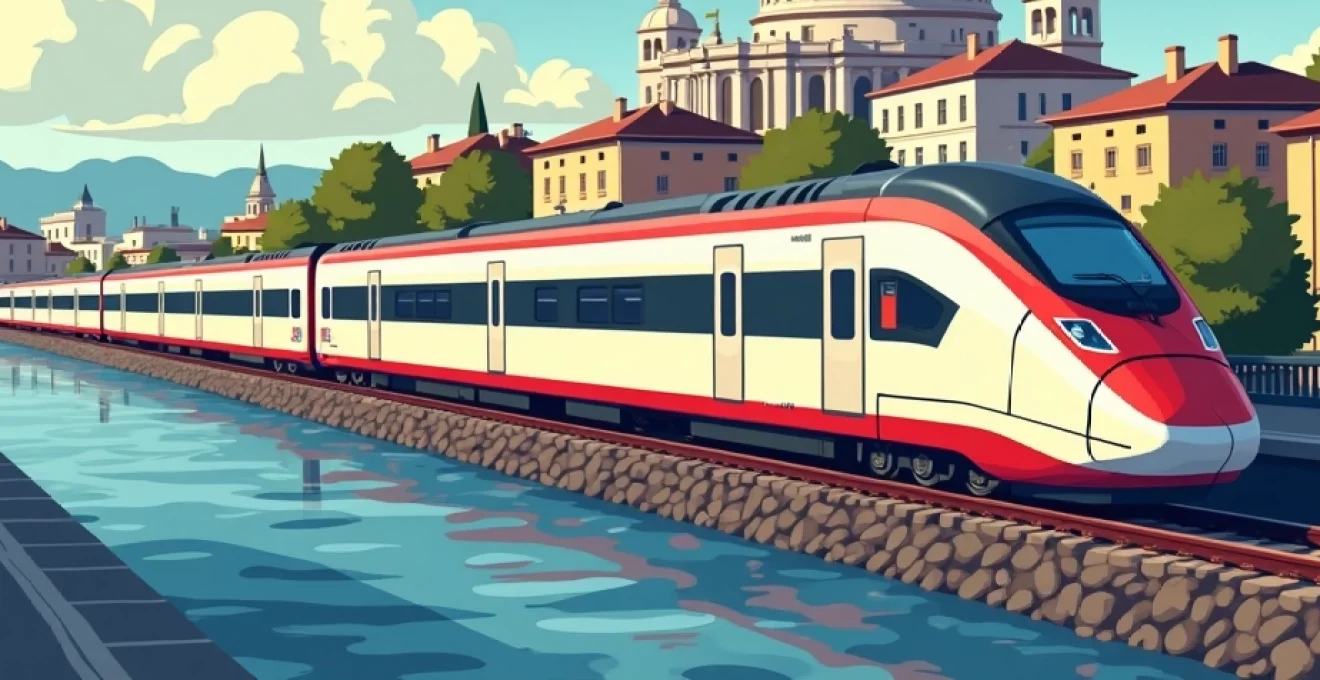
The overland journey from London to Athens represents one of Europe’s most captivating railway adventures, spanning nearly 2,400 kilometres across diverse landscapes and cultural boundaries. This transcontinental expedition offers travellers an opportunity to witness the gradual transformation of Western European efficiency into the relaxed Mediterranean atmosphere of Greece, all while maintaining a significantly lower carbon footprint compared to aviation alternatives. The route traverses through multiple countries, each presenting unique railway experiences from high-speed French TGV services to traditional Balkan regional trains.
Modern railway networks across Europe have evolved to accommodate long-distance international travel, though the journey requires careful planning and multiple connections. The traditional overland route through Central and Eastern Europe presents both opportunities and challenges, particularly given recent infrastructure developments and geopolitical changes affecting cross-border services. Understanding the complexities of this multi-day journey enables travellers to make informed decisions about routing, accommodation, and documentation requirements.
Direct rail route planning through central european railway networks
The most reliable overland route from London to Athens currently involves strategic connections through major European railway hubs, though traditional direct services through the Balkans remain limited. Railway infrastructure across Central and Eastern Europe continues to modernise, yet service frequencies and cross-border connections often require careful timing and advance planning. The journey typically spans three to four days, depending on connection times and overnight stops, making it as much about the experience as the destination.
London st pancras international to paris gare du nord via eurostar services
The journey commences at London St Pancras International, where Eurostar services provide the most efficient Channel crossing option. These high-speed trains complete the London-Paris route in approximately 2 hours 15 minutes, reaching speeds of up to 300 kilometres per hour through the Channel Tunnel. Standard class tickets typically start from £44 when booked in advance, though prices fluctuate significantly based on demand and booking timing. The service operates up to 18 daily departures, providing flexibility for onward connections.
Eurostar offers three distinct service classes, each catering to different travel preferences and budgets. Standard class provides comfortable seating with power outlets, complimentary WiFi, and access to the onboard café-bar. Plus class enhances the experience with spacious seating and complimentary light meals served at your seat. Premier class delivers the premium experience with lounge access, priority boarding, and comprehensive dining service throughout the journey.
Paris to munich High-Speed TGV and ICE train connections
From Paris Gare de l’Est, direct high-speed connections to Munich operate daily via TGV Alleo services, completing the 830-kilometre journey in approximately 5 hours 40 minutes. These services represent a collaboration between French SNCF and German DB, utilising both TGV and ICE rolling stock depending on the specific departure. Advance booking discounts can reduce fares to €39 for second-class travel, though premium services command higher prices during peak periods.
Alternative overnight options include the ÖBB Nightjet service, which departs Paris at 19:12 and arrives in Munich at 05:43, providing sleeping car accommodation for those preferring to maximise daytime sightseeing opportunities. This service operates on selected dates throughout the week, requiring careful schedule coordination with onward connections. The night train offers various accommodation categories, from basic couchettes to private sleeping compartments with en-suite facilities.
Munich to belgrade overnight sleeper train via zagreb
The Munich-Belgrade corridor currently presents the most challenging segment of the London-Athens rail journey due to ongoing infrastructure reconstruction projects. The traditional direct service through Hungary remains suspended, with the Budapest-Belgrade line undergoing extensive modernisation expected to be completed by 2026. Current routing requires connections through Szeged and Subotica, extending journey times to approximately 12-14 hours with multiple train changes.
Passengers must purchase separate tickets for different segments: Munich-Szeged-Subotica with Hungarian MÁV railways, then Subotica-Belgrade with Serbian Railways. Combined fares typically range from €25-40 depending on service class and advance booking. The route operates three daily connections, with departures from Munich at strategic times to facilitate reasonable arrival hours in Belgrade. Service reliability varies seasonally, with winter weather occasionally affecting punctuality.
Belgrade to thessaloniki Cross-Border railway service
The Belgrade-Thessaloniki route operates as a direct day train service during peak season, covering 590 kilometres in approximately 8.5 hours through scenic mountainous terrain. However, service availability fluctuates significantly, with some periods requiring bus substitution between Sofia and Thessaloniki. When operational, tickets cost approximately €18-25 in second class, purchased locally at Belgrade’s central station or through Serbian Railways online booking system.
During suspended rail periods, travellers must utilise alternative routing through Sofia, Bulgaria, requiring an overnight stop and bus connections for the final segment into Greece. This adds considerable time to the journey but remains the most reliable option during infrastructure maintenance periods. Cross-border documentation requirements between Serbia and Greece necessitate passport checks, typically adding 30-45 minutes to the journey time.
Thessaloniki to athens intercity express final connection
The final segment utilises Greek Railways’ modernised Intercity services, completing the 515-kilometre journey in approximately 4 hours through central Greece’s varied landscapes. These air-conditioned trains operate five daily departures, with fares starting from €35 in second class when booked through the Hellenic Train online platform. First-class upgrades provide enhanced comfort for €45-50, featuring wider seating and complimentary refreshments during peak season.
The route traverses the Thermopylae pass and follows the eastern coastline, offering spectacular views of the Aegean Sea during clear weather conditions. Service reliability has improved significantly following recent infrastructure investments, with on-time performance typically exceeding 85%. Advance seat reservations are recommended during summer months and Greek holiday periods when capacity constraints may affect availability.
Essential travel documentation and Cross-Border requirements
International rail travel through multiple European countries requires comprehensive documentation planning, particularly following Brexit changes affecting UK passport holders. The journey crosses numerous border control points, each with specific requirements and processing procedures that can significantly impact connection times. Understanding these requirements prevents delays and ensures smooth transit through various immigration and customs checkpoints along the route.
UK to EU entry requirements Post-Brexit regulations
UK passport holders now face enhanced entry requirements when travelling to EU member states, including the initial Eurostar journey to France. Passports must maintain at least six months’ validity from the intended departure date, with recent issuance within the previous ten years. The 90-day tourist visa exemption applies to the entire Schengen zone collectively, not individual countries, requiring careful calculation of cumulative stay duration across multiple nations.
Border control procedures at Calais terminal include biometric scanning and entry stamp validation, typically adding 15-20 minutes to the overall journey time. Return journey documentation includes exit stamp requirements to validate compliance with the 90-day limit. Travel insurance with minimum €30,000 medical coverage becomes mandatory for UK citizens, though enforcement varies between border checkpoints.
Schengen zone transit documentation for multiple country crossings
The London-Athens railway route traverses multiple Schengen zone countries, where internal border controls have been largely eliminated for tourists. However, random identity checks occur frequently on international trains, particularly during overnight services and at major junction stations. Passengers must carry valid identification documents at all times, as national railway police conduct routine compliance verification.
France, Germany, Austria, Hungary, and parts of the Balkans maintain coordinated border policies, though implementation varies regionally.
Documentary requirements remain consistent throughout the Schengen zone, with passport validity and visa compliance forming the primary verification criteria during routine inspections.
Some routes through Switzerland require additional consideration, as the country maintains separate agreements despite Schengen membership.
Balkan region visa requirements for Non-EU passport holders
Serbia represents the primary non-EU country along traditional London-Athens rail routes, maintaining independent visa policies for various nationalities. UK passport holders benefit from visa-free entry for stays up to 90 days within a 180-day period, calculated independently from Schengen zone limitations. Documentation requirements include proof of accommodation and sufficient financial means, though enforcement primarily focuses on longer-stay visitors.
North Macedonia and Montenegro present alternative routing options, each with distinct visa requirements for non-EU citizens. These countries maintain bilateral agreements with various nations, creating complex scenarios for multi-nationality travel groups. Transit visas may apply for certain nationalities even when not leaving railway stations, requiring advance verification through respective consular services.
Rail pass validation procedures across different national networks
Interrail and Eurail pass validation procedures vary significantly between national railway operators, affecting both ticket verification and reservation requirements. Each country maintains independent validation systems, requiring physical stamp validation at designated stations before first use within their territory. Failure to properly validate passes can result in penalty fares equivalent to full ticket prices, regardless of pass validity.
Digital pass integration remains incomplete across Eastern European networks, necessitating physical pass presentation during conductor inspections. Reservation fees apply to most international services regardless of pass type, with costs varying from €3-15 per journey segment. Some operators require advance booking through their specific systems rather than general Interrail reservation platforms.
Ticket booking strategies and fare structure analysis
Effective ticket booking for the London-Athens railway journey requires understanding diverse pricing models across multiple national railway systems. Each operator maintains independent fare structures, booking windows, and discount policies, creating complex optimisation scenarios for cost-conscious travellers. Advanced planning becomes essential not only for securing the best prices but also ensuring service availability during peak travel periods.
Interrail pass vs Point-to-Point ticket cost comparison
Interrail passes offer significant value for the London-Athens journey when factoring in multiple country coverage and flexible routing options. Adult passes starting at £220 for 10 days within 22 days provide comprehensive coverage across participating networks, though reservation fees and supplements add €50-80 to the total cost. The pass becomes particularly cost-effective when incorporating side trips or extended stays in intermediate cities along the route.
Point-to-point ticketing allows greater control over service classes and specific routing preferences, with advance booking discounts often matching or beating pass prices for direct routing. Individual segment costs range from £44 for Eurostar to €18-35 for Balkan services, totalling approximately £180-250 for the complete journey excluding accommodation. Flexibility versus cost represents the primary consideration, with passes offering superior value for spontaneous itinerary changes.
Advanced booking discounts through national railway operators
Each national railway system maintains distinct advance booking windows and discount structures, requiring strategic timing for optimal pricing. SNCF releases TGV tickets up to 120 days in advance, with the deepest discounts appearing 60-90 days before departure during off-peak periods. German DB follows similar patterns, though ICE services to Eastern Europe often show limited availability beyond 60 days.
Dynamic pricing algorithms adjust fares based on demand patterns, seasonal variations, and competitive factors, creating volatile pricing scenarios for popular routes.
Early booking typically secures discounts of 30-60% compared to walk-up fares, though cancellation and change policies become more restrictive with promotional pricing.
Eastern European operators generally maintain flatter pricing structures with minimal advance booking benefits.
Seat reservation requirements for international Long-Distance services
Mandatory seat reservations apply to virtually all high-speed and international services along the London-Athens route, with fees ranging from €3-15 per journey segment. Eurostar, TGV, and ICE services include reservations within ticket prices, while regional and cross-border services often charge separately. Reservation systems remain fragmented between operators, requiring multiple bookings through different platforms for complete journey coverage.
Sleeping car reservations for overnight services require advance booking, particularly during summer months when capacity constraints affect availability. Pricing varies significantly based on accommodation type, from basic couchettes at €25-35 to private compartments at €80-150 per person. Group bookings often provide discounts for parties of four or more, though availability depends on specific service configurations.
Dynamic pricing models across SNCF, DB, and OSE networks
French SNCF operates sophisticated yield management systems that adjust TGV pricing in real-time based on booking patterns and capacity utilisation. Peak-hour services command premium pricing, while off-peak departures can offer significant savings for flexible travellers. Weekend services typically carry surcharges of 20-40% compared to weekday equivalents, particularly on popular tourist routes.
German DB implements similar dynamic pricing for long-distance services, though regional trains maintain fixed pricing regardless of booking timing. Greek OSE maintains relatively stable pricing structures with limited dynamic adjustments, focusing on seasonal variations rather than real-time demand management. Understanding these different approaches enables strategic booking timing across the various network segments.
Journey duration and connection time management
The complete London-Athens railway journey typically requires 58-72 hours of total travel time, distributed across 3-4 days depending on routing choices and overnight arrangements. This extended duration necessitates careful connection planning, as missed connections in remote locations can add significant delays and costs to the overall journey. Buffer time becomes particularly crucial at major interchange points where multiple international services converge.
Connection times vary dramatically between different route segments, with Western European hubs offering frequent alternative services if connections are missed, while Eastern European routes may have only one daily service. Paris connections between Gare du Nord and Gare de l’Est require 45-60 minutes minimum transfer time, including metro travel and station navigation. Munich offers more convenient same-station connections, though platform changes can involve significant walking distances in the large terminal complex.
Weather-related delays become increasingly problematic during winter months, particularly through Alpine regions and the Balkans where snow and ice can disrupt services for extended periods. Summer thunderstorms also affect punctuality, especially on older infrastructure networks in Eastern Europe. Contingency planning should include alternative routing options and flexible accommodation arrangements to manage inevitable delays and service disruptions.
The journey’s rhythm changes dramatically as travellers progress eastward, with Western European precision giving way to more relaxed scheduling approaches in the Balkans. This cultural shift affects not only punctuality expectations but also station amenities, onboard services, and passenger assistance availability.
Adapting to these different operational philosophies becomes part of the overall travel experience, requiring patience and flexibility rather than rigid adherence to published timetables.
Alternative routes via eastern european corridors
Several alternative routing options exist for the London-Athens journey, each presenting distinct advantages and challenges based on current infrastructure availability and seasonal service patterns. The traditional route through Vienna and Budapest remains partially disrupted due to ongoing railway modernisation projects, though some sections continue operating with bus substitutions where necessary. These alternatives often require additional overnight stops but can provide access to different cultural experiences and scenic landscapes.
The northern route through Prague and Slovakia offers enhanced comfort and reliability during certain seasons, utilising Czech Railways’ modernised international services and connecting through Bratislava to Hungarian networks. This routing adds approximately 8-12 hours to the total journey time but provides access to well-maintained infrastructure and frequent service patterns. Connection opportunities in Prague enable extended stopovers for sightseeing without significantly impacting overall schedule flexibility.
Southern routing through Switzerland and Italy presents the most comfortable alternative, utilising premium Swiss rail services and connecting through Milan to ferry services from Bari or Brindisi to Greek ports. This approach transforms the journey into a combined rail-sea adventure, with overnight ferry crossings providing comfortable cabin accommodation and spectacular views of the Ionian islands. The route requires 48-72 hours total travel time depending on ferry schedules and connection timing.
Polish and Romanian corridors offer adventurous alternatives for experienced rail travellers willing to navigate complex booking procedures and language barriers. These routes traverse less-touristed regions while maintaining reasonable journey times through major cities like Warsaw, Krakow, and Bucharest. Infrastructure quality varies significantly along these routes, with modern high-speed sections alternating with traditional regional services requiring patience and cultural adaptation.
Accommodation options during Multi-Day rail journey
The extended duration of the London-Athens railway journey necessitates strategic accommodation planning, balancing budget considerations with comfort requirements and convenient station access. Major interchange cities offer diverse lodging options, from budget hostels near railway terminals to luxury hotels in historic city centres. Booking flexibility becomes crucial, as railway delays can disrupt accommodation schedules and require last-minute adjustments.
Paris offers exceptional accommodation variety within walking distance of major railway stations, with the Gare de l’Est and Gare du Nord areas providing numerous budget-friendly options starting from €60-80 per night. The citizenM
Hotels and B&B Hotel Milano Central Station provide excellent value with easy access to multiple train connections. Munich accommodation clusters around the Hauptbahnhof area, where the Hotel Blauer Bock offers traditional Bavarian hospitality within 200 metres of the main terminal. These locations prove essential for managing early morning departures and late evening arrivals throughout the multi-day journey.
Belgrade presents more limited accommodation options near the central station, with the Hotel Moskva representing the premium choice for travellers seeking comfort and reliability. Budget alternatives include guesthouses and hostels within the Stari Grad district, though these require taxi transfers to reach early morning train departures. Advance booking becomes crucial in Belgrade, as accommodation capacity remains limited compared to Western European destinations and availability fluctuates significantly during peak travel periods.
Overnight train accommodation provides an alternative to traditional hotels, with sleeping car services available on several route segments. The ÖBB Nightjet between Paris and Munich offers private compartments starting from €80, featuring washbasins, reading lights, and continental breakfast service. Serbian Railways operates basic sleeping cars on Belgrade-Thessaloniki services when available, though comfort levels vary considerably from Western European standards. These onboard accommodation options reduce overall journey costs while maximising sightseeing time in destination cities.
Thessaloniki offers diverse accommodation ranging from boutique hotels in the historic Ladadika district to modern business hotels near the railway station. The Electra Palace provides luxury accommodation with panoramic city views, while budget travellers can utilise numerous hostels and guesthouses within walking distance of major attractions. Given the city’s role as a major junction point, flexible booking policies prove valuable for managing potential delays from earlier route segments.
Strategic accommodation booking should prioritise proximity to railway stations over tourist attractions, as early morning departures and late evening arrivals characterise much of the London-Athens rail journey experience.
Extended stopovers in intermediate cities transform potential inconveniences into opportunities for cultural exploration. Vienna, when accessible via alternative routing, offers world-class accommodation options from imperial palaces to modern design hotels. Similarly, Prague provides exceptional value for overnight stops, with historic properties in the Old Town complementing the railway journey’s cultural immersion aspects. These strategic stops can significantly enhance the overall travel experience while managing the physical demands of extended rail travel.