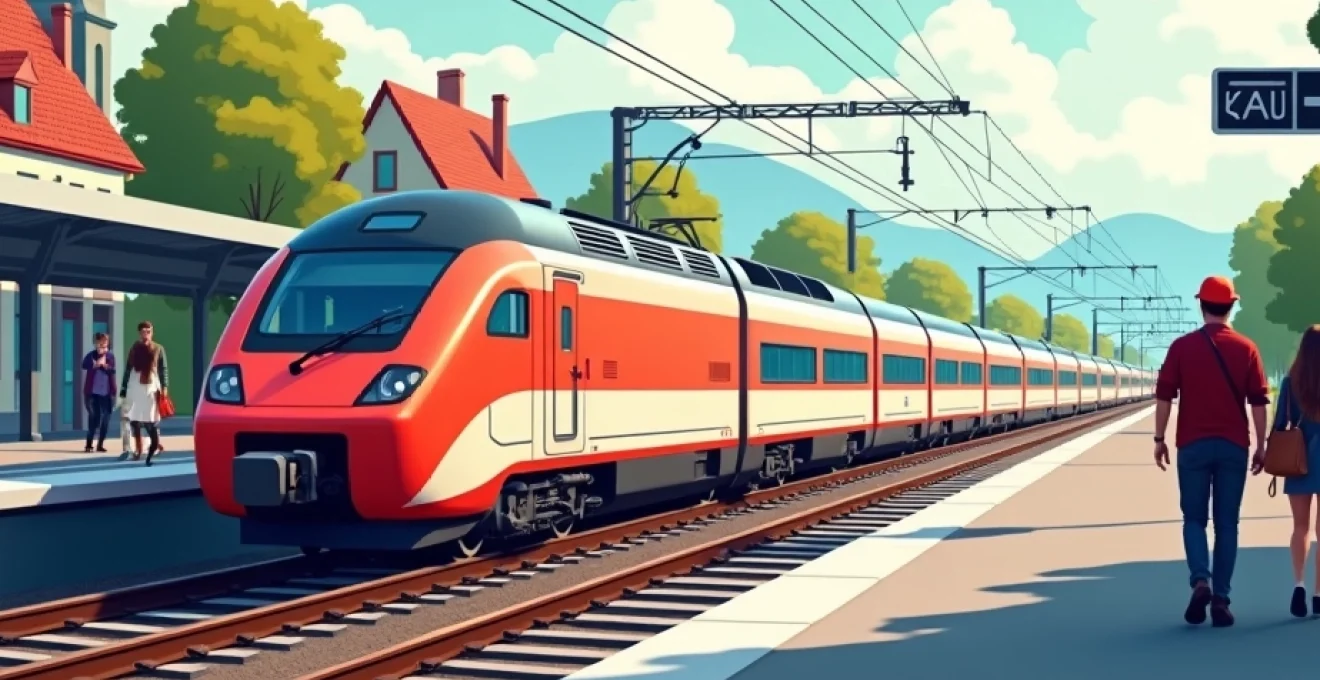
The rail connection between Berlin and Zurich represents one of Europe’s most significant cross-border train routes, connecting Germany’s vibrant capital with Switzerland’s financial hub. This journey spans approximately 668 kilometres through some of Central Europe’s most diverse landscapes, from the North German Plain through the Rhine Valley to the Swiss Plateau. With multiple daily departures and various service classes available, travellers can choose from direct overnight services or comfortable daytime connections that showcase the engineering marvels of modern European rail transport.
Whether you’re travelling for business or leisure, understanding the intricacies of this international rail route can significantly enhance your journey experience. The route offers remarkable flexibility, with services operated by Deutsche Bahn (DB), Austrian Federal Railways (ÖBB), and Swiss Federal Railways (SBB), each bringing their own standards of comfort and efficiency. Journey times range from approximately 8 hours for the fastest daytime connections to 12 hours for the overnight Nightjet service, providing options that suit different travel preferences and schedules.
Deutsche bahn ICE and EC direct services between berlin and zurich
Deutsche Bahn operates several high-speed and express services connecting Berlin with Zurich, utilising their flagship Intercity-Express (ICE) trains and EuroCity (EC) services. These trains represent the pinnacle of German railway technology, offering speeds up to 330 kilometres per hour on dedicated high-speed sections. The routing typically follows the main north-south corridor through Germany, passing through major cities including Leipzig, Frankfurt am Main, and Karlsruhe before crossing into Switzerland at Basel.
The journey showcases Germany’s extensive high-speed rail network, with trains travelling on three distinct high-speed lines during the course of the trip. Passengers experience the technological advancement of European rail transport firsthand, as trains seamlessly transition between conventional and high-speed sections. The service frequency ensures convenient departure times throughout the day, with approximately 24 daily services covering this route through various connection patterns.
ICE 273 morning departure schedule and rolling stock configuration
The ICE 273 service typically departs Berlin Hauptbahnhof around 09:46, arriving in Zurich by early evening after a journey time of approximately 8 hours and 14 minutes. This particular service utilises ICE 4 or ICE 3 neo rolling stock, featuring the latest in German high-speed train technology. The train configuration includes both first and second-class carriages, with a restaurant car positioned centrally for easy access from all seating areas.
These modern ICE trainsets offer significant improvements in energy efficiency and passenger comfort compared to earlier generations. The trains feature improved sound insulation, enhanced air conditioning systems, and better suspension technology that ensures a smooth ride even at maximum speed. Each carriage is equipped with power outlets at every seat, free Wi-Fi connectivity, and real-time journey information displays.
EC 194 EuroCity service via frankfurt am main route analysis
The EuroCity service EC 194 provides an alternative routing that emphasises comfort over pure speed, following a slightly different path through Germany’s railway network. This service typically requires one connection in Frankfurt am Main, where passengers board continuing services operated by DB or international partners. The total journey time extends to approximately 9 hours and 30 minutes, but offers more frequent departure options throughout the day.
EuroCity trains maintain high service standards across international borders, with multilingual announcements and staff trained in international customer service protocols. The rolling stock varies depending on the specific service, but consistently features air conditioning, dining facilities, and comfortable seating arrangements. These services prove particularly valuable for travellers who prefer more flexible booking options or specific departure times that align with business schedules.
First class compartment features and onboard amenities on ICE trains
First-class travel on ICE services provides a significantly enhanced experience, with seats arranged in a 1+2 configuration compared to the 2+2 layout in second class. Each first-class seat offers substantially more legroom, wider armrests, and improved recline functionality. The seats feature individual reading lights, fold-down tables suitable for laptop work, and easily accessible power outlets for multiple devices.
First-class passengers enjoy complimentary newspapers and magazines, along with at-seat service from the onboard restaurant team. The service includes a selection of regional German and international beverages, plus light meals prepared fresh in the train’s kitchen facilities. Access to DB Lounges at major stations provides additional convenience, offering quiet spaces for work or relaxation before departure, plus complimentary refreshments and high-speed internet access.
Second class seating configuration and reservation requirements
Second-class accommodation on ICE trains maintains high comfort standards despite the more economical pricing. The 2+2 seating arrangement provides adequate space for most passengers, with seats designed for long-distance comfort. Each seat includes adjustable headrests, individual armrests, and under-seat storage for small luggage items. Tables between seats accommodate laptops and meals purchased from the onboard bistro service.
Seat reservations are highly recommended, particularly during peak travel periods and holiday seasons. While not mandatory, reservations ensure guaranteed seating and allow selection of specific preferences such as window seats, table arrangements, or quiet zones. The reservation system integrates with major booking platforms, enabling selection during the initial ticket purchase process for seamless travel planning.
Berlin hauptbahnhof to zurich hauptbahnhof route planning and connections
Berlin Hauptbahnhof serves as the primary departure point for Zurich-bound services, with its impressive multi-level design facilitating efficient passenger flow and connection opportunities. The station’s innovative architecture includes platforms at different levels, with long-distance international services typically departing from the upper level platforms. Clear signage in multiple languages guides passengers to appropriate departure areas, while digital information boards provide real-time updates on platform assignments and service status.
Route planning for the Berlin-Zurich journey requires understanding the various connection possibilities and their respective advantages. Direct overnight services offer the convenience of departing Berlin in the evening and arriving in Zurich the following morning, essentially saving a night’s accommodation costs. Daytime services typically require at least one connection, most commonly in Frankfurt am Main or Basel, but provide opportunities to observe the changing landscapes across three countries.
Platform navigation at berlin hauptbahnhof for international departures
Berlin Hauptbahnhof’s unique cross-shaped design can initially appear complex, but understanding the layout significantly improves navigation efficiency. International long-distance services typically depart from platforms 11-16 on the upper level, accessed via escalators or lifts from the main concourse. Allow at least 15-20 minutes for platform access, particularly if checking departure boards and purchasing any last-minute refreshments or reading materials.
The station provides comprehensive passenger information services, including multilingual staff at information desks and detailed printed timetables for international routes. Digital departure boards display platform assignments approximately 30 minutes before departure, with earlier information available through mobile applications. The station’s extensive facilities include currency exchange, international newsagents, and restaurants serving various cuisines for pre-departure dining.
Frankfurt am main hbf transfer procedures for Zurich-Bound services
Frankfurt am Main Hauptbahnhof serves as Germany’s most significant railway junction, handling connections between northern and southern European destinations. Transfer times between Berlin-originating services and Zurich connections typically range from 30 to 60 minutes, providing adequate time for platform changes even with heavy luggage. The station’s linear design simplifies navigation, with clear platform numbering and comprehensive signage systems.
Connection protection policies ensure that passengers with through tickets receive assistance if delays cause missed connections. DB staff monitor arrival times and provide alternative routing when necessary, often rebooking passengers on subsequent services without additional charges. The station’s facilities support comfortable waiting periods, with restaurants, shops, and seating areas distributed throughout the terminal building.
Alternative routing via munich hauptbahnhof and ÖBB RailJet integration
An alternative routing option routes passengers through Munich Hauptbahnhof, utilising ÖBB RailJet services for the onward journey to Zurich. While this routing typically adds approximately one hour to the total journey time, it offers access to different scenery, particularly the stunning Alpine approaches as trains cross from Bavaria into Austria and Switzerland. RailJet trains provide a distinctly Austrian service experience, with different onboard amenities and service standards.
This routing proves particularly attractive for travellers seeking more economical fares or specific departure times that align better with their schedules. The ÖBB RailJet fleet features modern rolling stock with excellent comfort standards, competitive Wi-Fi services, and restaurant facilities serving Austrian and international cuisine. Integration between DB and ÖBB booking systems enables through-ticketing, simplifying the reservation process despite the operator change.
Basel SBB border crossing protocols and customs procedures
The border crossing at Basel represents a seamless transition between the European Union and Switzerland, thanks to bilateral agreements that facilitate passenger movement. Trains pause briefly at Basel Bad Bf (the German station) before continuing to Basel SBB (the Swiss station), during which customs and immigration procedures theoretically apply, though random checks are more common than systematic inspections.
Passengers should carry valid identification documents, as spot checks by border authorities do occur, particularly on international services. The process typically involves minimal disruption to the journey, with officials occasionally boarding trains to conduct document inspections while the train remains in motion. Currency considerations become relevant at this point, as Switzerland utilises the Swiss Franc rather than the Euro, though most onboard services accept major credit cards regardless of currency.
Advanced booking strategies through DB navigator and SBB mobile applications
Modern railway booking has evolved significantly through comprehensive mobile applications that streamline the entire journey planning and ticketing process. The DB Navigator application serves as the primary booking platform for German railway services, offering real-time journey planning, dynamic pricing displays, and integrated seat reservation capabilities. The application’s interface supports multiple languages and currencies, accommodating international travellers’ needs while providing detailed information about onboard services, connection times, and platform assignments.
Strategic booking approaches can yield substantial savings, particularly when utilising advance purchase discounts and flexible fare options. DB offers various ticket categories, from Super Saver fares starting at €29.90 for advance bookings to flexible fares that accommodate schedule changes without penalties. Timing your booking approximately 3-6 months in advance typically provides access to the most competitive pricing , while last-minute bookings often carry premium charges reflecting reduced inventory availability.
The SBB Mobile application complements DB Navigator for Swiss portions of international journeys, providing seamless integration between national railway systems. This dual-application approach ensures comprehensive coverage of the entire Berlin-Zurich route, with each system optimised for their respective national networks. Both applications offer offline functionality for downloaded tickets, eliminating connectivity concerns during border crossings or in areas with limited mobile coverage.
Advanced users benefit from understanding dynamic pricing algorithms that adjust fares based on demand patterns, seasonal variations, and booking timing. Midweek departures typically offer better pricing than weekend services , while morning and evening departures command premium pricing due to business travel demand. The applications provide price alerts and alternative date suggestions, enabling flexible travellers to identify optimal booking opportunities that balance cost considerations with schedule preferences.
Cross-border ticketing systems and interrail pass validation procedures
European rail integration extends beyond individual national systems through comprehensive ticketing arrangements that facilitate seamless international travel. The Berlin-Zurich route exemplifies this integration, with through-tickets available that cover the entire journey regardless of the multiple operators involved. These tickets incorporate fare splitting across different railway companies while presenting passengers with a single, unified travel document that simplifies onboard validation and conductor inspections.
Interrail and Eurail pass holders benefit from significant flexibility on this route , with most services accepting pass validation without mandatory seat reservations. However, pass holders must understand reservation requirements for specific services, particularly overnight trains and premium services during peak travel periods. The ÖBB Nightjet service requires advance reservations for pass holders, with fees starting from €5 for basic seating up to €125 for premium sleeping compartments, depending on accommodation categories and booking timing.
Understanding the nuances of cross-border ticketing can transform a complex international journey into a straightforward travel experience, with proper documentation ensuring smooth transitions between different railway systems.
Pass validation procedures vary between operators, with some requiring physical ticket stamping while others utilise digital validation systems. DB conductors typically scan QR codes or validate passes electronically, while Swiss Federal Railways may employ different validation methods. Passengers should familiarise themselves with each system’s requirements to avoid validation issues that could result in supplementary fare charges or travel disruptions.
The reservation system integration between national railways enables pass holders to secure seats across the entire journey through single booking transactions. This integration eliminates the need for multiple reservations with different operators, streamlining the planning process while ensuring seat availability throughout the international journey. Advanced booking remains advisable, particularly during summer travel seasons when international routes experience elevated demand from both regular passengers and rail pass users.
Journey duration optimisation and Real-Time delay management via DB and SBB APIs
Modern railway operations increasingly rely on sophisticated data systems that monitor train movements, predict potential delays, and provide passengers with real-time journey updates. The Berlin-Zurich route benefits from extensive API integration between DB, ÖBB, and SBB systems, enabling comprehensive monitoring of services across national boundaries. These systems track not only scheduled services but also alternative routings, connection opportunities, and recovery options when disruptions occur.
Journey duration optimisation involves understanding the various routing options and their respective time advantages. The fastest daytime connections typically achieve journey times of approximately 8 hours and 3 minutes , utilising high-speed sections and minimal intermediate stops. However, alternative routings might extend journey times to 9-10 hours while offering benefits such as better scenery, more comfortable seating availability, or preferential pricing structures that appeal to different passenger priorities.
Real-time delay management becomes particularly crucial on international routes where missed connections can significantly impact overall journey times. The integrated systems monitor approach times at major junction stations, automatically calculating connection feasibility and alternative routing options. When delays threaten planned connections, the systems generate rebooking suggestions and alternative routings, often implementing these changes automatically for passengers with flexible ticket types.
Effective delay management transforms potential travel disruptions into minor inconveniences, with modern railway systems providing passengers multiple recovery options that maintain journey integrity despite operational challenges.
Passengers can access real-time information through multiple channels, including mobile applications, station announcement systems, and onboard information displays. The APIs provide granular detail about delay causes, estimated recovery times, and alternative service options. This transparency enables informed decision-making, allowing passengers to choose between waiting for delayed services or accepting alternative routings that might involve different operators or connection points.
Weather monitoring integration adds another layer of journey optimisation, with systems tracking conditions across the entire route and implementing proactive measures when adverse weather threatens operations. Winter conditions in the Alpine regions can particularly impact Basel-Zurich sections , while summer thunderstorms might affect German high-speed sections. The predictive capabilities enable advance notifications and alternative arrangements, minimising passenger inconvenience through early intervention rather than reactive measures.
Advanced travellers utilise third-party applications that aggregate data from multiple railway APIs, providing comprehensive journey monitoring beyond individual operator systems. These applications often offer enhanced notification capabilities, historical performance analysis, and predictive analytics that help identify optimal travel times based on historical reliability patterns. Such tools prove invaluable for business travellers who require high journey reliability or leisure travellers seeking to maximise their European rail travel experiences through data-driven planning approaches.