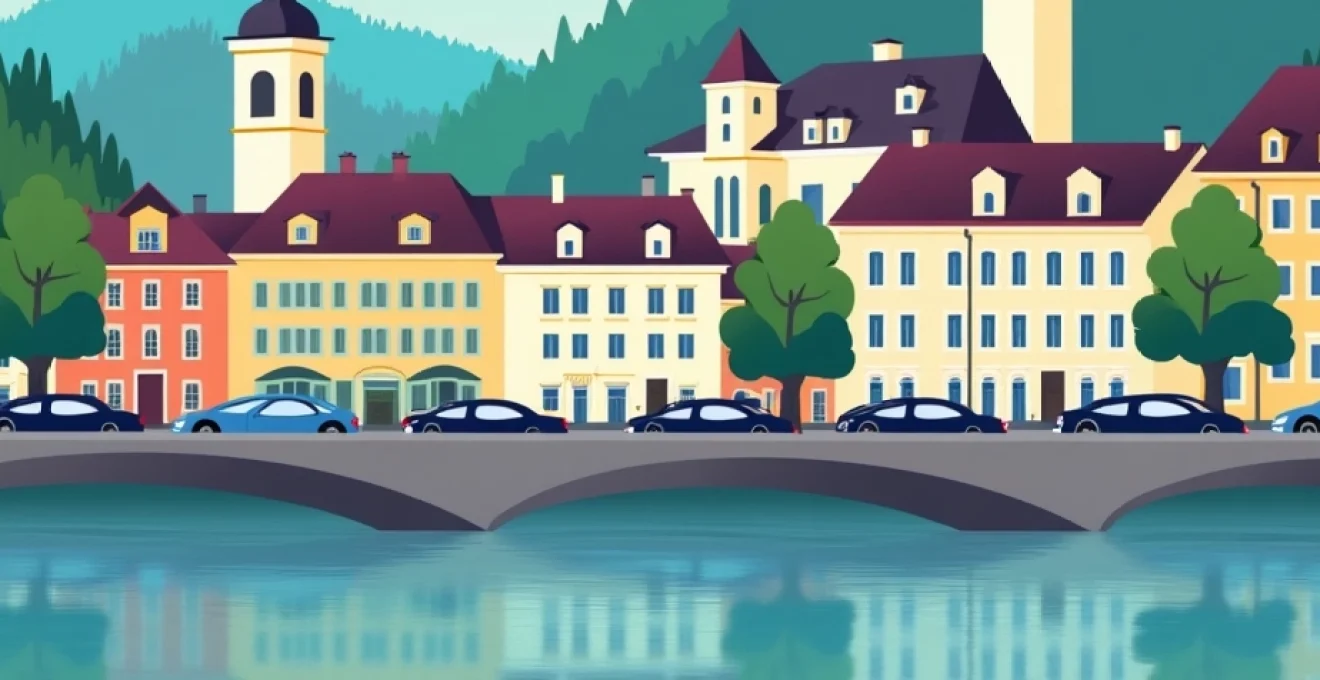
Salzburg, the enchanting birthplace of Mozart and backdrop to The Sound of Music, offers visitors an extraordinary blend of baroque architecture, Alpine landscapes, and cultural richness. While the historic city centre invites exploration on foot, having a rental car unlocks the full potential of your Austrian adventure, enabling spontaneous journeys through the Salzburger Land region and beyond. The freedom to venture into the Austrian Alps, discover charming lakeside villages like Hallstatt, or embark on scenic drives along the Grossglockner High Alpine Road transforms a simple city break into an unforgettable Alpine odyssey.
Navigating the car rental landscape in Salzburg requires understanding local regulations, documentation requirements, and the strategic locations of rental agencies. The city’s compact size and excellent infrastructure make it an ideal starting point for exploring Austria’s mountainous terrain, yet specific Austrian driving laws and seasonal considerations demand careful preparation. From the bustling atmosphere of Salzburg Airport to the romantic cobblestone streets of the Altstadt, each pickup location offers unique advantages for different travel itineraries.
Essential documentation requirements for car rental in salzburg
Valid driving licence categories and international driving permit specifications
Austrian car rental companies operate under strict European Union regulations governing driver licensing and vehicle operation. EU citizens can utilise their national driving licences without additional documentation, provided the licence remains valid throughout the rental period. Category B licences permit operation of passenger vehicles up to 3,500 kilograms, which encompasses the vast majority of rental cars available in Salzburg.
Non-EU visitors must present both their national driving licence and a valid International Driving Permit (IDP) issued in accordance with the 1968 Vienna Convention on Road Traffic. The IDP serves as an official translation of your domestic licence and must be obtained from your home country’s authorising agency before travel. Applications typically require 2-3 weeks for processing, making advance planning essential for seamless rental experiences.
Passport and identity verification protocols for Non-EU residents
Passport verification protocols vary significantly between EU and non-EU residents renting vehicles in Salzburg. European Union citizens require only a valid national identity card or passport, whilst visitors from outside the EU must present a passport with sufficient validity extending beyond their intended departure date. Immigration stamps confirming legal entry into the Schengen Area may be requested, particularly for extended rental periods.
Additional verification measures often apply to residents of certain countries, with rental agencies conducting enhanced background checks through international databases. These procedures, whilst occasionally time-consuming, ensure compliance with Austrian immigration and security regulations whilst protecting rental companies against potential fraud.
Credit card Pre-Authorisation limits and accepted payment networks
Credit card pre-authorisation serves as the primary security mechanism for Austrian car rental transactions, with typical holds ranging from €300 to €2,000 depending on vehicle category and rental duration. Premium vehicle categories and luxury models often require substantially higher deposits, occasionally exceeding €5,000 for high-end BMWs or Mercedes-Benz models popular in the Austrian market.
Visa and Mastercard networks enjoy universal acceptance across Salzburg rental agencies, whilst American Express faces occasional restrictions, particularly amongst smaller local operators. Debit card acceptance remains limited, with most agencies requiring credit cards bearing the primary renter’s name. Prepaid cards are universally rejected due to insufficient pre-authorisation capabilities required for security deposits.
Age restrictions and young driver surcharge policies
Austrian rental agencies typically impose minimum age requirements of 21 years for standard vehicle categories, though economy models may be available to drivers aged 19-20 with appropriate licensing. Young driver surcharges apply to renters under 25 years of age, with daily fees ranging from €8 to €25 depending on the rental company and vehicle selection.
Luxury and specialist vehicles often carry elevated age restrictions, with sports cars and premium SUVs requiring drivers aged 25 or older. Maximum age limits, whilst less common, occasionally apply to drivers over 70 years, with some agencies requesting medical certificates or enhanced insurance coverage for elderly renters navigating Alpine terrain.
Major car rental companies operating at salzburg airport and city centre
Salzburg airport (SZG) terminal rental desks: europcar, hertz, and avis locations
Salzburg Airport Wolfgang Amadeus Mozart houses rental desks for all major international car hire companies within the ground floor of the multi-storey car park, directly opposite the terminal building. A covered walkway connects the terminal to the rental area, ensuring comfortable access regardless of weather conditions. Europcar, Hertz, and Avis maintain prominent positions with extended operating hours accommodating early morning and late evening flights.
The airport’s compact layout facilitates rapid vehicle collection, with most rental cars parked within 50 metres of the agency desks. Digital reservation systems enable express pickup services, allowing frequent travellers to bypass traditional paperwork through pre-registered profiles and mobile applications. Average processing times range from 10-15 minutes for standard bookings to 5 minutes for premium express services.
Salzburg hauptbahnhof railway station rental outlets
Salzburg’s central railway station provides convenient access to major rental agencies for travellers arriving by train from Vienna, Munich, or other European destinations. Located within the station complex, these outlets serve passengers transitioning from rail to road transportation, offering seamless integration between transport modes. Operating hours align with major train arrivals, though weekend and holiday schedules may be restricted.
The station’s position approximately 2 kilometres from the historic centre makes it particularly attractive for visitors planning immediate departure towards Alpine destinations. Rental vehicles from the Hauptbahnhof location typically include complimentary city maps and regional touring guides, recognising the high proportion of leisure travellers utilising this pickup point.
Historic centre pickup points near getreidegasse and mirabell palace
Several boutique and international rental agencies maintain offices within Salzburg’s historic centre, offering unparalleled convenience for visitors staying in traditional hotels along Getreidegasse or near Mirabell Palace. These locations, whilst requiring navigation through narrow medieval streets, provide immediate access to both urban attractions and countryside departure routes. Parking limitations within the UNESCO World Heritage zone necessitate careful coordination with rental agents regarding vehicle collection procedures.
City centre agencies often specialise in compact and electric vehicles suitable for navigating Salzburg’s historic streets whilst respecting environmental zone restrictions. Premium services may include hotel delivery, eliminating the need for customers to locate rental offices within the labyrinthine old town layout.
Budget operators: sixt, enterprise, and local austrian rental services
Budget-conscious travellers benefit from competitive pricing offered by Sixt, Enterprise, and local Austrian rental companies throughout Salzburg. These operators frequently provide exceptional value through weekend promotions, extended rental discounts, and seasonal packages tailored to Alpine touring. Local companies often include valuable regional knowledge, recommending scenic routes and lesser-known destinations beyond typical tourist circuits.
Austrian regional operators distinguish themselves through personalised service and intimate knowledge of local driving conditions, seasonal road closures, and optimal timing for Alpine passes. Their fleets typically emphasise practical vehicles suited to Austrian terrain, including all-wheel-drive options and vehicles equipped with winter packages during appropriate seasons.
Vehicle categories and seasonal pricing strategies in salzburg
Salzburg’s rental car market reflects both urban convenience needs and Alpine adventure requirements, resulting in diverse vehicle categories designed to serve varying travel purposes. Economy models, primarily comprising Volkswagen Polo, Opel Corsa, and similar compact vehicles, dominate the lower price segments whilst offering excellent fuel efficiency for extended touring. These vehicles typically accommodate four passengers with moderate luggage capacity, making them ideal for couples or small families exploring the Salzburger Land region.
Mid-size categories feature popular models such as the Volkswagen Golf, BMW 1 Series, and Audi A3, balancing comfort with manoeuvrability through Salzburg’s historic streets. These vehicles provide enhanced luggage space and superior performance on Alpine routes, though their increased size may present challenges when navigating narrow medieval thoroughfares or locating parking within the historic centre.
Premium and luxury segments showcase Austria’s automotive heritage through BMW 3 Series, Mercedes-Benz C-Class, and Audi A4 models, offering sophisticated comfort for discerning travellers. These vehicles excel on Alpine highways and provide impressive performance through mountain passes, though their premium positioning reflects significantly higher rental rates, particularly during peak summer and winter sports seasons.
Seasonal pricing strategies in Salzburg demonstrate pronounced fluctuations aligned with tourist patterns and regional events. Summer months, spanning June through August, command premium rates due to optimal Alpine touring conditions and heightened demand from international visitors attending the Salzburg Festival. Winter pricing peaks during December and January, coinciding with Christmas market tourism and proximity to major ski resorts in the Austrian Alps.
Spring and autumn present exceptional value opportunities, with rental rates declining by 30-50% compared to peak season pricing whilst offering favourable weather conditions for sightseeing. October proves particularly attractive for travellers seeking autumnal Alpine scenery without summer crowds, though advance booking remains advisable for popular vehicle categories.
Rental rates during the Salzburg Festival period in July and August can increase by up to 200% compared to off-season pricing, making advance reservation essential for budget-conscious travellers seeking quality vehicles.
Austrian traffic regulations and Salzburg-Specific driving requirements
Motorway vignette purchase requirements for A1 and A10 routes
Austrian motorway travel requires mandatory vignette purchases for all vehicles under 3.5 tonnes, with digital and physical options available at petrol stations, border crossings, and online platforms. The A1 Autobahn connecting Salzburg to Vienna and the A10 Tauern Autobahn leading towards Villach and Italy represent primary routes requiring vignette coverage. Daily vignettes cost approximately €9.60, whilst longer durations offer improved value for extended stays.
Failure to display valid vignettes results in substantial fines starting at €120, with enforcement conducted through automated systems and mobile police patrols. Rental agencies typically offer vignette purchase services, though independent acquisition often provides cost savings and greater flexibility in duration selection based on specific itinerary requirements.
Environmental zone restrictions in salzburg’s altstadt UNESCO area
Salzburg’s historic centre operates under stringent environmental protection measures designed to preserve its UNESCO World Heritage status whilst maintaining air quality standards. Low emission zones restrict vehicle access based on Euro emission standards, with older vehicles potentially facing access limitations or additional charges during high pollution periods.
Electric and hybrid vehicles enjoy unrestricted access throughout the historic centre, making them increasingly popular choices for environmentally conscious visitors. Rental agencies often promote these options through preferential pricing or enhanced service packages, recognising their compatibility with Salzburg’s sustainability initiatives.
Winter tyre regulations from november to april
Austrian law mandates winter tyre installation on all vehicles from November 1st through April 15th when road conditions require enhanced traction. Winter tyres must display the M+S marking or Alpine symbol, with minimum tread depth requirements of 4 millimetres for adequate snow and ice performance. Rental vehicles automatically include appropriate seasonal tyres during winter months, though verification during vehicle inspection remains prudent.
Snow chain requirements apply to specific Alpine routes during adverse weather conditions, with rental agencies providing chains and installation guidance for vehicles equipped accordingly. Mountain passes may close temporarily during severe weather, making flexible itinerary planning essential for winter travel through Austria’s Alpine regions.
Speed limit enforcement on salzburger alpenstrasse mountain routes
Mountain routes throughout the Salzburger Alpenstrasse network enforce variable speed limits reflecting changing terrain, weather conditions, and traffic density. Standard limits range from 50 km/h in villages to 100 km/h on dual carriageways, with temporary restrictions imposed during construction or adverse weather. Automated enforcement systems monitor compliance throughout the network, with fines calculated according to speed excess severity.
Alpine driving requires enhanced attention to road signage, weather conditions, and vehicle performance capabilities. Rental vehicles should be inspected for proper fluid levels, tyre condition, and emergency equipment before embarking on mountain routes, particularly during shoulder seasons when weather patterns may change rapidly.
Strategic parking solutions and navigation considerations
Park and ride facilities: salzburg süd and messezentrum locations
Salzburg’s park and ride system offers cost-effective alternatives to historic centre parking whilst maintaining excellent public transport connections to major attractions. The Salzburg Süd facility, located adjacent to the A10 Autobahn, provides 1,200 parking spaces with direct bus connections to the Altstadt running every 10 minutes during peak periods. Daily parking rates of €5 include public transport tickets for all vehicle occupants, representing substantial savings compared to central parking fees.
Messezentrum park and ride serves the northern approach to Salzburg, offering 800 spaces with trolleybus connections to Mirabell Palace and the historic centre. This facility proves particularly convenient for visitors approaching from Munich or other German destinations, providing immediate transition from highway travel to efficient urban transportation.
Historic centre parking garages: altstadtgarage and mönchsberg lift access
The Altstadtgarage represents Salzburg’s premier central parking facility, accommodating 500 vehicles within walking distance of Mozart’s birthplace, Salzburg Cathedral, and primary shopping districts. Located beneath the historic centre, this underground garage offers direct pedestrian access to Getreidegasse whilst protecting the historic streetscape from vehicular traffic. Hourly rates range from €2.50 to €4.00, with maximum daily charges of €25 during peak tourist seasons.
Mönchsberg parking combines scenic elevator access with convenient proximity to Salzburg’s fortress and old town attractions. The unique cliff-top lift system transports visitors from parking levels to pedestrian areas whilst offering spectacular views across the city and surrounding Alps. Advanced reservation systems ensure space availability during festival periods and peak tourist seasons.
Blue zone Short-Term parking regulations and payment systems
Salzburg’s blue zone parking system governs short-term vehicle storage throughout residential and commercial districts surrounding the historic centre. Maximum parking duration ranges from 90 minutes to 3 hours depending on specific zone regulations, with enforcement conducted through mobile patrol units and automated monitoring systems. Mobile payment applications offer convenient alternatives to traditional parking metres, enabling remote session extension and automatic notifications approaching expiry times.
Blue zone regulations suspend during evenings and weekends in most areas, though specific locations near major attractions maintain continuous enforcement. Visitor parking permits, available through tourist information centres, provide extended duration options for guests staying in central accommodation without dedicated parking facilities.
Understanding Salzburg’s parking ecosystem can save visitors up to €30 per day whilst ensuring compliance with local regulations and avoiding costly penalties that can quickly escalate rental costs.
Cross-border travel permissions for austrian alpine region exploration
Austrian rental vehicles typically include comprehensive insurance coverage for travel throughout the European Union, enabling spontaneous exploration of neighbouring countries without additional documentation or fees. Germany’s Berchtesgaden National Park lies within 30 minutes of Salzburg, offering spectacular mountain scenery and hiking opportunities accessible via scenic border crossings. Switzerland access remains unrestricted for EU-sourced rental vehicles, though different motorway vignette requirements apply for extended stays beyond transit purposes.
Italy’s South Tyrol region, including destinations such as Bolzano and Merano, provides Mediterranean Alpine experiences within three hours’ drive from Salzburg. Border formalities remain minimal for EU citizens, though non-EU visitors should verify passport requirements and potential visa implications for multi-country itineraries. Rental agreements typically specify permitted countries, with Eastern European destinations occasionally requiring prior notification or additional insurance coverage.
Slovenia and Czech Republic offer exceptional value destinations for extended Alpine exploration, with rental vehicles providing flexible access to regions poorly served by public transportation. The dramatic landscapes of the Julian Alps and Bohemian countryside complement Salzburg’s Austrian charm, creating comprehensive Central European touring opportunities. Fuel pricing variations between countries can influence route planning, with Austrian petrol stations generally offering competitive rates compared to neighbouring Switzerland.
Cross-border emergency assistance protocols ensure consistent support regardless of location within the European Union network. Rental agencies provide 24-hour contact numbers and coordinate with local partners to address mechanical issues, accidents, or medical emergencies throughout permitted travel areas. Comprehensive insurance policies
typically include repatriation coverage, ensuring rental vehicles can be recovered and customers transported to their home destinations in case of serious incidents occurring during cross-border travel.
Documentation requirements for cross-border travel may include rental agreement specifications permitting international use, though most major Austrian agencies automatically include EU coverage in standard contracts. Vehicle registration documents and insurance certificates should remain accessible during travel, as border authorities occasionally request verification during random checks or specific security operations. Green card insurance documentation, whilst no longer mandatory within the EU, may be requested by some rental agencies for comprehensive coverage verification across all permitted territories.
Seasonal considerations significantly impact cross-border Alpine exploration, with winter road closures affecting major mountain passes connecting Austria to Italy and Switzerland. The Grossglockner High Alpine Road, Austria’s premier scenic route, operates seasonally from May through October, requiring alternative routing during winter months. Advanced route planning becomes essential when combining Austrian exploration with neighbouring country visits, particularly during shoulder seasons when weather conditions may vary dramatically between valleys and mountain regions.
Currency considerations add practical complexity to cross-border exploration, with Switzerland maintaining the Swiss Franc whilst most other neighbouring countries utilise the Euro. Fuel purchases, toll payments, and emergency expenses may require multiple payment methods, making credit card availability essential for seamless travel experiences. Fuel efficiency calculations should account for varying terrain and driving conditions across different countries, with Alpine routes typically consuming 20-30% more fuel than equivalent flat terrain distances.
Return logistics for cross-border travel typically require vehicles to be returned to their original Austrian pickup location, though some premium agencies offer international drop-off services for substantial additional fees. One-way international rentals may incur charges ranging from €200 to €800 depending on distance and destination country, making round-trip planning more economical for most travellers exploring the broader Alpine region from Salzburg’s strategic central location.
Cross-border travel from Salzburg opens access to four countries within a three-hour drive, making it one of Europe’s most strategically positioned bases for comprehensive Alpine exploration experiences.
Emergency contact procedures for cross-border incidents require understanding which services to contact in different countries, with European emergency number 112 providing universal access to police, medical, and fire services throughout the EU network. Rental agency emergency numbers typically provide English-language support regardless of location, though local emergency services may require basic German, Italian, or Slovenian language skills depending on specific incident locations.
Insurance verification across borders ensures consistent coverage levels, though some policies may include geographical limitations or reduced coverage in specific countries. Premium insurance packages often provide enhanced cross-border benefits, including higher coverage limits and additional services such as alternative transportation or accommodation in case of extended vehicle immobilisation during international travel.
Time zone considerations affect cross-border travel planning, with most neighbouring countries sharing Central European Time with Austria, though daylight saving transitions may occur on different dates. GPS navigation systems typically adjust automatically, though manual verification of appointment times and border crossing hours becomes important for travellers maintaining tight schedules across multiple countries during their Salzburg-based Alpine adventure.
Rental car exploration from Salzburg transforms a simple Austrian city break into a comprehensive Central European adventure, providing unmatched flexibility to discover hidden Alpine gems, historic cities, and spectacular mountain landscapes across multiple countries. The combination of Salzburg’s strategic location, excellent rental infrastructure, and comprehensive cross-border access creates optimal conditions for unforgettable automotive touring experiences through some of Europe’s most spectacular regions.