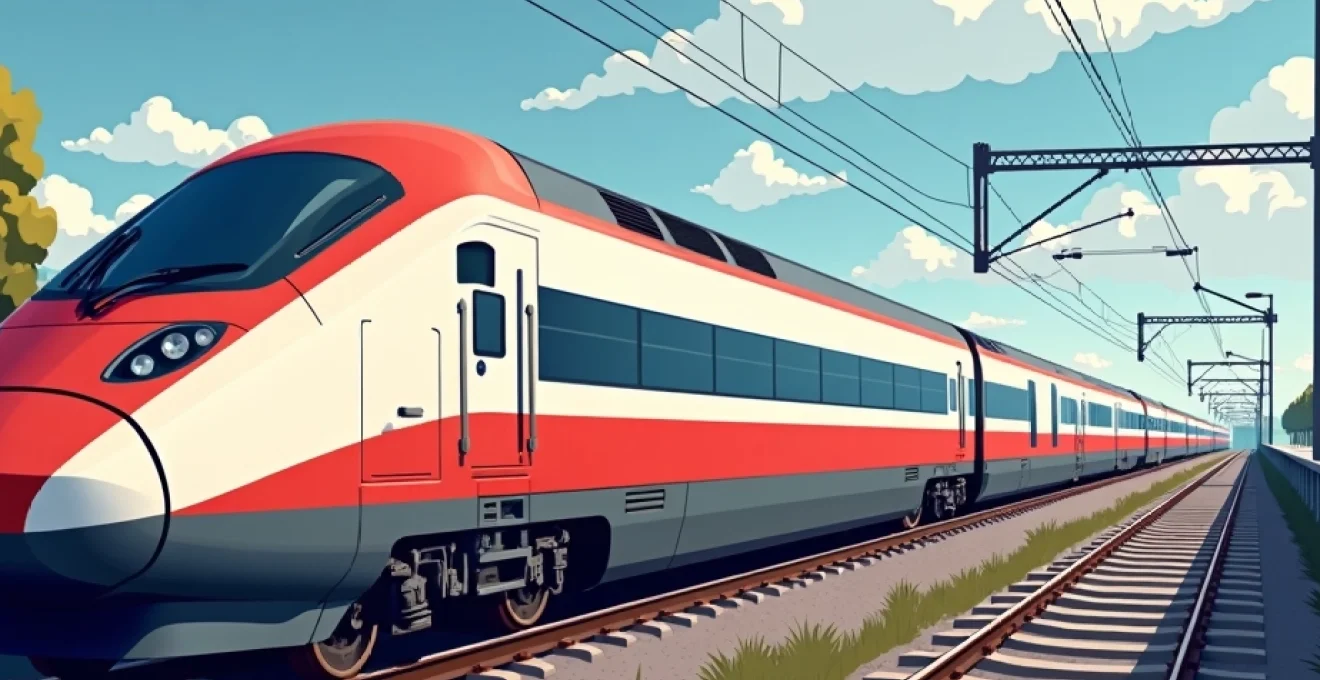
Spain’s high-speed rail network represents one of Europe’s most impressive transportation achievements, connecting the country’s two largest cities through cutting-edge technology and engineering excellence. The Barcelona to Madrid corridor stands as a testament to modern railway innovation, offering passengers a swift and comfortable alternative to air travel across the Iberian Peninsula. This 621-kilometre journey has revolutionised intercity travel in Spain, transforming what was once an arduous 7-hour trip into a seamless experience that takes less than three hours. The development of this high-speed connection has not only enhanced passenger convenience but has also contributed significantly to sustainable transport practices across the region.
High-speed rail infrastructure: AVE service configuration between barcelona and madrid
The Alta Velocidad Española (AVE) network forms the backbone of Spain’s high-speed rail system, representing a sophisticated integration of advanced railway technology and strategic infrastructure development. This comprehensive network has established Spain as the second-largest high-speed rail operator globally, with over 3,400 kilometres of dedicated high-speed lines connecting major urban centres across the country.
Renfe AVE S-103 fleet technical specifications and performance metrics
The Siemens Velaro E trains, designated as AVE S-103 in the Spanish fleet, operate at the technological forefront of high-speed rail transport. These eight-car distributed traction units achieve operational speeds of up to 350 kilometres per hour, though commercial services typically operate at 310 kilometres per hour for optimal efficiency and passenger comfort. The trains feature advanced aerodynamic design with sealed carbodies and sophisticated climate control systems that maintain consistent internal pressure during high-speed operation.
Each S-103 unit accommodates approximately 404 passengers across two service classes, incorporating noise reduction technology that ensures conversation levels remain comfortable throughout the journey. The distributed traction system provides superior acceleration capabilities compared to traditional locomotive-hauled trains, enabling rapid acceleration to cruising speed and efficient braking performance when approaching stations.
Dedicated High-Speed line LAV Madrid-Barcelona engineering details
The Línea de Alta Velocidad Madrid-Barcelona represents a masterpiece of railway engineering, constructed specifically for high-speed operations with minimal geometric constraints. The line features extensive use of viaducts and tunnels to maintain optimal gradients and curve radii, with maximum gradients limited to 3.5% and minimum curve radii of 7,000 metres for 350 km/h operation.
Construction of this dedicated infrastructure required innovative solutions to traverse the challenging topography between Spain’s central plateau and the Mediterranean coastal plain. The line includes the 7.3-kilometre Túnel de Guadarrama, one of Spain’s longest railway tunnels, which enables trains to cross the Sierra de Guadarrama mountain range without significant speed restrictions.
Electrification systems: 25kv AC overhead line technology implementation
The high-speed line utilises 25kV AC electrification at 50Hz, representing the European standard for high-speed rail operations. This system provides superior power transmission efficiency over long distances compared to traditional DC systems, enabling sustained high-speed operation with minimal voltage drop. The overhead line equipment incorporates tensioned catenary systems designed to maintain consistent contact with pantographs at speeds exceeding 300 kilometres per hour.
Advanced power distribution substations positioned at strategic intervals ensure consistent electrical supply throughout the network. These facilities incorporate sophisticated monitoring systems that detect any irregularities in power delivery and automatically implement corrective measures to maintain service reliability.
Track gauge standardisation: UIC 1435mm european standard integration
The adoption of standard European gauge (1,435mm) for the high-speed network marked a significant departure from Spain’s traditional broad gauge (1,668mm) railway system. This standardisation enables seamless integration with European high-speed networks and facilitates cross-border services, particularly the planned connections with France’s TGV network.
The gauge conversion required extensive planning and coordination, as trains operating on the Madrid-Barcelona route must be capable of operating on standard gauge infrastructure while maintaining compatibility with gauge-changing facilities at key interchange points. This technical challenge has been successfully resolved through advanced bogie design and sophisticated train control systems.
Signalling systems: ERTMS level 2 and ASFA digital integration
The European Rail Traffic Management System (ERTMS) Level 2 provides continuous train supervision and automatic train protection throughout the high-speed network. This advanced signalling system enables trains to operate safely at high speeds while maintaining optimal track capacity through precise speed and distance calculations transmitted via GSM-R radio communications.
Integration with Spain’s traditional ASFA (Anuncio de Señales y Frenado Automático) system ensures compatibility across the broader rail network. This dual-system approach enables AVE trains to operate seamlessly from high-speed lines onto conventional infrastructure when accessing city centre stations, providing passengers with direct connectivity to urban centres.
Journey duration analysis: scheduled service times and route optimisation
Understanding the various factors that influence journey times between Barcelona and Madrid requires examination of operational patterns, service configurations, and route optimisation strategies employed by different operators. The high-speed corridor now accommodates multiple train operators, each offering distinct service patterns and timing profiles designed to meet varying passenger requirements.
Direct AVE services: 2 hours 30 minutes to 3 hours 15 minutes range
The fastest direct services between Barcelona Sants and Madrid Puerta de Atocha complete the journey in approximately 2 hours and 30 minutes, representing the pinnacle of commercial high-speed rail efficiency in Europe. These non-stop services operate during peak business travel periods, typically in early morning and late afternoon slots, catering to corporate passengers requiring rapid intercity connectivity.
Standard direct services extend journey times to approximately 2 hours and 45 minutes, incorporating brief technical stops for operational requirements while maintaining passenger convenience. The slight time variation reflects different operational priorities, with some services optimised for maximum speed and others designed to accommodate broader scheduling requirements across the network.
The reduction from historical 7-hour journey times to under 3 hours represents a 75% improvement in travel efficiency, fundamentally transforming the economic relationship between Spain’s two largest metropolitan areas.
Intermediate station impact: Zaragoza-Delicias and Lleida-Pirineus stop patterns
Services that include intermediate stops typically extend journey times to between 3 hours and 3 hours 15 minutes, though this variation provides valuable connectivity to intermediate cities along the corridor. Zaragoza-Delicias serves as the primary intermediate destination, offering passengers access to Aragon’s capital and surrounding regions.
The strategic positioning of these intermediate stations reflects careful planning to maximise network utility while minimising impact on through passengers. Station dwell times are carefully managed to maintain schedule integrity, with typical stops lasting between 2-4 minutes for passenger exchange and technical requirements.
Peak hour scheduling: morning and evening business corridor timetables
Morning departures from Barcelona typically commence at 06:00, providing early arrival in Madrid for business appointments and meetings. The highest frequency of services operates between 07:00 and 10:00 from both cities, reflecting the significant business travel demand along this corridor. Peak hour services often feature reduced journey times as operators prioritise schedule reliability and passenger convenience during high-demand periods.
Evening return services mirror morning patterns, with frequent departures between 17:00 and 21:00 enabling same-day return journeys for business travellers. This scheduling pattern has effectively created a unified economic corridor, enabling businesses to maintain operations across both cities while minimising travel time impacts on productivity.
Seasonal variations: summer and holiday period schedule adjustments
Summer scheduling incorporates additional services to accommodate leisure travel demand, though individual journey times remain consistent with standard operations. Holiday periods may feature modified timetables with adjusted departure frequencies, but the fundamental journey duration capabilities of the infrastructure remain unchanged.
Maintenance windows during off-peak periods occasionally result in temporary service adjustments, though advanced planning ensures minimal passenger impact. The robust infrastructure design enables year-round operations with minimal weather-related disruptions, maintaining schedule reliability across seasonal variations.
Route geography and technical challenges: 621-kilometre corridor analysis
The Madrid-Barcelona high-speed corridor traverses diverse geographical regions, presenting unique engineering challenges that have been successfully overcome through innovative design solutions and advanced construction techniques. The route begins at Madrid’s elevated central plateau at approximately 650 metres above sea level, descending through the Meseta Central before crossing the Ebro River valley and ascending toward Barcelona’s coastal Mediterranean location.
Significant elevation changes along the route required sophisticated gradient management to maintain high-speed capabilities throughout the journey. The most challenging section involves crossing the Sistema Ibérico mountain range, where engineers implemented extensive tunnelling and viaduct construction to achieve optimal geometric standards. The longest tunnel section extends for 7.3 kilometres through the Sierra de Guadarrama, representing a remarkable feat of underground construction that enables trains to maintain speeds exceeding 250 kilometres per hour even through mountainous terrain.
Environmental considerations played a crucial role in route selection and construction methodology. The alignment carefully avoids sensitive ecological areas while incorporating noise barriers and wildlife crossing facilities to minimise environmental impact. Seismic engineering standards were applied throughout construction to ensure infrastructure resilience, particularly important given Spain’s occasional seismic activity in certain regions along the corridor.
Climate variations between Madrid’s continental climate and Barcelona’s Mediterranean conditions required sophisticated material selection and construction techniques. Temperature fluctuations, precipitation patterns, and wind exposure all influenced infrastructure design decisions, ensuring optimal performance across diverse weather conditions. The result is a highly resilient transportation system capable of maintaining schedule integrity regardless of seasonal variations or temporary weather events.
Service frequency and operational patterns: daily departure scheduling
The Barcelona-Madrid corridor now supports over 30 daily departures in each direction, representing one of Europe’s most intensive high-speed rail operations. This frequency reflects the enormous passenger demand along Spain’s primary intercity corridor, with multiple operators contributing to comprehensive timetable coverage throughout operating hours. Renfe’s AVE services provide the backbone of operations with approximately 20 daily departures, supplemented by Iryo’s premium services and OUIGO’s budget-oriented offerings.
Service patterns demonstrate sophisticated demand management, with peak frequency during traditional business travel windows and reduced but consistent service during off-peak periods. Early morning departures commence at 06:00 from both terminals, enabling full-day productivity for business travellers, while evening services extend until approximately 21:00 to accommodate varied passenger requirements. Weekend scheduling reflects leisure travel patterns, with modified departure times and frequencies designed to optimise recreational journey requirements.
| Time Period | Weekday Frequency | Weekend Frequency | Typical Journey Time |
| 06:00-09:00 | 8 departures | 4 departures | 2h 30m – 2h 45m |
| 09:00-17:00 | 12 departures | 8 departures | 2h 45m – 3h 15m |
| 17:00-21:00 | 10 departures | 6 departures | 2h 30m – 2h 45m |
Operational reliability across the network consistently exceeds 95% punctuality, reflecting robust infrastructure design and sophisticated traffic management systems. Advanced scheduling algorithms coordinate multiple operators while optimising track utilisation and minimising passenger disruption. The integration of real-time monitoring systems enables proactive schedule adjustments when necessary, maintaining service quality even during peak demand periods or minor operational irregularities.
The coordination of multiple high-speed operators on a single corridor represents a successful model for railway liberalisation, demonstrating how competition can enhance service quality while maintaining operational efficiency.
Ticket pricing structure: renfe fare categories and advance booking systems
Understanding the complex pricing ecosystem for Barcelona-Madrid rail services requires examination of multiple operator strategies, fare structures, and booking methodologies that have evolved since market liberalisation in 2021. Renfe’s traditional AVE services maintain a tiered pricing structure based on flexibility, advance booking, and service class, while newer entrants like OUIGO and Iryo have introduced simplified pricing models designed to attract price-sensitive passengers.
AVE ticket categories range from basic Básico fares starting around €58 for advance bookings to Premium fares exceeding €180 for first-class travel with maximum flexibility. The Elige fare category provides intermediate pricing with moderate flexibility, appealing to passengers requiring some scheduling adaptability without premium pricing. Dynamic pricing algorithms adjust fares based on demand patterns, booking timing, and seat availability, creating significant variation in ticket costs depending on travel dates and booking horizons.
OUIGO’s budget-oriented approach offers baseline fares from €9 for advance bookings, though this pricing includes strict baggage limitations and additional fees for standard amenities. Passengers selecting OUIGO services must carefully consider total journey costs, as seat selection, standard luggage, and onboard services incur additional charges. The airline-style pricing model appeals to leisure travellers willing to accept reduced flexibility in exchange for significantly lower base fares.
Iryo’s premium positioning targets passengers seeking enhanced comfort and service quality, with Inicial class fares typically starting around €25 and Infinita Bistró class reaching €120 for comprehensive amenities. The operator’s focus on passenger experience includes spacious seating, premium catering, and flexible booking terms that justify higher pricing compared to budget alternatives. Advanced booking periods extending up to six months enable passengers to secure optimal pricing for planned travel, though last-minute bookings may result in significantly higher costs across all operators.
Alternative transport connections: comparative journey times and multimodal options
While high-speed rail dominates the Barcelona-Madrid corridor, understanding alternative transport options provides valuable context for journey planning and cost optimisation. Air services between Barcelona El Prat and Madrid Barajas offer flight times of approximately 80 minutes, though total journey times including airport procedures, security screening, and ground transportation typically extend to 4-5 hours door-to-door for city centre locations.
Highway connections via the AP-2 autopista enable private vehicle journeys of approximately 7 hours covering 621 kilometres, though driving times vary significantly based on traffic conditions, rest requirements, and route selection. Fuel costs, tolls, and parking expenses often make private vehicle transport less economical than rail alternatives, particularly when considering urban parking challenges in both Barcelona and Madrid city centres.
Bus services provide the most economical transport option with fares starting around €20, though journey times extend to 7-8 hours with limited onboard amenities compared to rail travel. Multiple daily departures enable flexible scheduling, appealing to budget-conscious travellers willing to accept extended journey times in exchange for significant cost savings.
The comprehensive transport options along the Barcelona-Madrid corridor demonstrate how high-speed rail has redefined intercity travel expectations, offering an optimal balance of journey time, comfort, and environmental sustainability.
Intermodal connections enhance the overall transport ecosystem, with integrated ticketing options enabling seamless transfers between high-speed rail and local transport networks. Both Barcelona Sants and Madrid Atocha stations provide direct connections to metro, suburban rail, and bus networks, facilitating convenient onward travel to final destinations across both metropolitan areas. The success of the high-speed rail corridor has encouraged additional infrastructure investments, including improved airport rail links and enhanced urban transport integration that benefits all passengers regardless of their chosen intercity transport mode.