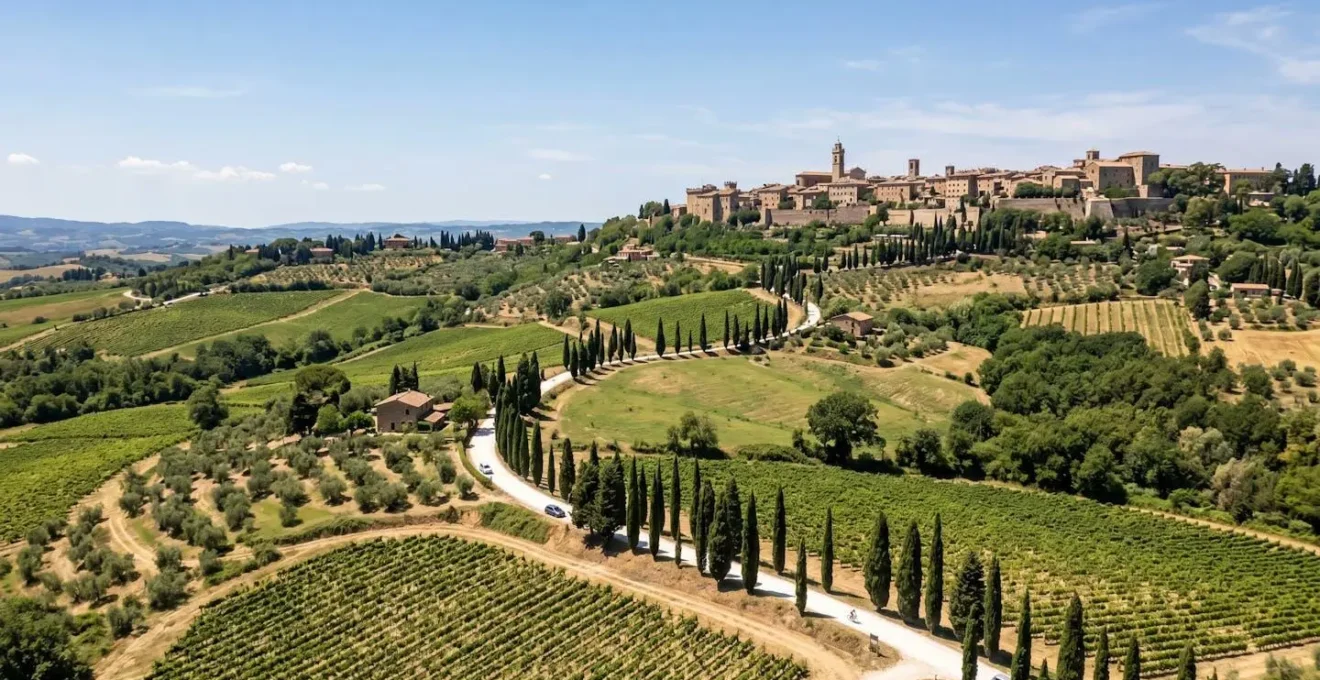
Tuscany recorded historic tourism numbers in 2024, with Italy welcoming over 458 million overnight stays according to ISTAT‘s latest data, and the region consistently ranking among the country’s top four destinations for international travelers. Yet behind those impressive figures lies a common frustration: getting between Florence, Pisa, Lucca, Siena, and San Gimignano efficiently without drowning in logistics or blowing your vacation budget.
The challenge isn’t whether these Renaissance cities are worth visiting — that’s a given. The real question travelers face is choosing the right transport method when you want to see multiple destinations in one trip. Rent a car and risk navigating Italy’s infamous ZTL restricted zones and parking nightmares? Piece together regional train tickets and hope connections align? Book individual city tours and sacrifice flexibility? Or opt for a multi-day bus pass solution like Tootbus, designed specifically for this multi-city sightseeing scenario?
Here’s what makes this decision trickier than it appears: each option markets itself as the obvious choice, but the real-world experience — including hidden costs, time waste, and stress factors — tells a more nuanced story. This comparison breaks down four realistic transport approaches across the criteria that actually matter when you’re on the ground in Tuscany.
Your Tuscany transport decision in 60 seconds:
- Tootbus Multi-Day Pass: Best for first-timers wanting stress-free multi-city access with walking tours and English app support (starting €46.55 for 1-5 day options)
- Regional trains: Cheapest for major city pairs like Florence-Pisa if you’re comfortable navigating Italian ticket systems and fixed schedules (€8-15 per one-way trip)
- Car rental: Ideal for experienced drivers seeking countryside vineyard access, but factor in ZTL fines, fuel, and parking (total €40-70+ daily)
- Individual city tours: Works if staying in one base city, but gets expensive fast for multi-destination itineraries (€50-80 per city)
What makes Tuscany transport challenging for visitors?
The reality is that Tuscany‘s appeal as a UNESCO-rich cultural destination creates its own logistical puzzle. According to ENIT‘s 2025 Tuscany strategy report, the region actively promotes what they call “Toscana Diffusa” — a deliberate effort to spread visitor flows beyond Florence’s historic center to places like Pisa, Lucca, and San Gimignano. That’s great for authentic experiences and crowd management, but it means tourists now face the challenge of covering more ground efficiently.
What most travel guides won’t tell you upfront is that each city enforces ZTL zones — Zona Traffico Limitato — which are restricted traffic areas in historic centers monitored by cameras. Drive into one without authorization (common when following GPS directions to your hotel), and you’ll receive a €100-plus fine weeks after returning home. For context, many American travelers rack up multiple violations during a 4-day trip without realizing they’ve entered forbidden zones, essentially wiping out any perceived cost advantage of car rental.
The ZTL reality check: Florence, Siena, and Lucca all enforce camera-monitored restricted zones in their historic centers. Unauthorized entry triggers €100-200 fines per violation, often arriving 6-8 weeks post-trip. Many rental agencies don’t clearly explain this system during pickup, leaving tourists vulnerable to surprise penalties that can exceed the original rental cost.
Meanwhile, the regional train alternative — while budget-friendly on paper — reveals its own friction points once you start planning actual routes. Getting from Florence to Pisa or Lucca works smoothly enough on Trenitalia’s regional network, but try reaching San Gimignano by train and you’ll discover it requires two connections and over three hours each way for what’s essentially a 60-kilometer journey. Italy’s public transport infrastructure was built primarily for commuters and domestic travelers who know the system, creating a steeper learning curve for tourists juggling language barriers, unfamiliar ticket machines, and connection stress.
The four main ways to travel between Florence, Pisa, and Lucca
Think of your transport choice as selecting between four fundamentally different travel philosophies, each with distinct trade-offs. There’s the all-in-one guided highway approach (multi-day bus passes), the DIY budget route (regional trains), the premium independence option (car rental), and the piecemeal city-by-city method (individual tours). None is universally “best” — what works depends entirely on your comfort level with navigation, budget flexibility, and how much control versus convenience you prioritize.
Tootbus Multi-Day Pass operates two dedicated routes across Tuscany — the Green and Terracotta lines — connecting five major cities (Florence, Pisa, Siena, Lucca, and San Gimignano) with hop-on hop-off freedom for 1, 2, 3, or 5 consecutive days. You get unlimited boarding across both routes during your pass validity, plus included walking tours, an AI guide called Tootie for itinerary planning, and a mobile app with real-time GPS bus tracking.
Regional trains via Trenitalia cover the major city connections with roughly hourly service between Florence and Pisa (about 60 minutes), while Florence to Lucca involves a connection in Pisa. According to Autolinee Toscane‘s official fare structure, urban tickets within provincial capitals cost 1.70 €, while suburban intercity routes start from €3.00. Trains win on per-trip price, but require navigating Italian ticket machines, validating tickets before boarding (€50 fine if you forget), and accepting that some destinations like San Gimignano become logistically painful.
Car rental gives you geographic freedom to explore Chianti vineyards and countryside hamlets at will. You can leave when you want, stop where you want, and aren’t bound to any route or schedule. The catch: you’re fully responsible for navigation (GPS doesn’t always account for ZTL zones or one-way medieval streets), parking (€2-4 per hour in city centers, if you find a spot), fuel costs, and the mental load of driving on unfamiliar roads where Italian drivers demonstrate assertive highway behavior.
Individual city tours — whether walking tours, guided bus tours, or private experiences — offer the deepest cultural context with expert guides who bring history to life. They’re fantastic for one city, but booking separate tours for Florence, Pisa, Siena, and San Gimignano means paying €50-80 per person per city, losing the flexibility to change plans spontaneously, and coordinating multiple bookings instead of one unified transport solution.
The comparison below evaluates all four transport methods across six decision criteria that matter most when you’re planning multi-city travel in Tuscany. Each row represents one transport option, with columns showing flexibility levels, realistic daily costs, geographic coverage, ease of navigation, and what’s included beyond basic transport.
Data collected and updated February 2026 based on official operator sources and current published rates.
| Transport Option | Flexibility Level | Daily Cost Range | Cities Accessible | Ease of Use | Included Extras |
|---|---|---|---|---|---|
| Tootbus Multi-Day Pass | Unlimited hop-on hop-off during pass validity | €30-47 per day (1-5 day options) | 5 major cities via 2 dedicated routes | English mobile app, real-time GPS, AI guide Tootie | Walking tours, audioguides, itinerary planner |
| Regional Trains (Trenitalia) | Bound to published timetables | €15-30 per day (2-3 one-way trips) | Major cities easily; small towns require multiple connections | Italian signage and machines, moderate learning curve | None — pure transport |
| Car Rental | Total freedom (roads permitting) | €40-70+ per day (includes fuel, parking, ZTL risk) | Entire region including countryside | ZTL fines risk, parking challenges, navigation stress | None — full self-service |
| Individual City Tours | Fixed itinerary per booked tour | €50-80 per city (separate bookings) | One destination per tour purchased | Easiest — fully guided with expert context | Complete guided cultural experience |
Breaking down flexibility, cost, and coverage
The table above gives you the framework, but the real decision happens when you map those features against what actually matters during five days on the ground in Tuscany. Three criteria consistently determine whether travelers feel they made the right choice: how freely you can change plans when inspiration strikes, what you actually spend when all costs are tallied, and which destinations remain realistically accessible.
Car rental promotions emphasize “total freedom,” which is accurate until you factor in that freedom also means finding parking in medieval city centers designed for horses, not SUVs. Trains advertise frequent service, true for Florence-Pisa, but “frequent” becomes “three departures daily requiring two connections” for routes like Siena to San Gimignano.
Tootbus’s hop-on hop-off model means exactly what it says: during your pass validity period, you board any bus on either route as many times as you want, no reservation required. Discovered you want to spend an extra two hours in Lucca’s Renaissance ramparts instead of rushing to Pisa? Just catch the next bus. The flip side is you’re still bound to bus route coverage — Tootbus won’t take you to tiny countryside villages off the main tourism corridors. That’s where cars genuinely win. But for most first-time visitors focused on UNESCO headline destinations, route-bound flexibility proves more than sufficient.
Individual city tours sit at the opposite end of the spectrum — maximum rigidity. You’ve pre-booked a Florence walking tour at 10 AM and a Pisa tour at 3 PM the next day. If weather turns nasty or you’d rather spend the afternoon in a museum you just discovered, tough luck. It’s the trade-off for expert-guided cultural depth.
Real cost breakdown: 4-day Tuscany trip for two travelers
Take a realistic scenario — a couple spending four days visiting Florence, Pisa, Siena, Lucca, and San Gimignano, making approximately eight intercity trips total. Here’s what each option actually costs:
Tootbus Multi-Day Pass: Two 3-day passes at roughly €40 per person equals €240 total, including unlimited travel across all five cities, walking tours, AI guide app, and zero hidden fees.
Regional trains: Twelve one-way regional tickets averaging €12 each totals €144, plus San Gimignano bus connection (€14 round-trip for two) brings it to €158. Factor in three hours wasted on that San Gimignano connection, ticket validation stress, and missed connection risk. Real-world cost: €158-180 plus significant time waste.
Car rental: Four days at €45 daily (€180), plus €40-50 fuel for 300 kilometers, plus €25-30 parking fees, plus ZTL zone risk — if you accidentally enter Florence’s restricted zone even once, that’s another €100-160 in fines arriving weeks later. Realistic total: €245-420.
Individual city tours: Separate guided experiences in four cities at €55-70 per person per city equals €440-560 for two people. You get the richest cultural context but at more than double the cost of the multi-day pass while sacrificing flexibility.
The verdict on pure economics: trains appear cheapest on paper but San Gimignano accessibility becomes problematic. Tootbus delivers strong value-for-convenience at €240 with zero stress or surprise costs. Cars only make financial sense if you’re absolutely certain you can avoid all ZTL zones. Individual tours are premium-priced for premium cultural depth.
Geography and infrastructure create natural winners and losers for each transport mode. Trenitalia’s regional rail network covers Florence, Pisa, and Lucca smoothly with frequent service and short journey times. But Tuscany’s appeal extends beyond those three cities, and that’s where coverage limitations surface. Siena is rail-accessible from Florence (about 90 minutes with one connection), but San Gimignano famously lacks a train station entirely. The workaround — train to Poggibonsi then local bus — turns a 60-kilometer trip into a multi-hour odyssey.
Tootbus’s two routes were built specifically to solve this tourist-focused coverage gap, directly connecting all five UNESCO and major heritage destinations without requiring transfers. According to ENIT’s 2025 strategy document promoting the “Toscana Diffusa” concept, these five cities represent Tuscany’s flagship cultural destinations that the region actively markets internationally. The bus pass aligns perfectly with that promoted tourist circuit, delivering comprehensive coverage without the complications of self-navigation or the limitations of train infrastructure gaps.
Which option fits your Tuscany travel style?
The honest answer is that there’s no universally “best” transport solution for Tuscany — only the best match for your specific priorities, experience level, and tolerance for logistics versus guidance. The mistake most travelers make is picking based on a single factor (usually lowest advertised price) instead of weighing the complete picture of what makes a vacation enjoyable versus what creates preventable stress.
- If saving money is your absolute top priority and you’re comfortable with moderate navigation challenges:
Choose regional trains for a Florence-Pisa-Lucca corridor focused trip. You’ll pay the least per journey (€8-15 one-way), but accept that you’re limited to cities with good rail connections, need to figure out Italian ticket machines and validation, and should skip San Gimignano unless you’re willing to invest half a day in connections. Best for: experienced independent travelers who’ve navigated European public transport before and are staying 5+ days with time flexibility.
- If avoiding vacation stress matters more than pinching every euro and you want multi-city flexibility:
Choose the Tootbus Multi-Day Pass for stress-free coverage of all five major destinations with English-language support, spontaneous hop-on boarding, and included walking tours. You’ll pay a moderate daily rate (starting €46.55 for single-day or averaging €30-40 daily for multi-day options), but gain the freedom to change plans without penalty, real-time GPS tracking via mobile app, and zero language barriers or navigation anxiety. Best for: first-time Italy visitors, travelers with limited time (3-5 days), families wanting predictability, and anyone who values convenience over absolute budget minimum.
- If you’re an experienced driver wanting countryside vineyard access and can handle Italian driving culture:
Choose car rental only if you’re genuinely planning rural Chianti exploration beyond main tourist cities, you’re confident navigating ZTL zone maps before driving (download them in advance from Florence, Siena, and Lucca municipality sites), and you accept parking scarcity in historic centers. Budget realistically: €40-70 daily rate plus €40-60 fuel for a 4-day trip plus €25-40 parking plus ZTL risk buffer. Best for: experienced international drivers prioritizing countryside over cities, wine tour focused itineraries, travelers comfortable with self-service logistics.
- If you want maximum cultural depth with expert guides and have a premium budget:
Choose individual city tours if you’re staying in one base location (usually Florence) and value guided historical context over geographic coverage. You’ll pay €50-80 per person per city tour but receive expert-led cultural immersion with deep local knowledge. Accept that multi-city coverage gets expensive fast and you sacrifice flexibility to modify plans spontaneously. Best for: culturally focused travelers prioritizing depth over breadth, those staying 7+ days in one base, history enthusiasts wanting expert interpretation.
The pattern that emerges from thousands of Tuscany trip reports is straightforward: travelers who match their transport choice to their actual experience level and priorities report high satisfaction, while those who choose based solely on price or mismatched expectations end up frustrated. For the typical first-time visitor doing the Florence-Pisa-Siena-Lucca-San Gimignano loop over 4-5 days, the multi-day bus pass consistently delivers strong balance of coverage, ease, and cost-effectiveness.
- List your actual must-see destinations (if San Gimignano or small hill towns are priorities, that immediately eliminates trains as practical)
- Calculate realistic daily trip frequency (planning 2-3 city changes over 4 days makes multi-day passes more economical than individual tickets)
- Honestly assess your navigation comfort level and language skills (if Italian ticket machines intimidate you, that’s valid — choose options with English support)
- Factor total costs including parking, fuel, and ZTL violation risk if considering car rental
- Book transport online before arrival to secure early booking discounts most operators offer versus on-site walk-up rates
- Download relevant mobile apps before departure (Tootbus app for pass users, Trenitalia app for train travelers, offline Google Maps for drivers)
- If renting a car, study ZTL zone maps from Florence, Siena, and Lucca official municipality sites before driving (ignorance doesn’t prevent fines)
What matters most isn’t picking the theoretically optimal option from a spreadsheet, but choosing the approach that lets you actually enjoy Tuscany’s Renaissance treasures without spending half your vacation wrestling with logistics you could have avoided. The transport method that disappears into the background — letting you focus on the Duomo, the Leaning Tower, and the medieval streetscapes you came to experience — is the one that was right for your trip.