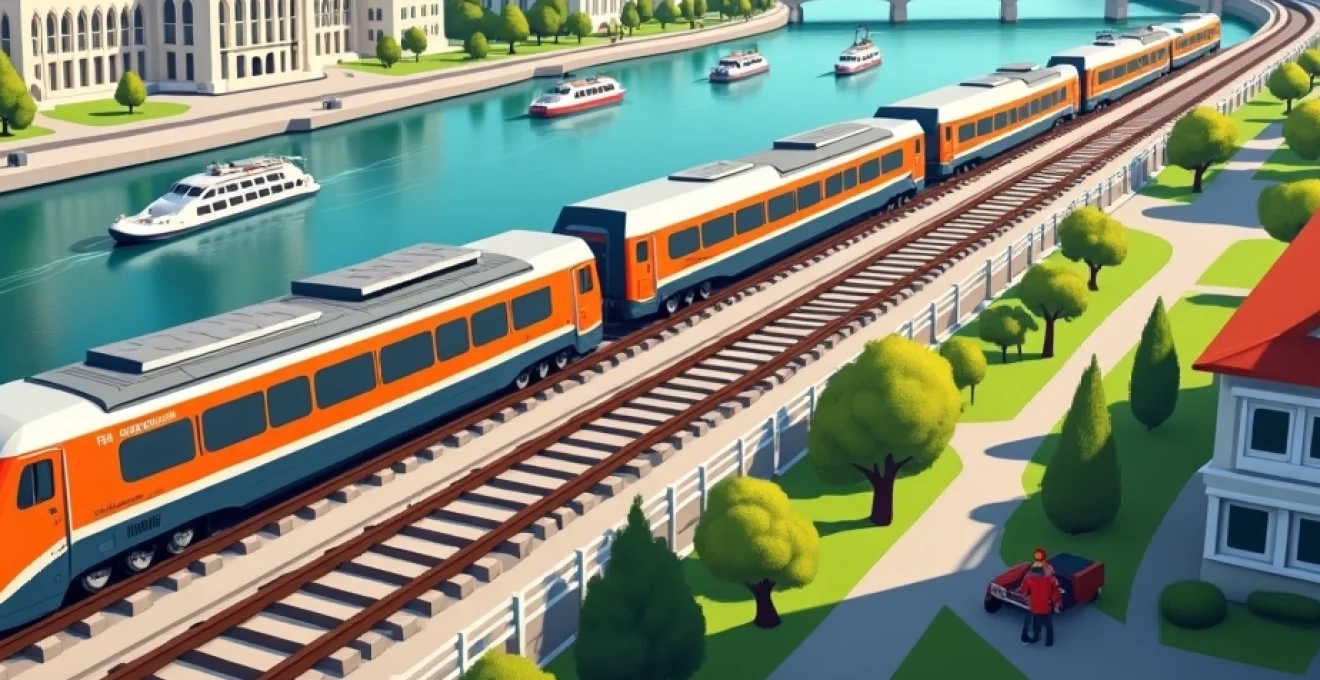
The railway connection between Budapest and Zagreb represents one of Central Europe’s most significant cross-border rail links, connecting the capitals of Hungary and Croatia through a journey that spans approximately 365 kilometres. This route serves as a vital artery for both passenger and freight transport, facilitating economic and cultural exchange between the two nations. The technical complexity of this international railway line involves sophisticated coordination between multiple railway operators, varying electrification systems, and intricate border control procedures that ensure seamless passenger movement across national boundaries.
Understanding the intricacies of this railway connection becomes essential for passengers planning their journey, as the route involves several technical considerations that can significantly impact travel experience. From the moment trains depart Budapest’s main terminal until they arrive at Zagreb’s central station, passengers traverse through diverse railway infrastructure that reflects the evolution of European rail transport over more than a century. The journey offers insights into how modern railway systems manage international connectivity whilst maintaining operational efficiency across different national networks.
Railway infrastructure between budapest keleti and zagreb glavni kolodvor
The infrastructure connecting Budapest Keleti to Zagreb Glavni Kolodvor represents a fascinating blend of historical railway engineering and modern technological upgrades. This international corridor has witnessed significant investment in recent decades, particularly following Croatia’s accession to the European Union and subsequent integration into broader European transport networks. The route passes through diverse geographical terrain, requiring sophisticated engineering solutions to maintain consistent service quality across varying topographical challenges.
Track gauge specifications and rolling stock compatibility
Both Hungarian and Croatian railway networks utilise the standard European gauge of 1,435 millimetres, ensuring seamless rolling stock compatibility throughout the entire journey. This standardisation eliminates the need for gauge-changing facilities that complicate rail transport in other parts of Europe, particularly between countries using different track specifications. The consistent gauge allows for uninterrupted locomotive operation across the international border, significantly reducing journey times and operational complexity.
Rolling stock compatibility extends beyond simple track gauge considerations to encompass loading gauge specifications, axle loads, and platform heights. Hungarian MÁV-START and Croatian HŽ have coordinated their technical standards to ensure that trains can operate efficiently across both networks without requiring specialised equipment modifications. This harmonisation reflects broader European efforts to create seamless international rail connectivity through technical standardisation initiatives.
Electrification systems: 25kv AC vs 3kv DC network transitions
The electrification systems along the Budapest-Zagreb route present one of the most technically challenging aspects of international rail operations. The Hungarian network primarily operates on 25kV AC overhead electrification, whilst certain sections of the Croatian network utilise 3kV DC systems inherited from the former Yugoslav railway infrastructure. Modern international trains operating on this route are equipped with dual-voltage capabilities, allowing them to seamlessly transition between different electrical systems without passenger disruption.
These electrical transitions require sophisticated onboard systems that can automatically detect and adapt to varying voltage and frequency specifications. The technology involved includes complex power conversion equipment, protective systems, and monitoring devices that ensure safe operation across different electrification standards. Railway operators have invested substantially in upgrading their rolling stock to handle these multi-system requirements, reflecting the technical sophistication required for modern international rail services.
Border control procedures at koprivnica and gyékényes stations
Border control procedures at Koprivnica and Gyékényes stations have evolved significantly following Croatia’s entry into the Schengen Area in January 2023. Previously, these stations served as major checkpoint locations where trains would stop for extended periods whilst border guards conducted passport and customs inspections. The elimination of systematic border controls for EU citizens has dramatically reduced processing times, though random checks and procedures for non-EU passengers continue to require operational flexibility.
Modern border control infrastructure at these stations incorporates advanced screening technologies, automated document reading systems, and sophisticated communication networks linking national immigration databases. The facilities are designed to handle both routine passenger processing and exceptional circumstances that may require enhanced security measures. Railway operators maintain close coordination with border authorities to ensure that any necessary procedures minimise disruption to published timetables whilst maintaining security requirements.
Signal box operations and traffic management systems
Traffic management along the Budapest-Zagreb corridor utilises a combination of traditional signal box operations and modern computerised traffic control systems. The Hungarian section predominantly employs ETCS (European Train Control System) Level 1 technology, providing enhanced safety through continuous speed monitoring and automatic braking capabilities. Croatian sections are progressively implementing similar systems as part of broader railway modernisation programmes funded through European Union structural funds.
Signal box coordination between national networks requires sophisticated communication protocols to ensure seamless train handover at border points. Modern traffic management centres monitor train movements across the entire international corridor, providing real-time information to passengers and enabling dynamic schedule adjustments in response to operational disruptions. This integrated approach represents a significant advancement from historical practices where national networks operated largely independently with minimal cross-border coordination.
Train operators and service classifications on the Budapest-Zagreb route
The Budapest-Zagreb railway corridor hosts services operated by multiple railway companies, each bringing distinct operational philosophies and service standards to international passenger transport. Understanding these different operators and their service classifications helps passengers make informed decisions about their travel preferences, whether prioritising schedule convenience, onboard amenities, or fare considerations.
Croatian railways (HŽ) InterCity services and fleet composition
Croatian Railways operates several InterCity services on the Budapest-Zagreb route, utilising a modern fleet of electric multiple units and locomotive-hauled carriages specifically configured for international travel. The HŽ InterCity trains feature air-conditioned carriages with comfortable seating arrangements, onboard catering facilities, and passenger information systems providing multilingual announcements. These services typically offer both first and second-class accommodation, with first-class featuring enhanced seat pitch and complimentary beverage service.
Fleet composition includes recently refurbished carriages equipped with modern passenger amenities such as power outlets, Wi-Fi connectivity, and improved accessibility features for passengers with reduced mobility. Croatian Railways has invested significantly in rolling stock modernisation programmes, ensuring that international services meet contemporary passenger expectations whilst maintaining operational reliability. The maintenance facilities supporting these services incorporate advanced diagnostic equipment and predictive maintenance technologies that minimise service disruptions.
MÁV-START regional express connections via nagykanizsa
Hungarian railway operator MÁV-START provides Regional Express services that connect Budapest with Zagreb via the important junction station of Nagykanizsa. These services offer an alternative routing option that may involve passenger transfers but often provides more flexible departure times throughout the day. The Regional Express trains utilise modern electric multiple units designed for medium-distance travel, featuring comfortable seating and basic onboard facilities.
The Nagykanizsa routing represents an important strategic connection within the broader Central European railway network, linking Hungarian domestic services with international connections towards Croatia, Slovenia, and beyond. MÁV-START coordinates closely with Croatian Railways to ensure convenient transfer opportunities for passengers continuing their journey to Zagreb, though direct services remain the preferred option for most international travellers due to their convenience and reduced journey times.
Eurocity train designations and international ticketing systems
EuroCity train designations on the Budapest-Zagreb route represent the premium international service category, offering enhanced comfort standards, reliable scheduling, and coordinated ticketing systems across national boundaries. These services must meet specific European standards for service quality , including minimum journey speeds, onboard catering options, and passenger information systems. EuroCity trains typically feature the most modern rolling stock available, with superior interior appointments and comprehensive passenger amenities.
International ticketing systems for EuroCity services enable passengers to purchase through tickets covering the entire journey, eliminating the complexity of separate national ticket purchases. The ticketing integration includes coordinated fare structures, unified reservation systems, and standardised passenger rights protections that apply throughout the international journey. Advanced booking systems allow passengers to select specific seats, meal options, and additional services through a single transaction processed by either participating railway operator.
Reservation requirements for Cross-Border rail services
Reservation requirements for cross-border rail services between Budapest and Zagreb vary depending on the specific service type and seasonal demand patterns. EuroCity trains typically require mandatory seat reservations to ensure adequate capacity management and passenger comfort, particularly during peak travel periods such as summer months and major holiday periods. The reservation system coordinates inventory across both Hungarian and Croatian railway booking platforms, preventing overbooking and ensuring seamless passenger accommodation.
Modern reservation systems incorporate dynamic pricing algorithms that adjust fares based on demand patterns, advance booking periods, and seasonal variations. Passengers booking reservations well in advance typically benefit from reduced fares and broader seat selection options, whilst last-minute bookings may face premium pricing and limited availability. The integrated reservation platform also manages special requirements such as bicycle transport, pet travel, and accessibility accommodations that require advance coordination between operating companies.
Timetabling variations and seasonal service adjustments
Railway timetabling between Budapest and Zagreb follows complex seasonal patterns that reflect varying passenger demand, infrastructure maintenance requirements, and operational constraints across both national networks. The annual timetable typically divides into distinct seasonal periods, with summer schedules offering enhanced service frequency to accommodate increased tourist travel, whilst winter periods may feature reduced services reflecting lower demand and potential weather-related operational challenges.
Summer timetable adjustments often include additional weekend services, extended operating hours, and supplementary trains during peak holiday periods. These seasonal enhancements require careful coordination between Hungarian and Croatian railway operators to ensure adequate rolling stock availability, crew scheduling, and maintenance facility capacity. The planning process for seasonal adjustments begins months in advance, incorporating passenger demand forecasts, tourism industry projections, and infrastructure availability assessments.
Seasonal variations also impact journey times due to infrastructure maintenance activities typically scheduled during lower-demand periods. Track renewal projects, signal system upgrades, and station modernisation work may require temporary schedule adjustments or alternative routing arrangements. Modern railway planning systems utilise sophisticated modelling tools to minimise passenger disruption whilst ensuring that essential maintenance activities can proceed without compromising long-term service reliability.
Weather-related timetabling considerations become particularly relevant during winter months when snow, ice, and extreme temperatures can affect railway operations across both countries. Railway operators maintain detailed contingency plans addressing various weather scenarios, including procedures for service modifications , passenger communication protocols, and coordination with emergency services. Advanced weather monitoring systems provide early warning of potentially disruptive conditions, enabling proactive schedule adjustments that minimise passenger inconvenience.
Railway operators have developed sophisticated seasonal planning processes that balance passenger demand with operational constraints, ensuring reliable service delivery throughout varying annual conditions.
Alternative routing options through slovenian railways
Alternative routing through Slovenia presents intriguing possibilities for passengers seeking different travel experiences or facing disruptions on the direct Budapest-Zagreb route. The Slovenian railway network, operated by Slovenske železnice, offers connections that can link Budapest and Zagreb through Ljubljana, though these routes typically involve longer journey times and multiple transfers. These alternative routings become particularly relevant during maintenance periods on the direct route or for passengers wishing to explore additional destinations during their journey.
The Ljubljana routing typically requires passengers to travel from Budapest to Ljubljana via Austrian railway connections, then continue from Ljubljana to Zagreb using Slovenian and Croatian railway services. This complex routing involves coordination between multiple railway operators including Austrian Federal Railways (ÖBB), Slovenske železnice, and Croatian Railways. Whilst journey times are significantly extended compared to direct services, the routing offers opportunities to experience diverse European railway systems and visit Slovenia’s attractive capital city.
Technical considerations for Slovenian routing include different electrification systems, varying service standards, and complex ticketing arrangements spanning four national railway networks. Modern intermodal journey planning systems can calculate optimal connections and provide integrated ticketing solutions, though passengers should expect higher fares and increased complexity compared to direct services. The routing demonstrates the interconnected nature of European railway networks, where alternative pathways exist even for seemingly straightforward point-to-point journeys.
Seasonal availability of Slovenian routing options varies considerably, with summer periods typically offering enhanced international connections and more convenient transfer opportunities. Winter services may be reduced or subject to weather-related disruptions, particularly in mountainous regions of Slovenia where railway operations can be affected by snow and extreme temperatures. Passengers considering alternative routings should verify current timetables and connection possibilities well in advance of their planned travel dates.
Fare structure analysis and Multi-Modal transport integration
The fare structure for Budapest-Zagreb railway services reflects a complex matrix of pricing policies that consider distance-based calculations, service categories, advance booking incentives, and seasonal demand variations. Base fares typically start around €17 for advance bookings in second class, escalating to €28 or higher for same-day purchases or first-class accommodation. These pricing structures incorporate yield management principles similar to airline industry practices, where fares adjust dynamically based on booking patterns and capacity utilisation.
Discount categories provide significant savings opportunities for eligible passengers, including youth discounts for travellers under 26, senior citizen reductions for passengers over 65, and group discounts for parties of six or more travelling together. Student discounts, family packages, and disability-related reductions further enhance accessibility for diverse passenger demographics. The discount structures require coordination between Hungarian and Croatian railway pricing systems to ensure consistent application across the international journey.
Multi-modal transport integration encompasses connections with local urban transport systems at both Budapest and Zagreb, enabling passengers to purchase combined tickets covering railway travel plus metropolitan transport services. Budapest’s comprehensive public transport network, including metro, tram, and bus services, offers integrated ticketing options that can be purchased alongside railway tickets. Similarly, Zagreb’s efficient tram network provides seamless connections from the central railway station to destinations throughout the Croatian capital.
International rail pass validity adds another dimension to fare considerations, with Eurail and Interrail passes providing coverage for the Budapest-Zagreb route subject to mandatory reservation fees. Pass holders must secure advance reservations, typically costing €3-5, to guarantee seat availability on their chosen services. The pass integration demonstrates broader European efforts to promote sustainable tourism through comprehensive railway networks that facilitate multi-country exploration without complex individual ticket purchases.
Modern pricing strategies balance revenue optimisation with passenger accessibility, creating fare structures that reward advance planning whilst maintaining service availability for spontaneous travel decisions.
Station facilities and passenger services at major interchange points
Budapest Keleti railway station serves as the primary departure point for Zagreb-bound services, offering comprehensive passenger facilities that reflect its status as one of Central Europe’s major railway terminals. The historic 19th-century architecture houses modern amenities including multilingual information desks, currency exchange facilities, retail outlets, and diverse dining options ranging from quick-service establishments to sit-down restaurants. Left luggage facilities provide secure storage for passengers wishing to explore Budapest before departure, whilst taxi ranks and metro connections ensure convenient access from throughout the Hungarian capital.
Passenger services at Budapest Keleti have been enhanced through recent modernisation programmes that improved accessibility features, upgraded passenger information systems, and expanded retail offerings. The station’s central location within Budapest’s transport network makes it easily accessible via multiple metro lines, with clear signage directing passengers to international departure platforms. Advanced passenger information systems provide real-time updates in multiple languages, helping international travellers navigate departure procedures and stay informed about any service modifications.
Zagreb Glavni Kolodvor represents the terminus for Budapest services, welcoming passengers to Croatia’s capital through a beautifully restored neo-classical building that combines historical charm with modern functionality. The station features tourist information centres staffed by multilingual personnel, currency exchange services, and convenient connections to Zagreb’s comprehensive tram network. Recent renovations have enhanced passenger comfort through improved waiting areas, modern restroom facilities, and expanded commercial offerings.
Accessibility considerations at both major terminals ensure that passengers with reduced mobility can navigate facilities comfortably and access trains safely. Elevator systems, tactile guidance paths, audio announcements, and dedicated assistance services provide comprehensive support for passengers requiring additional help. The station operators coordinate closely with train crews to ensure seamless boarding assistance and onboard accommodation for passengers with special needs, reflecting European Union requirements for inclusive transport services.
Intermediate stations along the route, particularly Nagykanizsa and Koprivnica, provide essential facilities for passengers making connections or requiring brief stops during their journey. These stations feature basic amenities including waiting rooms, retail kiosks, and passenger information displays, though facilities are necessarily more limited compared to major terminals. The strategic importance of these intermediate points ensures that they maintain adequate passenger services whilst serving their primary function as operational hubs within the broader international railway network.
Station modernisation programmes continue transforming historical railway terminals into contemporary travel hubs that balance architectural heritage with modern passenger expectations.